
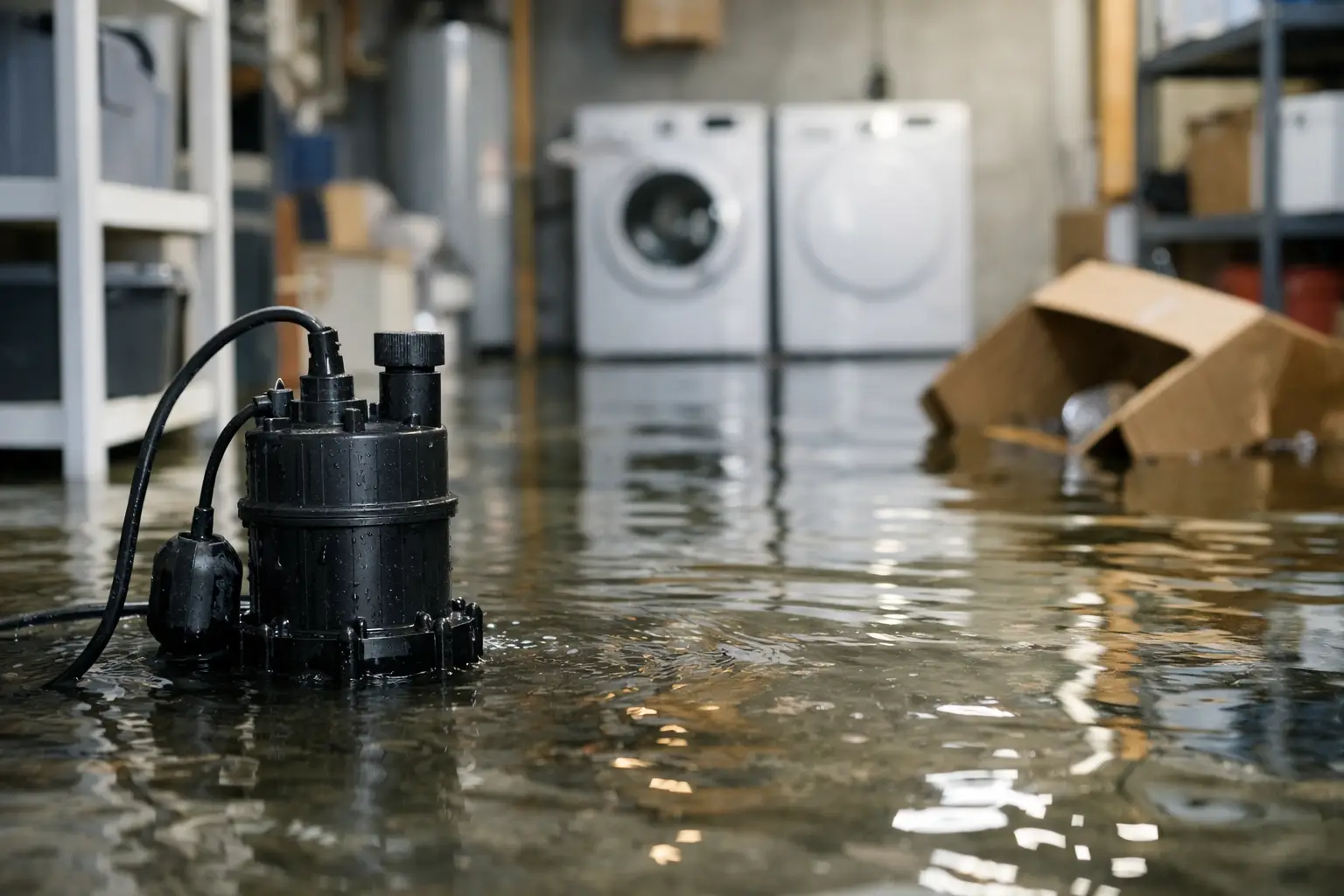
Basement Flooding From Failed Sump Pump
Basement flooding from failed sump pump? Learn what causes it, what to do first, what not to do, and when to call for fast professional help.
You usually find out about basement flooding from failed sump pump at the worst possible time - during a hard rain, overnight, or when water is already spreading across the floor. At that point, the priority is not theory. It is stopping damage, staying safe, and figuring out why the pump did not do its job.
A sump pump is supposed to be the last line of defense when groundwater rises around your foundation. When it fails, water can move in fast. Finished basements, stored furniture, drywall, flooring, electrical items, and mechanical equipment can all be affected within hours. The right response starts with a clear diagnosis, because a sump pump can fail for several different reasons, and the repair depends on which one you are dealing with.
What causes basement flooding from failed sump pump
Not every failed sump pump dies the same way. Sometimes the motor burns out. Sometimes the pump still has power but cannot discharge water because the line is clogged or frozen. In other cases, the float switch sticks, the basin is undersized, or the pump was simply the wrong type for the amount of water coming in.
Power loss is one of the most common causes during storms. Heavy rain and power outages often happen together, which means the pump loses the very electricity it needs most. If there is no battery backup or water-powered backup in place, the pit fills, overflows, and the basement floods.
Mechanical wear is another frequent issue. Sump pumps do not last forever. A unit that has been cycling heavily for years can slow down, overheat, or stop responding altogether. Homeowners often do not know there is a problem until the first major storm of the season.
Discharge line problems are easy to miss. If water cannot leave the house efficiently, the pump may run constantly, short cycle, or back up into the pit. In Albany area winters, exterior discharge piping can freeze. In other situations, debris, sediment, or improper pitch can restrict flow enough to cause trouble during peak demand.
There is also the installation factor. A pump can be new and still fail if it was poorly installed, incorrectly sized, or connected without proper check valve protection. When the setup is wrong, the system may look fine under normal conditions and then fail exactly when the water load increases.
What to do first when the basement is taking on water
Start with safety. If there is standing water near outlets, appliances, or your electrical panel, do not walk into the area and do not start unplugging equipment. Water and electricity are a dangerous mix. If conditions are unsafe, the first call may need to be for electrical shutoff before any plumbing work begins.
If the area is safe to access, check whether the sump pump has power. A tripped GFCI, a switched outlet, or a breaker issue can stop the pump. If power is present but the pump is silent, the problem may be the float switch, motor, or internal failure. If the pump is humming but not moving water, the discharge line or impeller may be blocked.
Try not to assume the pump itself is the only problem. A flooded basement can also involve groundwater pressure, foundation seepage, drain tile issues, or a sewer backup that looks similar at first glance. That is why a diagnosis-first approach matters. Treating the wrong problem wastes time while water damage gets worse.
If you can safely move boxes, rugs, or stored items out of the wet area, do it early. The faster you remove absorbent materials, the better your chances of limiting damage and mold growth. But do not get distracted by cleanup before the source of the water is addressed.
What not to do
A lot of homeowners lose time trying quick fixes that do not match the actual failure. Resetting the pump over and over will not solve a seized motor. Pouring water into the pit to test a system with a blocked discharge line can make the overflow worse. Running extension cords into a wet basement is also a bad idea.
Another mistake is waiting to see whether the water “goes down on its own.” If groundwater is still entering and the pump system is compromised, delay usually means more flooring, drywall, and stored contents get damaged. With wet basement calls, hours matter.
It is also common to replace a pump without addressing why it failed. If the old unit burned out because it was undersized, the new one may fail the same way. If the discharge line is frozen or the check valve is missing, swapping the pump alone does not solve the underlying issue.
How a plumber diagnoses a failed sump pump problem
A professional sump pump service call should be more than a quick glance at the pit. The first step is confirming what kind of water intrusion is happening and whether the sump system is actually the point of failure. From there, the plumber checks power supply, float operation, motor response, basin condition, discharge performance, check valve function, and overall pump sizing.
If the pump runs, the next question is whether it is keeping up. A system can be technically operational and still fail in practice because the inflow exceeds the pump's capacity. That is especially relevant in homes with high water tables, heavy storm runoff, or older drainage setups.
The discharge route matters too. A licensed plumber should verify where the water is going, whether the line is obstructed, and whether the termination point is contributing to recycling water back toward the foundation. In cold weather, frozen sections and poor exterior layout are frequent contributors.
In some homes, the best repair is a direct pump replacement. In others, the right fix includes a new check valve, discharge piping correction, basin improvements, or adding a backup system. Good diagnosis prevents guesswork and keeps the repair scope clear.
Repair or replace after basement flooding from failed sump pump
It depends on the age of the pump, the condition of the system, and the reason for failure. If the unit is relatively new and the issue is isolated - such as a bad switch or a clogged discharge line - a repair may make sense. If the pump is older, has a failing motor, or has already struggled through multiple storm cycles, replacement is often the more reliable option.
Homeowners understandably want the lowest-cost fix in the moment. The problem is that a cheap repair on an aging sump pump can turn into another emergency during the next storm. When the basement has already flooded once, reliability matters more than squeezing a little more life out of a worn-out unit.
A replacement decision should also consider the pump type. Submersible pumps are quieter and generally better protected in the pit, while pedestal pumps can be easier to service. The right choice depends on basin size, expected water volume, and the layout of the home.
Why backup protection matters
If your basement flooded because the primary pump lost power or failed under heavy demand, backup protection is worth serious attention. Battery backup systems help during outages, but runtime depends on battery condition and how much water is entering. Water-powered backup pumps can be effective in some homes, but only if the water supply and local conditions support that setup.
There is no one-size-fits-all answer here. A finished basement with expensive contents may justify a stronger backup strategy than an unfinished utility basement. The key is understanding the risk. If one storm event can damage flooring, walls, furniture, and stored belongings, backup protection usually costs less than another flood.
Preventing the next sump pump failure
The best prevention is regular testing and maintenance before storm season, not during it. A sump pump should be inspected for proper float movement, secure power connection, discharge flow, and signs of wear. The pit should stay clear enough for the pump to operate as designed. The exterior discharge point should also be checked so water can exit freely away from the home.
Age matters. If your pump is getting up in years and you cannot remember the last time it was inspected, that is a warning sign. Sump pumps are easy to ignore because they sit quietly until needed. The trouble is that when they finally are needed, there is no room for uncertainty.
For homeowners in Albany, Colonie, Troy, Delmar, and East Greenbush, weather swings, snowmelt, and heavy rain can all put real pressure on a basement drainage system. A professional inspection before peak wet weather can catch a failing pump, weak backup, or bad discharge setup before it turns into an emergency.
When water is already on the floor, the goal is simple: stop the flooding, identify the failure correctly, and fix it in a way that holds up the next time conditions get rough. That is the kind of plumbing problem that needs a fast response and a clean diagnosis, not guesswork. If your sump pump has let you down, act early, stay safe, and get the system checked before a wet basement becomes a much bigger repair.