
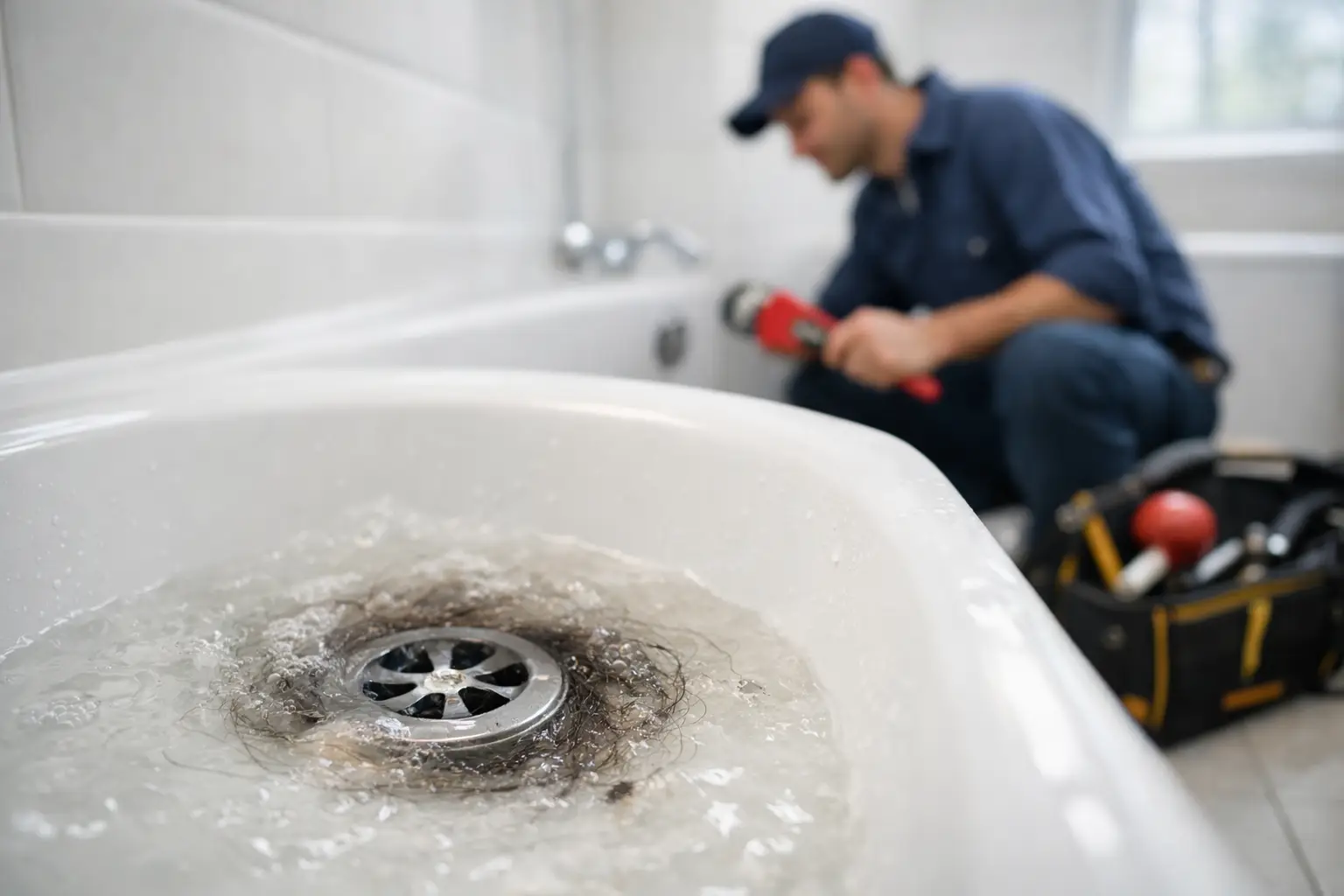
Bathtub Drain Clogged? When to Call a Plumber
Bathtub drain clogged plumber advice for Albany homeowners. Know what you can try safely, when to stop, and when fast professional service matters.
A bathtub that starts draining slowly rarely stays a small problem for long. If you are searching for a bathtub drain clogged plumber, you are probably already past the point of annoyance and into standing water, soap residue, and a bathroom you cannot use normally.
In most homes, bathtub drain clogs build up from hair, soap scum, and residue that narrows the pipe over time. Sometimes the blockage is close to the drain opening and relatively simple to remove. Other times, the clog is deeper in the branch line, tied to older piping, or connected to a larger drain issue affecting the bathroom group. That difference matters, because the wrong fix can waste time, damage parts, or push the blockage farther down the line.
Bathtub drain clogged plumber calls usually happen for a reason
Homeowners usually wait until the tub stops draining almost completely. Before that point, there are warning signs people tend to ignore - water pooling around your feet during a shower, a sour smell from the drain, gurgling after the sink runs, or a tub that empties very slowly and then suddenly backs up again.
Those symptoms tell you the pipe is restricting flow, not clearing itself. A temporary improvement after hot water or a store-bought cleaner does not mean the line is fixed. In many cases, it means a partial channel opened through the clog while buildup remains stuck to the pipe wall.
That is why diagnosis comes first. A bathtub clog can be isolated to the tub drain assembly, but it can also point to a problem farther down the drain line. If the bathroom sink is sluggish too, or the toilet bubbles when the tub drains, that is no longer a simple hair clog at the top of the line.
What you can try before calling a plumber
There are a few safe steps that make sense before scheduling service. Start with the simplest one: remove the stopper and check for visible hair and debris near the opening. In many tubs, the clog sits right under the stopper crossbar or in the first bend of the waste assembly. Pulling out that material by hand or with a plastic drain tool can restore normal flow.
A plunger can also help, but only if used correctly. For a bathtub, you need enough water to cover the plunger cup, and you need to account for the overflow opening. If the overflow is left open, you lose pressure and get very little result. A few controlled plunges are reasonable. Aggressive pumping is not always better, especially on older drain assemblies.
Hot water can help loosen soap residue, but it is not a cure for a packed hair clog. And chemical drain cleaners are where many homeowners create a bigger service call. These products can sit in the trap, splash back during disassembly, damage older metal piping, and complicate the work when a technician has to open the line safely.
If you have already tried basic removal and light plunging without success, stop there. That is usually the point where do-it-yourself effort stops being efficient and starts increasing the risk of damage.
When a bathtub drain clogged plumber is the right call
You should call a plumber if the tub will not drain, backs up repeatedly, or shows signs the problem is not limited to the tub itself. The same applies if you notice sewer odor, multiple slow fixtures in the same area, or recurring clogs that keep coming back after short-term fixes.
Another common reason to bring in a professional is access. Many bathtub drain assemblies are awkward to work on, especially when parts are corroded, the stopper linkage is jammed, or the overflow plate hardware is worn out. What looks like a simple clog can turn into a broken trip lever, stripped fitting, or leaking waste-and-overflow assembly if handled roughly.
For Albany-area homeowners with older homes, that risk is even more real. Aging galvanized lines, partial corrosion, and years of buildup can make a routine drain issue less predictable. A plumber is not just there to clear water. The job is to identify where the blockage is, whether the piping is still serviceable, and whether the problem is isolated or part of a larger drainage issue.
What a professional plumber actually does
A proper service call should not start with guessing. It should start with diagnosis.
First, the plumber checks how the tub is draining and asks the right questions: Is the problem new or recurring? Is the bathroom sink affected? Any toilet bubbling or backup? Have chemical cleaners been used? That information helps narrow down whether the blockage is local to the tub or farther into the branch drain.
From there, the technician may remove the stopper assembly, inspect the accessible portion of the drain, and use the appropriate clearing method. For many bathtub clogs, that means a hand snake or professional drain cable sized correctly for the line. The goal is to remove the obstruction without damaging the drain body or pushing material deeper where it causes a second blockage.
If the line is heavily restricted, a more thorough cleaning method may be needed. In some cases, the issue is not the clog itself but the condition of the pipe - scale, grease residue from repeated product use, or deterioration inside older drain lines. That is where experience matters. A quick punch-through is not the same as a real cleaning.
When necessary, further inspection may be recommended to confirm that the line is fully open and draining correctly. That is especially true when clogs keep returning or when more than one fixture is involved.
Why recurring bathtub clogs should not be ignored
A clog that returns every few weeks is usually telling you something. Either the blockage was never fully removed, or the pipe is holding debris because of buildup, damage, or poor drainage conditions.
Homeowners sometimes assume recurring clogs are just part of having long hair in the house. Hair is often part of the problem, but not always the whole problem. Soap residue, mineral buildup, improper slope, and old pipe interiors can all make the line catch debris faster than it should.
Ignoring that pattern can lead to a worse backup, hidden leakage from overfilled tubs, or a larger drain service issue later. It is usually less expensive and far less disruptive to address the line while the problem is still contained to one tub.
The difference between a quick fix and the right repair
Not every bathtub drain issue needs a major repair. Sometimes the right answer is straightforward drain cleaning and nothing more. But there are times when the clog is a symptom, not the main problem.
If the waste-and-overflow assembly is deteriorated, if fittings are leaking behind the tub, or if the branch drain is in poor condition, clearing the line may only solve part of the issue. A dependable plumber will explain that clearly, define the scope, and tell you what needs attention now versus what can be planned.
That kind of communication matters when you are making a home repair decision under stress. Homeowners do not need vague talk or scare tactics. They need to know what is blocked, what caused it, what it takes to correct it, and whether the work will be done cleanly and to code.
What to expect from a local service call
If your tub is backing up and you need help fast, the process should be simple. You call, describe what is happening, and get a clear response about availability and next steps. On site, the plumber should assess the problem first, protect the work area, and explain the recommended service before work begins.
That matters more than people think. Drain service can get messy if it is rushed or handled carelessly. A professional process reduces damage, confusion, and repeat visits. For homeowners in Albany, Colonie, Troy, Delmar, and East Greenbush, fast response is important, but so is getting the diagnosis right the first time.
Trinity Plumbing & Drains approaches bathtub drain problems the same way it handles other residential plumbing calls - identify the cause, define the repair, and complete the work cleanly and correctly without the runaround.
How to reduce future bathtub clogs
After the line is cleared, prevention is fairly simple. Use a good hair catcher, clean it regularly, and avoid letting heavy soap residue build up around the stopper. If your tub starts slowing down again, address it early instead of waiting for a full backup.
It also helps to be careful with repeated home remedies. Occasional maintenance is one thing. Repeated chemical treatments and forceful plunging on an already restricted line can create more trouble than they solve.
If your bathtub is draining slowly today, there is a good chance the blockage is already building into something larger. The smart move is not to keep guessing. Get it checked, get a clear answer, and get your bathroom working the way it should.