
Best Basement Flood Protection for Albany Homes
Learn the best basement flood protection for Albany homes, from sump pump backup and drainage fixes to prompt action when water starts rising indoors.
A basement can go from dry to damaged in a single storm, a power outage, or a sewer backup. The best basement flood protection is not one product sitting in a corner. It is a system that identifies where water is coming from, moves it away from the house, and keeps working when conditions are at their worst.
For homeowners in Albany, Colonie, Troy, Delmar, and East Greenbush, that matters. Heavy rain, snowmelt, aging drain lines, and high groundwater can all put pressure on a basement. The right protection starts with a clear diagnosis, not a guess or a quick patch.
Start by Identifying the Water Source
Before installing equipment or paying for repairs, determine why water is getting into the basement. The fix for groundwater is different from the fix for a failed plumbing line, and neither is the same as a sewer backup.
Water that appears along the foundation walls or floor perimeter during rain often points to exterior drainage, grading, or groundwater pressure. A puddle near a water heater, laundry area, or exposed pipe may be a plumbing leak. Dark, dirty water coming up through a floor drain, toilet, or shower drain is a potential sewer issue and needs immediate attention.
Do not assume every wet basement needs a new sump pump. A sump pump is often part of the answer, but it cannot correct a broken sewer line, a leaking water service, or a downspout that dumps roof runoff against the foundation. Diagnosis first prevents unnecessary work and helps protect the home properly.
Build a Dependable Sump Pump System
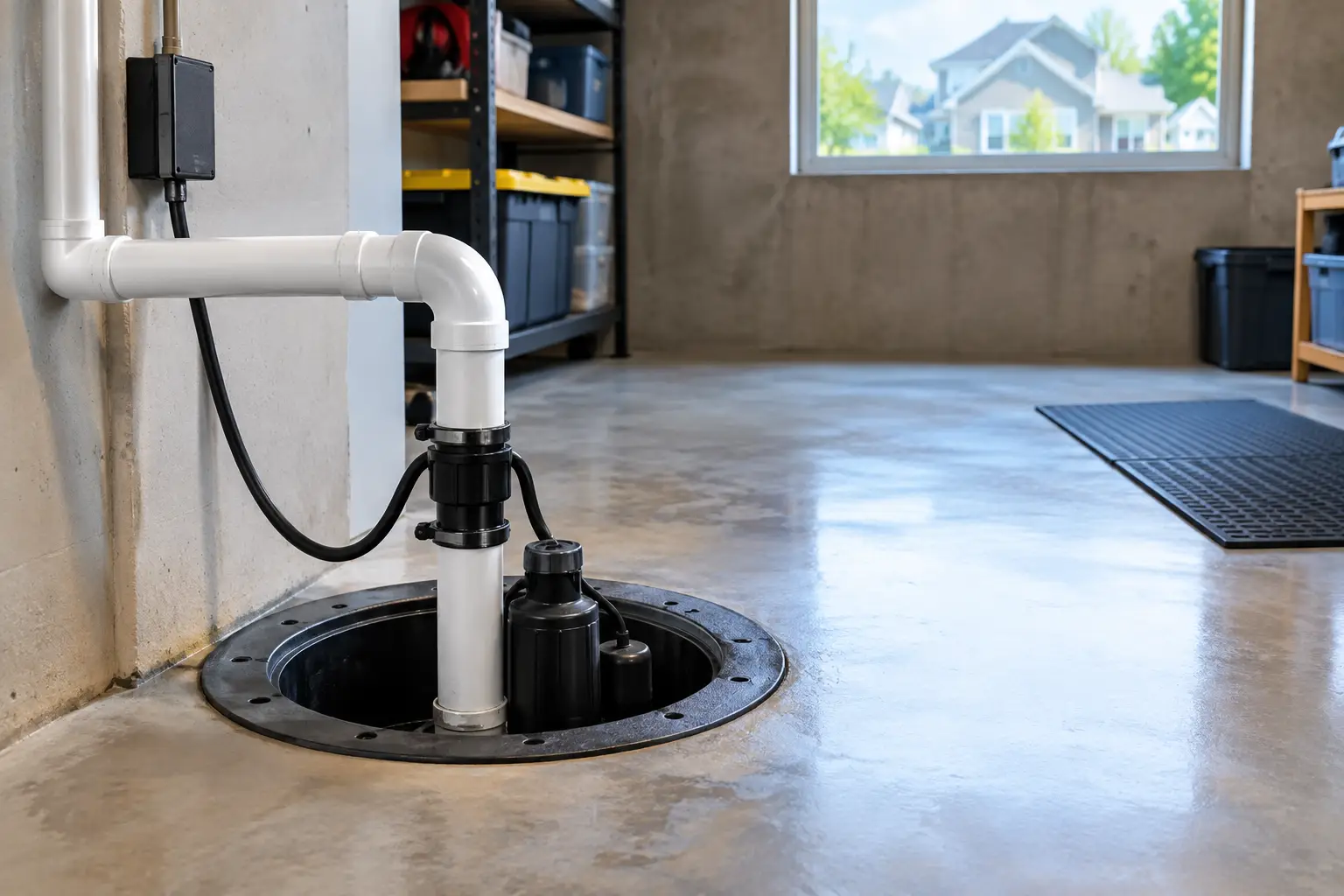
A properly installed sump pump is the center of flood protection for many homes with groundwater issues. It collects water in a sump basin below the basement floor and pumps it outside before it can rise into the living area.
The pump itself matters, but installation details matter just as much. The basin must be sized and positioned correctly. The pump needs a reliable check valve so water does not fall back into the pit after each cycle. The discharge line must carry water far enough away that it cannot drain back toward the foundation.
A pump that runs constantly, makes unusual noise, or fails to turn on during testing should not be ignored. Those warning signs can mean a stuck float, worn motor, clogged intake, failing check valve, or undersized pump. Waiting until a storm to find out is not a plan.
Add Battery Backup for Power Outages
A standard sump pump runs on household electricity. That creates an obvious weak point: storms can cause the very power outage that leaves your basement vulnerable.
A battery backup sump pump provides a second layer of protection when the primary pump loses power or cannot keep up with incoming water. It is especially worthwhile for homes that have flooded before, homes with finished basements, and properties where the pump runs frequently during wet weather.
Battery backup systems need periodic testing and battery replacement according to the manufacturer’s requirements. Some units include alarms or monitoring features that alert homeowners when the primary pump fails, the battery is weak, or water levels are rising. An alarm does not stop water, but it gives you time to act before a small problem becomes a major cleanup.
Make Sure the Discharge Has Somewhere to Go
A strong pump cannot protect the basement if its discharge line is frozen, clogged, crushed, or routed poorly. In Capital Region winters, an exposed or improperly sloped discharge line can freeze and prevent the pump from moving water out.
The line should discharge away from the home and away from neighboring properties. It should not empty next to the foundation, into a location that creates ice hazards, or into a sanitary sewer connection. Local code requirements and site conditions matter here. A qualified plumber can evaluate the pump, piping, check valve, and discharge route as one working system.
Keep Outside Water Away From the Foundation
Not every basement water problem starts below ground. Roof runoff is one of the most common sources of preventable foundation moisture. Gutters packed with leaves, missing downspout extensions, and poor yard grading can send large volumes of water directly toward the house.
Clean gutters regularly, especially before spring thaw and heavy-rain seasons. Downspouts should carry water well away from the foundation. The soil around the home should slope away from the walls so surface water does not collect at the perimeter.
If the ground slopes toward the house, the correction may involve regrading, drainage improvements, or coordination with a waterproofing contractor. Plumbing work and exterior drainage work are related, but they are not interchangeable. The best result comes from addressing the actual path water takes to reach the basement.
Protect Against Sewer Backups
A sewer backup is different from groundwater flooding and requires a different response. If wastewater rises through a basement floor drain or lower-level fixture, avoid using water anywhere in the house. Running a sink, flushing a toilet, or starting the washing machine can add more water to a blocked system.
Call for professional drain and sewer diagnosis right away. A camera inspection can help identify whether the issue is a blockage, damaged pipe, root intrusion, collapsed section, or a problem affecting the municipal sewer connection.
For some properties, a properly selected backwater valve can help prevent sewage from flowing backward into the home during a surcharge event. This is not a universal fix. Backwater valves must be installed in the right location, remain accessible for service, and meet applicable plumbing code. They also require maintenance. A valve that is stuck open or obstructed cannot provide the protection homeowners expect.
Maintain the Equipment You Already Have
Flood protection fails most often because equipment is neglected. A quick check a few times a year can catch problems before the next major storm.
Test the sump pump by pouring water slowly into the basin until the float activates the pump. Watch to confirm that the pump turns on, the water level drops, and water exits at the outdoor discharge point. Check that the power cord is secure and connected to a working outlet. If the pump has a backup battery, test that system as well.
Keep the basin cover in place and clear any debris that could interfere with the float or intake. Check visible discharge piping for leaks, loose connections, and signs of freezing. If you hear the pump cycling repeatedly when there has been no rain, schedule an inspection. That can indicate groundwater activity, a check-valve problem, or a pump issue that should be addressed before it worsens.
Know What to Do When Water Starts Rising
When water enters the basement, safety comes first. Do not walk through standing water if electrical outlets, appliances, cords, or the electrical panel may be affected. Do not attempt to reset breakers while standing on a wet floor. If there is any doubt about electrical safety, stay out of the area and contact the appropriate emergency professionals.
If the water is clean and conditions are safe, move valuables and stored items to a dry area. Stop using water fixtures if you suspect a sewer backup. For a plumbing leak, shut off the local fixture valve if you can identify it safely. If a pipe has burst or a major leak is active, shut off the home’s main water supply and call for emergency plumbing service.
Take photos for insurance documentation once it is safe to do so. Then focus on stopping the source. Wet vacuums, fans, and cleanup can help after the water is under control, but they do not solve the reason it entered in the first place.
When Professional Service Is the Right Call
Call for service when a sump pump fails, a pump runs continuously, a discharge line freezes, water appears without an obvious cause, or sewage comes up through a drain. These are not problems to put off until the next storm.
Trinity Plumbing & Drains can inspect sump pump systems, diagnose plumbing and sewer-related basement water problems, and explain the repair options clearly. The goal is straightforward: identify the cause, complete code-compliant work, and leave you with protection that makes sense for your home.
A dry basement is easier to protect before the next hard rain than after it. Test the pump, look at where your water is going outside, and address warning signs while there is still time to make a controlled repair.