
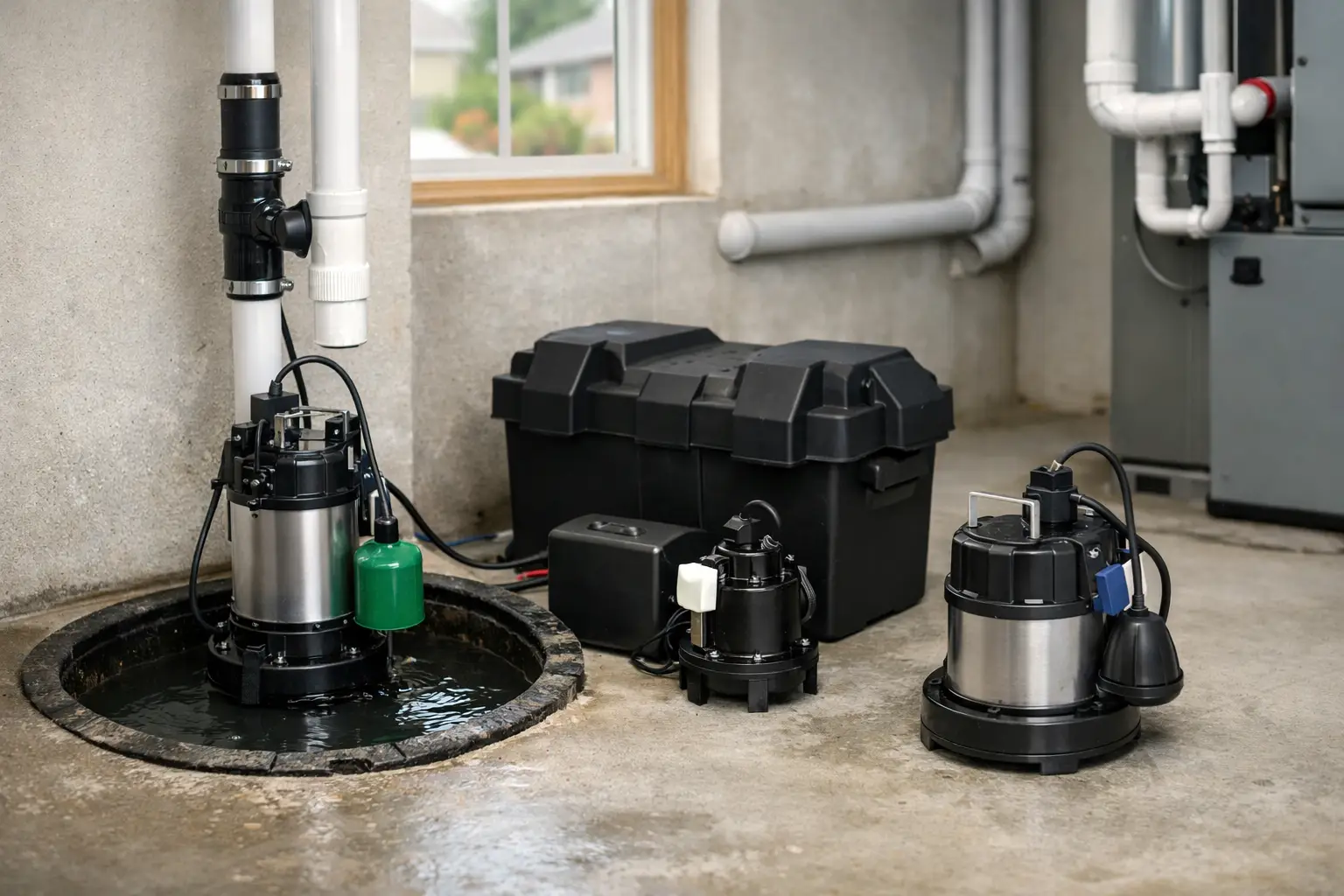
Best Sump Pump Backup Systems for Albany Homes
Compare the best sump pump backup systems for Albany homes. Learn when battery, water-powered, and combo options protect your basement reliably.
A working sump pump is your basement’s first line of defense, but it cannot help much if the power goes out during the same storm that sends groundwater toward your foundation. The best sump pump backup systems keep water moving when the primary pump fails, loses power, or cannot keep up with incoming water. For homeowners in Albany, Colonie, Troy, Delmar, and East Greenbush, that protection can mean the difference between a dry basement and a cleanup that involves flooring, stored belongings, drywall, and mold concerns.
There is no single backup system that fits every home. The right choice depends on your water pressure, electrical setup, sump pit size, drainage conditions, and how much water your basement handles during heavy rain or spring thaw. A proper assessment comes before an installation. Adding equipment without confirming why a basement gets wet is how homeowners spend money and still end up with water on the floor.
What a Sump Pump Backup System Actually Does
A backup system is separate from your main electric sump pump. It is designed to take over when the primary pump cannot do its job. That may happen because of a power outage, a failed float switch, a burned-out motor, a tripped breaker, or water entering the pit faster than one pump can discharge it.
Most backup setups use either a battery-powered pump or a water-powered pump. Some homeowners choose a combination system that replaces the primary pump and adds a battery backup in one package. The best option is not automatically the one with the biggest number on the box. It has to be sized, installed, and discharged correctly for the conditions at your home.
A backup also needs an independent discharge arrangement with proper check valves. Without that detail, water can cycle back into the pit after pumping, reducing performance and shortening equipment life. The discharge line must carry water away from the foundation without creating ice, erosion, or a nuisance for a neighbor or sidewalk.
Best Sump Pump Backup Systems: Your Main Choices
Battery-powered backup pumps
Battery backup pumps are the most common choice for residential basements. They run on a dedicated deep-cycle battery when utility power is unavailable. When the main pump stops or the water level rises beyond its normal operating range, the backup pump activates automatically.
This is usually the practical choice for homes with municipal water, well water, or any setup where a water-powered backup is not a good fit. Modern battery systems can provide alarms for low battery charge, pump activation, and system trouble. That early warning matters. A backup system is only useful if its battery is charged and capable of carrying the load when a storm arrives.
The trade-off is run time. A battery does not run forever, especially when groundwater is entering the pit quickly. A properly selected battery backup can protect a home through many short pumping cycles, but a long outage combined with severe flooding can drain it. Homes with frequent outages or high water volume may need a larger battery capacity, a secondary battery, or a different backup strategy.
Do not confuse a standard automotive battery with a proper sump pump backup battery. Car batteries are built for short bursts of starting power. Backup pumps need deep-cycle capacity for repeated discharge and recharge cycles.
Water-powered backup pumps
A water-powered backup uses municipal water pressure to create suction and remove water from the sump pit. It does not rely on electricity or a battery, so it can continue operating through an extended outage as long as the municipal water supply remains available.
For some homes, this is an excellent layer of protection. It is especially worth discussing when a basement receives steady groundwater during storms and outages can last longer than a battery is likely to support. Because it has no battery to maintain, it eliminates one common failure point.
There are limits. Water-powered units use a significant amount of city water to remove sump water. They are not appropriate for homes served by a private well because the well pump generally needs electricity. They also require adequate water pressure and professionally installed backflow protection. This is not a do-it-yourself connection to a water line. The installation must meet local plumbing code and protect the home’s potable water supply.
Combination primary and battery backup systems
A combination system includes a primary electric sump pump plus a battery-powered backup unit. It can be a smart option when an older primary pump is already near the end of its service life or when the existing pit is poorly arranged.
The advantage is a clean, coordinated installation. The primary and backup pumps are designed to work together, and the system may include a control panel with alarms and battery monitoring. It also avoids trying to build a backup around a main pump that is undersized, unreliable, or installed with poor piping.
The trade-off is that a combination system is not automatically better than a quality separate backup pump. The sump pit still needs enough room for both pumps and their floats to move freely. If the pit is too small, the installation may require changes to prevent float interference and short cycling.
How to Choose the Right Backup for Your Basement
Start with the reason you need protection. If your concern is occasional short power outages, a battery backup may be the right answer. If your home has a history of long outages and heavy groundwater, a water-powered unit may provide stronger long-duration protection if you have reliable municipal water and sufficient pressure. In higher-risk homes, installing both a battery backup and a water-powered backup can provide added redundancy.
Next, look at pumping demand. A basement that only sees modest water after major storms has different needs than one with a high water table or a drainage issue around the foundation. Pump capacity is commonly described in gallons per hour, but that rating changes with vertical lift. Pumping water up 10 feet takes more work than pumping it up 5 feet. The discharge pipe size, horizontal run, elbows, and check valve all affect real-world performance.
The sump pit matters too. It must be large enough to allow the floats to operate without binding. The pump should sit on a stable base, not loose gravel that can shift or pull debris into the intake. A sealed or properly fitted cover can help keep debris out of the pit while reducing moisture and odors in the basement.
Finally, consider monitoring. An audible alarm is useful when someone is home. A system with remote alerts can be more helpful for homeowners who travel, have a finished basement, or want notice before a small equipment issue becomes a major water problem. Monitoring does not replace maintenance, but it gives you a chance to act sooner.
Installation Details That Protect the System
Backup pumps fail most often because of poor installation, neglected batteries, or a problem with the primary pump that was never diagnosed. The system should be tested under real operating conditions, not simply plugged in and assumed to work.
A professional installation should confirm that the primary pump activates at the right water level, the backup float can move freely, and both pumps discharge correctly. It should also verify that check valves are installed in the correct direction and that the discharge line does not allow water to return to the pit. The electrical outlet should be properly grounded and not overloaded with other basement equipment.
For water-powered systems, code-compliant backflow protection is essential. The water connection, pressure requirements, and discharge routing should be reviewed before the unit is selected. If your current sump discharge freezes in winter or deposits water too close to the foundation, adding a backup pump will not solve that drainage problem.
Maintenance Is Part of the Protection
A backup system should be checked before the seasons when basement water problems are most likely. In the Capital Region, that often means before spring thaw and again before periods of heavy rain.
Test the primary pump by adding water to the pit and confirming that it starts, pumps out, and shuts off properly. Check the backup alarm, inspect the battery terminals for corrosion, and confirm the battery is holding a charge. Battery replacement schedules vary by battery type and usage, but waiting until an alarm sounds during a storm is not a maintenance plan.
Keep the pit clear of debris, make sure the discharge outlet remains open, and watch for changes in pump cycling. A pump that runs constantly, makes unusual noise, or struggles to lower the water level needs attention before the next outage.
A dependable backup system is not about buying the most expensive pump. It is about matching the equipment to your home, installing it correctly, and testing it before bad weather puts it to work. If you are unsure whether your primary pump, battery, discharge line, or water pressure is ready, have the system evaluated now, while the basement is still dry.