
Can a Water Heater Leak? What to Do First
Can a water heater leak? Learn where leaks start, what to shut off, and when Albany homeowners need fast, code-compliant repair to avoid damage inside.
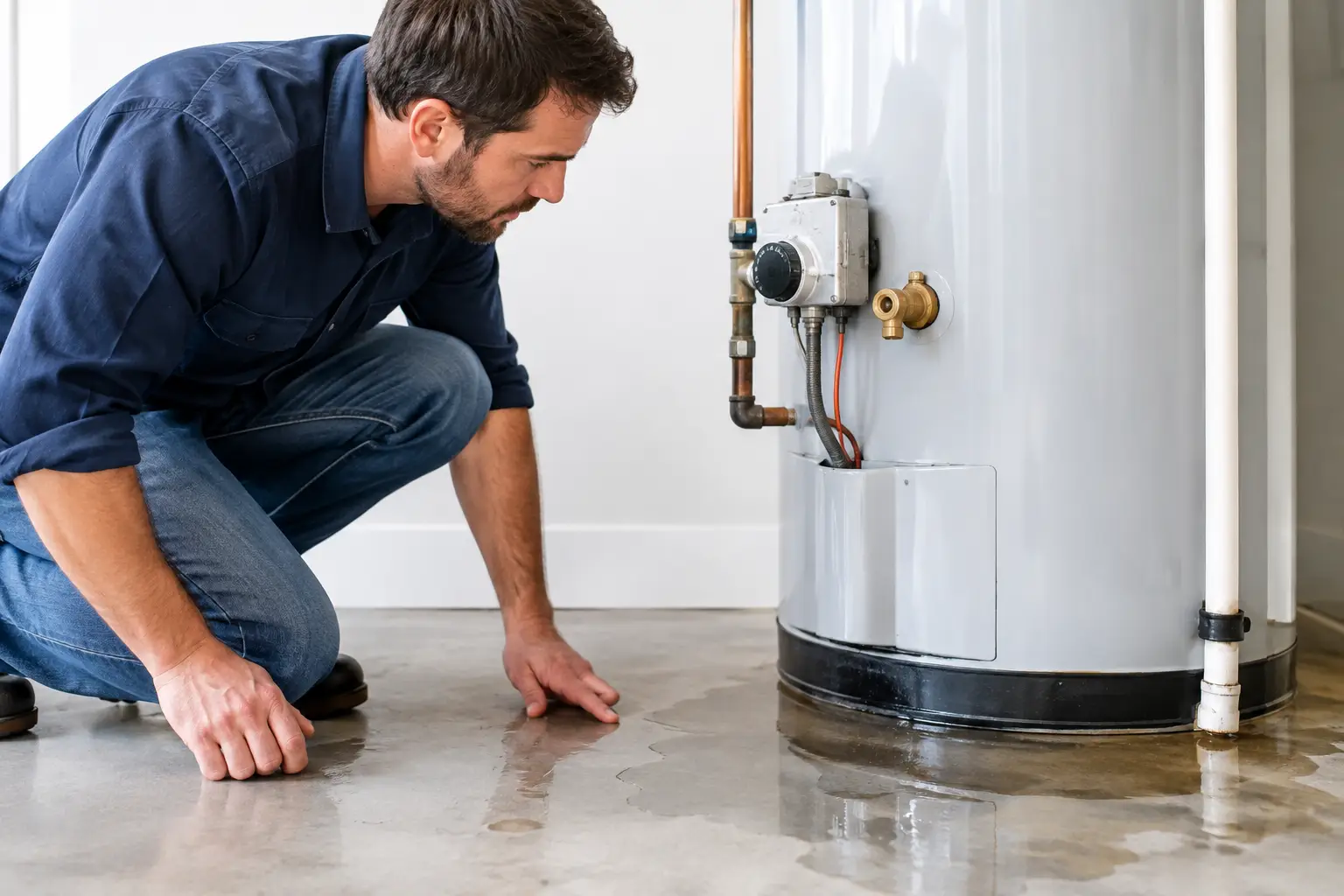
A few drops around a water heater can turn into a wet basement, damaged flooring, or a complete loss of hot water faster than most homeowners expect. Can a water heater leak? Absolutely. The real question is where the water is coming from, because the right response ranges from a simple fitting adjustment to immediate replacement.
A water heater should never leave standing water on the floor. Condensation can occur in limited situations, especially on a cold tank in a damp basement, but recurring moisture needs attention. If you are unsure whether the tank, a pipe, or another nearby appliance is leaking, treat it as an active plumbing issue until a proper diagnosis says otherwise.
Can a Water Heater Leak From the Tank Itself?
Yes, and a leak from the tank itself is usually the most serious type. Conventional tank water heaters have a steel inner tank protected by a glass lining and an anode rod. Over time, minerals in the water and normal corrosion wear down that protection. Once the tank wall corrodes through, water can escape from the bottom or side of the unit.
A tank leak is not repairable in a dependable way. Patches, sealants, and temporary fixes do not restore the pressure-rated integrity of the tank. If the tank has failed, replacement is the safe, practical solution.
Before assuming the tank is the problem, check whether water is traveling down from above. A loose pipe connection, failing shutoff valve, temperature and pressure relief valve, or leaking expansion tank can drip onto the heater and make it look like the tank has ruptured. This is why diagnosis should come before replacement.
What to Do When You Find Water Around the Heater
Do not wait for the puddle to grow. Water heaters hold many gallons under pressure, and the source of a small leak can change quickly. Take these steps while arranging professional service:
- Shut off the water supply to the heater. The shutoff is usually on the cold-water pipe above the unit. Turn a lever valve perpendicular to the pipe, or turn a wheel valve clockwise.
- Turn off the energy source. For an electric heater, switch off the dedicated breaker. For a gas unit, set the gas control to the off position if you can do so safely.
- Keep clear of standing water near electrical equipment. Do not touch an electric heater, breaker, or outlet while standing in water.
- Dry the area enough to track the source, but do not remove safety components or attempt to cap a relief valve.
If water is flowing steadily, the tank is bulging, you smell gas, or water has reached electrical equipment, treat the situation as urgent. Shut off what you safely can and call for emergency plumbing service. A gas odor requires extra caution: leave the immediate area and follow local gas emergency procedures rather than trying to locate or repair the issue yourself.
Common Places a Water Heater Leaks
The location of the moisture provides useful clues. A licensed plumber will inspect the complete system, but homeowners can often describe what they see well enough to speed up the service call.
Leaks at the top connections
Water on top of the heater commonly points to the cold-water inlet, hot-water outlet, flexible supply lines, or nearby piping. Threaded connections can loosen over time, and older supply connectors may corrode. These leaks are often repairable without replacing the heater, provided the tank and major components are still in good condition.
Water from the temperature and pressure relief valve
The temperature and pressure relief valve, often called the T&P valve, is a critical safety device. It opens to release water if pressure or temperature becomes excessive. A small amount of discharge may occur during an abnormal condition, but regular dripping is not something to ignore.
The valve itself may be worn, but it may also be doing its job because the system pressure is too high or thermal expansion is not being controlled. Replacing the valve without checking pressure can leave the real problem in place. This is one area where code-compliant diagnosis matters.
A leaking drain valve near the bottom
The drain valve is near the base of the tank and is used when flushing sediment or draining the heater for service. Plastic valves and older metal valves can seep around the handle or outlet. In many cases, a plumber can replace the valve. However, sediment buildup or heavy corrosion may complicate the work, especially on an aging tank.
Water under the tank
A puddle directly beneath the heater can come from a leaking drain valve, condensation, a relief valve discharge pipe, or the tank itself. If the area remains wet after you dry it and no water is visible above the tank, internal tank corrosion becomes more likely.
Rust-colored water, flakes of corrosion around the base, or moisture coming from beneath the outer jacket are additional warning signs. Do not assume the heater has more time just because the leak is slow. Tank failures typically get worse, not better.
Why Water Heaters Start Leaking
Age is a major factor. Many conventional tank water heaters last roughly eight to 12 years, though water quality, installation conditions, maintenance history, and household demand all affect service life. A heater in a damp basement or utility area may also show exterior corrosion sooner.
Sediment is another common issue in the Albany area and other locations with mineral-bearing water. Minerals settle at the bottom of the tank, reducing efficiency and creating hot spots that stress the metal. You may hear popping, rumbling, or banging during heating as sediment hardens and traps water beneath it.
High water pressure can damage valves, fittings, and appliances throughout the home. Thermal expansion can also raise pressure when water heats up in a closed plumbing system. A properly sized expansion tank and a functioning pressure-reducing setup, where needed, help protect the water heater and connected plumbing.
Regular maintenance can extend a heater's useful life, but it cannot reverse a tank that has already corroded through. Flushing sediment, testing the T&P valve, inspecting connections, and checking the anode rod are preventive services, not guaranteed repairs for an old unit.
Repair or Replace: How the Decision Is Made
A professional water heater inspection should identify the exact leak source, assess the tank's condition, check system pressure, and confirm that safety components are operating correctly. The repair-or-replace decision depends on more than the size of the puddle.
A relatively newer heater with a leaking fitting, drain valve, expansion tank, or T&P valve may be a sound repair candidate. A heater leaking from the tank body, showing widespread corrosion, or approaching the end of its expected lifespan is usually better replaced than repeatedly repaired.
Replacement also creates an opportunity to correct installation issues. That can include proper shutoff placement, code-required safety discharge piping, a drain pan where appropriate, gas venting, electrical connections, and expansion control. A water heater is not just an appliance. It is a pressurized system that needs to be installed correctly for safety and reliable performance.
For gas water heaters, venting and combustion air require particular attention. For electric units, the circuit, disconnecting means, and wiring must be suitable for the equipment. Permit and code requirements can vary by location and scope, which is why licensed master plumber oversight is worth having on a replacement project.
Do Not Let a Small Leak Decide the Timing
Some homeowners keep towels around a slow leak and plan to deal with it later. That approach risks water damage and can leave you without hot water at the worst possible time. It can also hide a pressure or safety issue that needs correction.
Trinity Plumbing & Drains provides diagnosis-first water heater service for homeowners in Albany, Colonie, Troy, Delmar, and East Greenbush. The goal is straightforward: identify the source, explain the repair or replacement options clearly, and complete the work cleanly and to code without the runaround.
If your water heater is leaking now, shut off the water and energy source if it is safe to do so, protect the surrounding area, and get it inspected promptly. A fast, accurate diagnosis is the best way to prevent a small puddle from becoming the next major repair in your home.