
Clogged Kitchen Sink Drain Cleaning Steps
Need clogged kitchen sink drain cleaning? Learn what causes backups, what you can safely try, and when to call a plumber before damage spreads.
A kitchen sink that fills up instead of draining is not a small annoyance. It usually means grease, food debris, soap residue, or a blockage deeper in the line is slowing everything down. When homeowners search for clogged kitchen sink drain cleaning, they usually need an answer fast - and they need to know whether this is a simple fix or a sign of a bigger drain problem.
What usually causes a kitchen sink drain to clog
Most kitchen sink clogs build up over time. Grease is one of the biggest causes. It may go down warm as a liquid, but it cools inside the pipe and sticks to the walls. Once that layer starts forming, food particles, coffee grounds, soap residue, and other debris catch on it and the drain gets narrower until water can barely pass.
Garbage disposals also contribute to slow drains when the wrong materials go through them. Rice, pasta, eggshells, fibrous vegetables, potato peels, and stringy scraps can create a thick mass in the trap or branch line. Even if the disposal still runs, the drain can be partially blocked.
Sometimes the clog is not directly under the sink. In older homes around the Albany area, kitchen drain lines may already have buildup, rough interior pipe surfaces, or sections with poor pitch. That means a sink backup may be the symptom, not the whole problem.
Start with the signs that tell you how serious it is
A slow drain is one thing. Standing water that will not move at all is another. If the sink gurgles when the dishwasher runs, if water backs up into the other basin, or if the clog keeps returning after you clear it, there is a good chance the blockage is deeper in the line.
Odors also matter. A foul smell can come from rotting debris in the trap, but it can also point to heavy buildup in the drain pipe. If multiple fixtures are draining slowly, especially a kitchen sink plus another nearby drain, the issue may be beyond the sink itself.
That is where guesswork starts costing time. A quick home fix may work for a shallow blockage, but repeated backups usually need proper drain diagnosis.
Safe clogged kitchen sink drain cleaning you can try first
If the sink is draining slowly and there is no sign of a whole-house backup, there are a few reasonable steps you can take before calling for service.
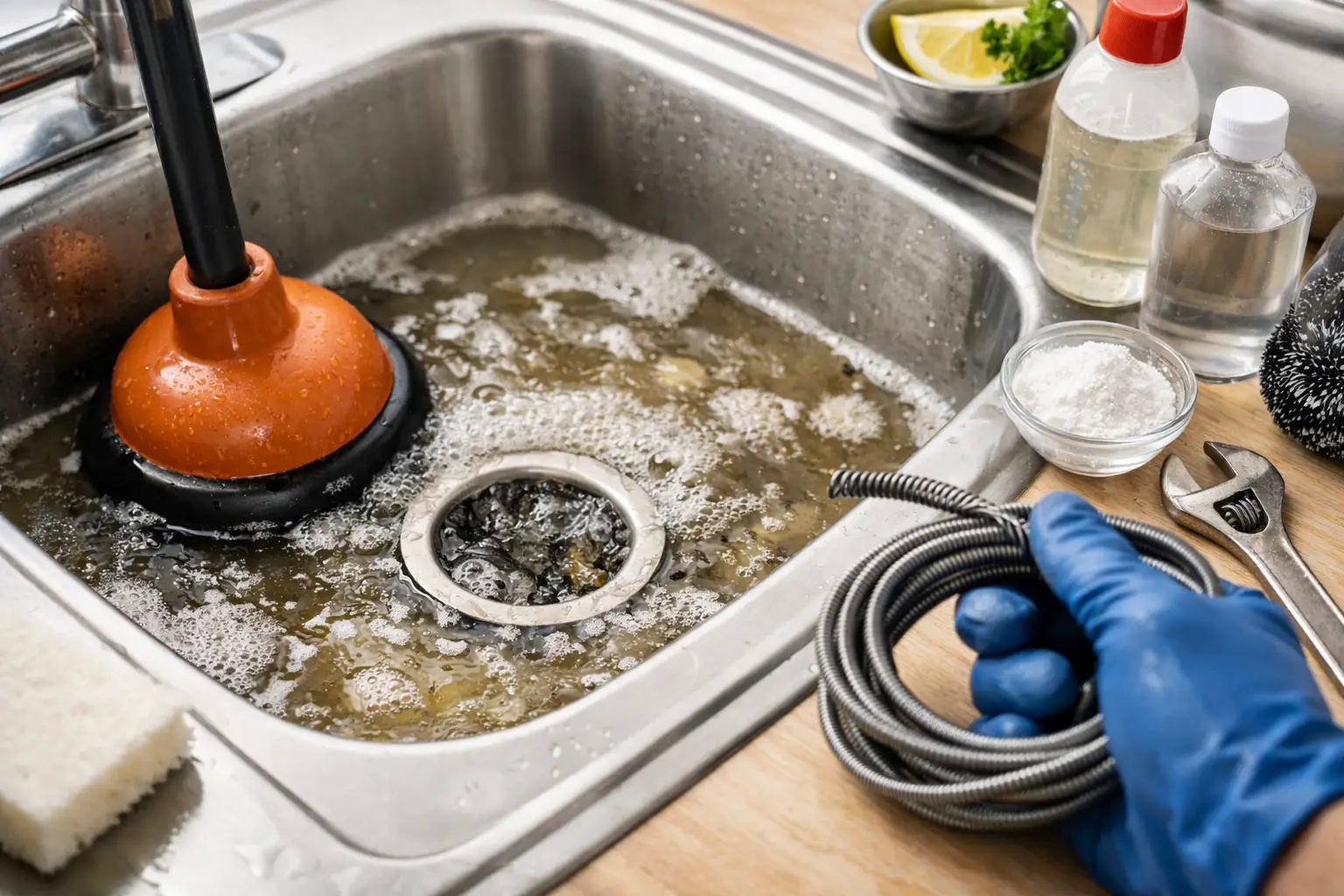
First, remove any standing water so you can work safely. Check the sink strainer and clear out visible debris. If you have a double-bowl sink, seal one side and plunge the other. A sink plunger works better than most people expect when the clog is close to the opening. If you have a dishwasher connected to the same drain, make sure the dishwasher hose and knockout at the disposal connection are not part of the issue.
If you have a garbage disposal, turn off power to the unit before inspecting it. Use the reset button if needed, and only use tools recommended for freeing the impeller. Never put your hand into the disposal.
You can also remove and clean the P-trap if you are comfortable doing basic cleanup under the sink. Put a bucket underneath first. Many kitchen clogs collect right there. If the trap is packed with grease and debris, cleaning it may restore normal flow. If the trap is clear, the blockage is farther down the line.
Hot water can help with light grease buildup, but only in limited cases. It is not a cure for a heavy clog. And if you have PVC piping, boiling water is not a good idea. Very hot tap water used carefully is safer than dumping a pot of boiling water down the drain.
What not to do when the sink is backed up
Chemical drain cleaners cause more problems than they solve. They often sit on top of standing water without fully clearing the blockage, and they can damage certain pipes, create a hazard under the sink, and make later service more dangerous. If the drain has to be opened by hand after chemicals were poured in, that becomes a safety issue.
Do not keep running the dishwasher into a backed-up sink. That can push more water and debris into an already overloaded line and create a mess in the kitchen.
It is also smart not to overuse small hand augers if you are unsure of the drain layout. In some cases, homeowners push through soft buildup without actually clearing it, or they damage older piping and fittings under the sink. The drain may seem better for a day, then back up again.
When a kitchen sink clog needs professional drain cleaning
If plunging and trap cleaning do not solve it, the next step is not random trial and error. It is finding the exact location and type of blockage. That is the difference between a temporary improvement and a real repair.
Professional clogged kitchen sink drain cleaning usually starts with diagnosis. A plumber checks whether the issue is isolated to the sink, tied to the disposal, connected to the dishwasher branch, or developing farther down the kitchen line. In some homes, the problem is grease and sludge buildup. In others, it is a solid obstruction, a failing line, or a larger drainage issue affecting more than one fixture.
The right cleaning method depends on that diagnosis. A drain machine can break through certain blockages. In other cases, the line needs more complete cleaning to remove heavy grease from the pipe walls. If the clog keeps returning, camera inspection may be the smart next step because it shows whether the problem is buildup, damage, or poor drainage conditions in the line itself.
That process matters. A kitchen drain that is only punched open can clog again quickly if the pipe walls are still coated with grease.
Why recurring clogs should not be ignored
A repeat kitchen sink backup is not just inconvenient. Water can overflow into cabinets, damage flooring, and create hidden moisture issues. If homeowners keep trying one more bottle of drain cleaner or one more quick fix, they can lose time while the real problem gets worse.
Recurring clogs can also point to a larger branch line issue. If that line eventually blocks completely, wastewater may back up at the worst possible time - during dinner cleanup, dishwasher use, or a busy weekend morning. Fast service matters, but accurate diagnosis matters just as much.
That is why a structured service call is valuable. A licensed plumber should be looking at the full picture, not just trying to get water moving for the next few hours.
How to prevent the next kitchen drain blockage
Prevention is simple, but it has to be consistent. Grease should never go down the drain, even with hot water running. Wipe pans before washing them. Use sink strainers to catch food scraps. Put coffee grounds, eggshells, rice, pasta, and fibrous vegetable waste in the trash instead of the disposal.
Run plenty of water when using the garbage disposal, and let it continue for a few seconds after the grinding stops. That helps move debris through the line instead of letting it settle near the trap.
If your kitchen sink has a history of slow drainage, schedule service before it turns into a full backup. Early drain cleaning is usually simpler and less disruptive than dealing with an overflow or line failure.
What homeowners in older Albany-area homes should keep in mind
Not every kitchen sink clog is caused by one bad habit. In many homes, especially older ones, years of residue inside the drain line create a narrow path for water. A disposal added later, heavier kitchen use, or slight pipe deterioration can push the system past its limit.
That is why local experience matters. A plumber familiar with residential drain systems in Albany, Colonie, Troy, Delmar, and East Greenbush is more likely to spot when a kitchen drain problem is really part of a larger line condition. Trinity Plumbing & Drains approaches that kind of call the right way - diagnosis first, clear scope, and repair recommendations based on what is actually happening in the line.
The best next step when the sink will not drain
If the clog is minor, a plunger or trap cleaning may be enough. If the sink is fully backed up, keeps clogging, smells bad, or affects other fixtures, it is time to stop guessing. Kitchen drain problems tend to get more disruptive, not less, once buildup hardens or the blockage shifts deeper into the system.
The practical move is to get it checked before water ends up where it does not belong. A clean, code-compliant repair process and a clear explanation of what is wrong can save a lot of frustration. When your kitchen sink stops draining, the goal is not a temporary patch. It is getting the line cleaned correctly so you can use your kitchen normally again.