
Clogged Main Sewer Line? What to Do Fast
A clogged main sewer line can back up sinks, tubs, and toilets fast. Learn the warning signs, causes, and when to call for professional service.
When more than one drain starts acting up at the same time, you are usually not dealing with a simple clog. A clogged main sewer line can affect toilets, tubs, showers, and sinks across the house, and it can turn from annoying to damaging fast. If wastewater has nowhere to go, it may come back up through the lowest drains in the home.
That is why this problem needs a clear response, not guesswork. Some drain issues can wait a day or two. A main line blockage usually should not.
What a clogged main sewer line looks like
Most homeowners first notice something odd, not dramatic. A toilet may gurgle when the shower runs. A tub may fill with dirty water after you flush. A basement floor drain may start smelling bad or show standing water. These are strong signs the blockage is not limited to one fixture.
A clogged main sewer line often shows up in multiple places because every fixture drains into the same primary waste line. When that line is restricted, water looks for the lowest or easiest point to escape. In many homes, that means a basement drain, first-floor shower, or lower-level tub.
If only one sink is draining slowly, the clog may be local to that branch. If several fixtures are affected together, especially on the lowest level, the main sewer line is a much more likely cause.
Why this is more urgent than a normal drain clog
A backed-up kitchen sink is frustrating. A sewer backup is a sanitation problem. Wastewater can carry bacteria, create strong odors, damage flooring and drywall, and leave contamination behind even after the water is gone.
There is also the risk of hidden damage. If the line is partially blocked and pressure builds, weak joints or already damaged sections of pipe may start leaking underground or inside the structure. Waiting too long can turn a cleaning job into a repair job.
For homes in the Albany area, timing matters even more during heavy rain or spring thaw. If the system is already under stress, a sewer restriction can become a bigger problem quickly.
Common causes of a clogged main sewer line
The cause depends on the age of the home, the pipe material, and what has been going down the drains over time. In older neighborhoods around Albany, Colonie, Troy, Delmar, and East Greenbush, aging sewer lines are a common factor.
Tree roots are one of the biggest causes. Roots naturally seek moisture, and even a small crack or loose joint in the sewer line can attract them. Once inside, they expand and catch paper and waste until the line starts backing up.
Grease buildup is another common issue. Grease may leave the kitchen sink as a liquid, but it cools and sticks inside the pipe. Over time, it narrows the line and traps debris. Flushable wipes are another frequent culprit. Even when packaging says flushable, they do not break down like toilet paper and can contribute to serious blockages.
In some homes, the problem is pipe failure rather than a soft clog. A sagging section of pipe, a collapsed line, or heavy scale buildup inside older cast iron can restrict flow enough to create recurring backups. In that case, cleaning may restore service temporarily, but it will not solve the underlying issue.
What to do first if you think the main line is clogged
Start by stopping water use in the house. Do not keep flushing toilets or running sinks to test the problem. That usually makes the backup worse.
If sewage is coming up through a floor drain, tub, or shower, keep people and pets away from the area. Avoid direct contact with the water. If it is safe to do so, remove rugs, towels, or stored items nearby so they do not absorb contaminated water.
Then pay attention to what is happening. Are all fixtures affected or only those on one side of the house? Is the backup on the lowest level only? Did the problem come on suddenly, or has there been slow draining for weeks? That information helps narrow down whether the issue is a main line clog, a branch line blockage, or a sewer line defect.
What not to do
Do not pour chemical drain cleaner into a suspected main sewer blockage. These products are often ineffective on a full main line stoppage, and they can create a safety hazard for anyone who has to open the line later. They can also damage certain pipes.
Do not keep using a plunger fixture by fixture if multiple drains are involved. A plunger may help with a toilet or isolated sink clog, but it will not clear roots, heavy grease, or a blockage deep in the main line.
And do not assume the problem has passed just because the water slowly goes down. A partial main line clog can temporarily relieve itself, then back up again with the next load of laundry or shower.
How a professional diagnoses the problem
The right repair starts with the right diagnosis. That matters with sewer problems because the symptom and the actual cause are not always the same.
A professional will usually start by confirming whether the blockage is in the main sewer line or in a smaller branch line. From there, drain cleaning equipment may be used to open the line, but in many cases a sewer camera inspection is what shows the full picture. That camera can reveal root intrusion, pipe offsets, scale, bellies in the line, or a broken section of pipe.
This is where homeowners often save money in the long run by avoiding guesswork. If a line is simply clogged with buildup, cleaning may be enough. If the pipe is damaged, repeated snaking may only delay a proper repair.
How a clogged main sewer line is usually fixed
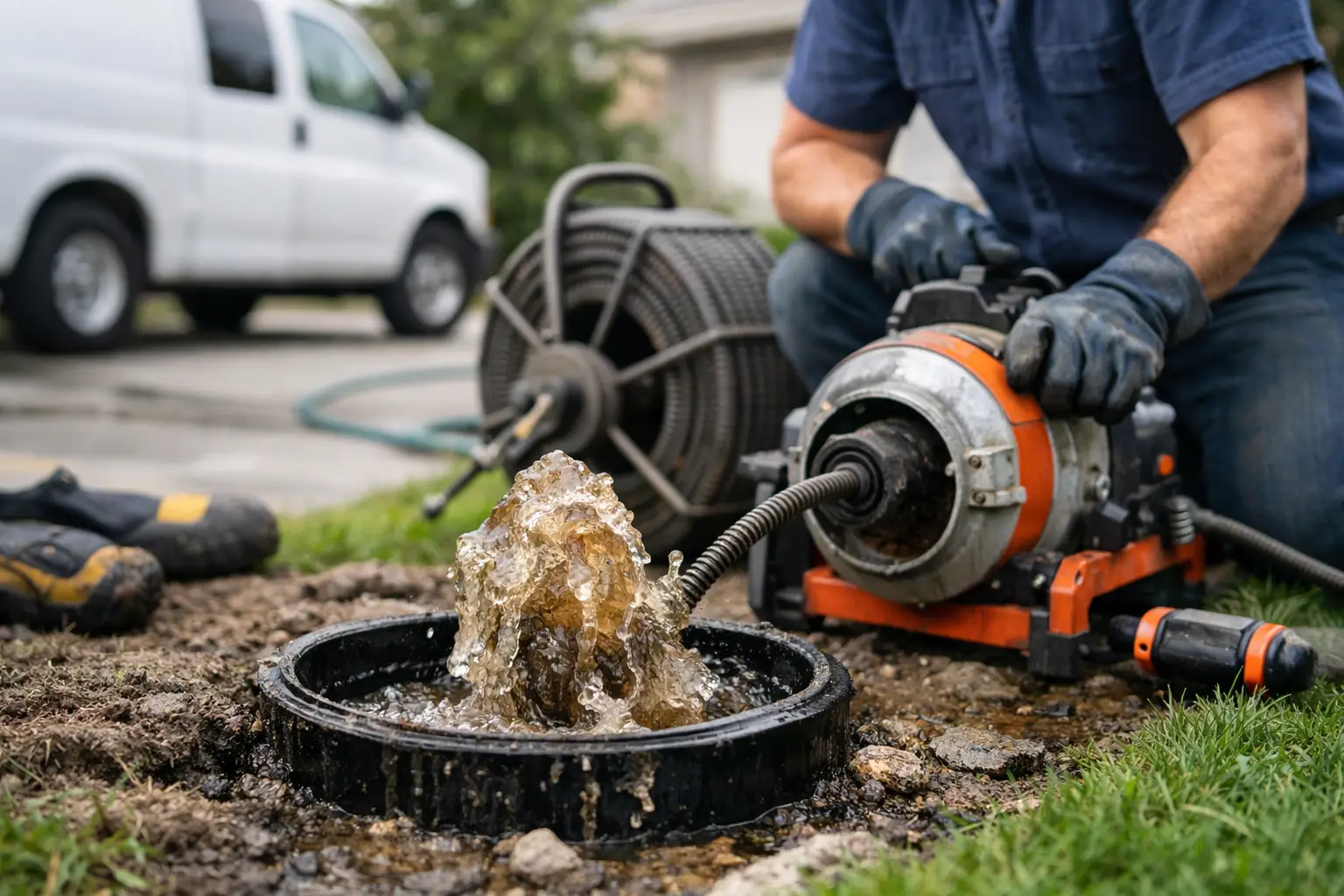
For soft blockages or typical debris buildup, professional drain cleaning may restore flow. For grease, sludge, or heavy accumulation along the pipe walls, hydro jetting may be the better option because it clears more of the line, not just a path through the middle.
If roots are the issue, mechanical root cutting may open the line, but that is often only part of the solution. If roots entered through cracks or separated joints, the line may need repair or replacement to prevent the problem from returning.
If the camera shows a collapsed section, a severe belly, or major pipe deterioration, cleaning will not solve it. At that point, the repair plan depends on pipe condition, access, depth, local code requirements, and whether the damaged section is inside or outside the home.
When emergency service makes sense
Not every drain issue is an emergency, but some sewer line problems clearly are. If sewage is actively backing up into the home, if multiple fixtures are unusable, or if the only working bathroom is affected, fast service is the practical move.
The same is true if you have a finished basement, vulnerable flooring, or stored items that could be damaged by contaminated water. Waiting until morning may save a service fee, but it can cost much more in cleanup and restoration.
A company with a structured diagnosis-first process can tell you quickly whether the line needs immediate cleaning, further camera inspection, or a repair plan. That is a much better outcome than trying random fixes while wastewater keeps rising.
Can you prevent it from happening again?
Sometimes yes, sometimes only partly. Good habits help, but they do not fix aging pipe or root-prone sewer lines.
The basics still matter. Do not flush wipes, paper towels, hygiene products, or grease. Be cautious about what goes through kitchen and bathroom drains. If your home has had sewer issues before, periodic maintenance cleaning or inspection may make sense, especially in older properties.
If roots have already been found in the line, prevention may involve more than careful drain use. You may need regular service intervals or a permanent pipe repair. That depends on how severe the intrusion is and what the camera inspection shows.
Why homeowners should take the warning signs seriously
A main sewer problem rarely improves on its own. More often, it gives small warnings first and bigger consequences later. Gurgling fixtures, repeated slow drains, sewage odor near the basement, and backups at the lowest drain are all signs worth acting on early.
For homeowners who want fast, code-compliant plumbing service without the runaround, the best next step is a direct one: get the line properly diagnosed and stop the guesswork before a clogged main sewer line turns into a bigger cleanup and repair problem.
If your drains are backing up in more than one place, trust what the house is telling you and deal with it before the next flush makes the decision for you.