
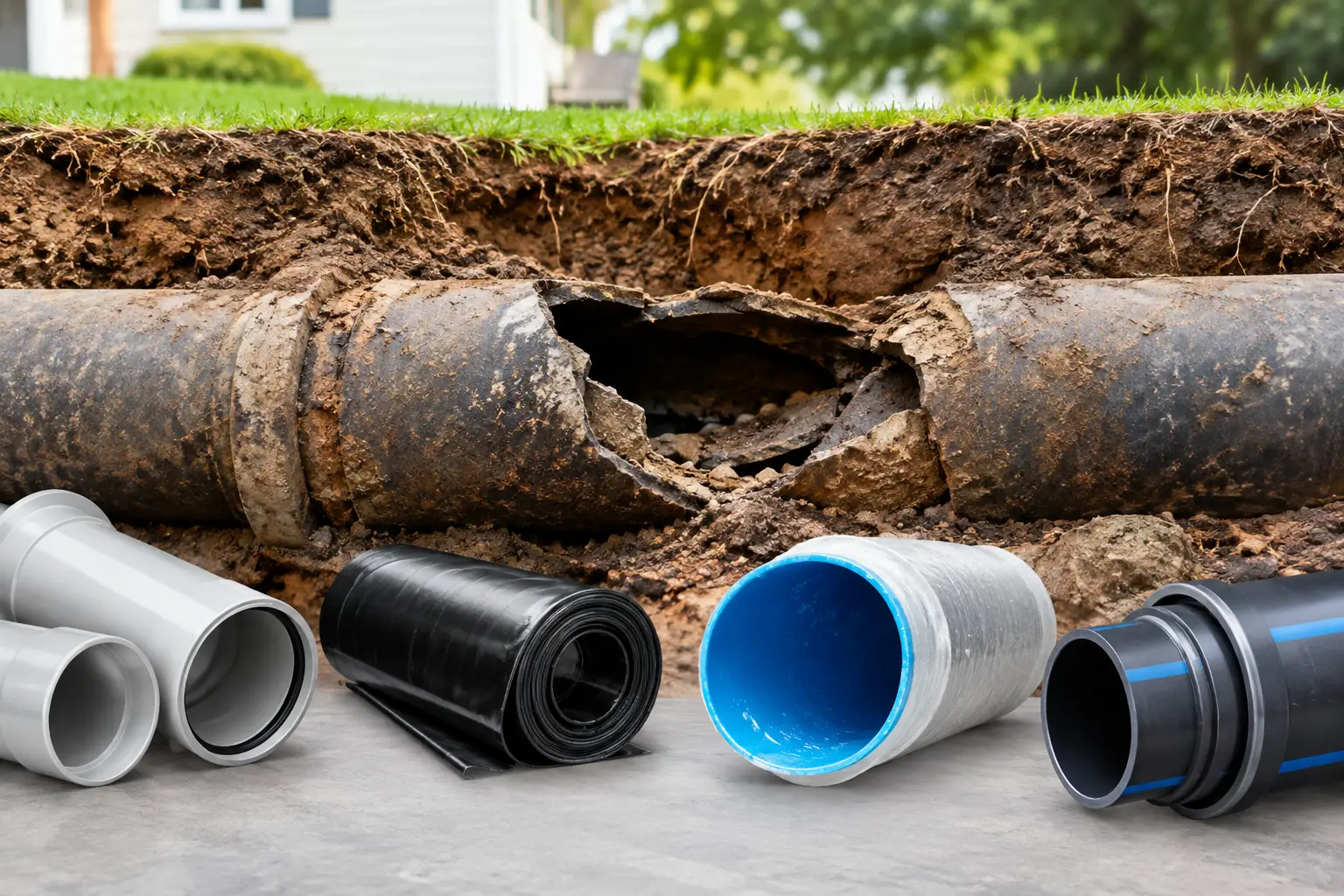
Collapsed Sewer Pipe Signs and Repair Options
A collapsed sewer pipe can cause backups, odors, and yard damage. Learn the warning signs, repair options, and when Albany homeowners should call now.
A toilet backing up is stressful. A sewer smell in the basement or a wet, sunken patch of lawn can be worse because the problem is often outside the home and out of sight. A collapsed sewer pipe stops wastewater from moving to the municipal sewer or septic system, and it requires prompt professional diagnosis. Waiting can turn a restricted drain into a sewage backup, property damage, and a much larger repair.
For homeowners in Albany, Colonie, Troy, Delmar, and East Greenbush, the right next step is not guessing or repeatedly pouring drain cleaner down a fixture. The sewer line needs to be evaluated to confirm where the failure is, how severe it is, and whether repair or replacement is the practical long-term answer.
What Is a Collapsed Sewer Pipe?
Your main sewer line carries wastewater from sinks, showers, toilets, washing machines, and other plumbing fixtures out of the house. When that pipe cracks, shifts apart, caves in, or becomes crushed, wastewater and solids cannot move through it normally. Depending on the damage, the line may be completely blocked or may allow limited flow until toilet paper, grease, or other debris catches at the damaged section.
A collapse is different from an ordinary clog. A clog can often be cleared with professional drain cleaning. A collapsed section has a structural problem in the pipe itself. Clearing the line may restore flow temporarily, but the same trouble will return until the damaged pipe is repaired.
Older homes are more likely to have clay, cast iron, Orangeburg, or deteriorated metal sewer piping. These materials can fail after decades underground. However, newer PVC lines are not immune. Poor installation, ground movement, vehicle traffic, or severe root pressure can damage newer pipe as well.
Signs of a Collapsed Sewer Pipe
One slow drain does not automatically mean the main sewer line has failed. A slow bathroom sink, for example, may be a local blockage. The concern rises when several fixtures act up at once or the lowest drains in the house begin backing up.
Multiple drains are slow or backing up
If flushing a toilet makes water rise in a shower, or running the washing machine causes a basement floor drain to overflow, the issue may be in the main sewer line. Wastewater follows the path of least resistance. When the main line is obstructed, it often comes back through a lower-level fixture first.
Sewage odors persist indoors or outside
A damaged sewer line can release sewer gas through the soil, basement, crawl space, or yard. A brief odor near a drain may have a simple cause, such as a dry trap. Persistent sewage odors, especially alongside slow drains or backups, deserve immediate attention.
The yard has wet spots, sinkholes, or unusually green grass
A leaking or collapsed underground sewer pipe can saturate the soil. You may notice a soft area in the yard, a low spot forming over the line, or one strip of grass growing faster and greener than the surrounding lawn. Do not walk on a suspected sinkhole or try to fill it before the source is identified.
The same sewer clog keeps returning
If a line is professionally cleared and clogs again within weeks or months, there may be root intrusion, a separated joint, pipe scale, a belly in the line, or a collapsed section. Repeated drain cleaning without a camera inspection can become expensive without solving the underlying problem.
Why Sewer Lines Collapse in the Capital Region
Sewer pipes work underground for many years, but soil, water, age, and seasonal conditions take a toll. In the Albany area, freeze-thaw cycles can contribute to soil movement. A small crack or offset joint can worsen as the ground shifts around the pipe.
Tree roots are another common issue. Roots naturally seek moisture and can enter older pipe joints or cracks. Over time, roots can create a heavy blockage and put pressure on weakened pipe. Root cutting can be effective when the pipe is still structurally sound, but it is not a permanent fix for a line that is broken or crushed.
Age also matters. Cast iron can corrode from the inside, leaving rough scale that catches debris and thins the pipe wall. Clay pipe joints can separate. Orangeburg pipe, used in some older properties, can deform and deteriorate. Construction activity, settling soil, and vehicle loads near the sewer route can also crush or displace a line.
What to Do When You Suspect a Sewer Line Failure
First, stop using water when multiple fixtures are backing up. Do not run the dishwasher, washing machine, shower, or additional toilet flushes. More water can force sewage onto floors, into a basement, or through a lower drain.
Keep children and pets away from contaminated water. Sewer backups can contain harmful bacteria. If sewage has entered the home, avoid direct contact, ventilate the area if possible, and arrange for professional service promptly. If you have a sewer cleanout outside or in the basement, do not remove its cap unless you know it is safe to do so. A blocked line can release pressurized sewage at the opening.
Skip chemical drain cleaners. They will not repair a collapsed pipe, may not reach the actual blockage, and can create a safety hazard for anyone servicing the line afterward. A diagnosis-first approach is faster and safer than trying several store-bought products.
Collapsed Sewer Pipe Repair Options
The correct repair depends on the location, pipe material, depth, amount of damage, and whether the line has enough sound pipe remaining to support a trenchless method. A professional camera inspection is the starting point because it shows what is actually happening inside the line.
Spot repair
When damage is limited to one accessible area, a targeted excavation and pipe replacement may be the best value. The damaged section is removed and replaced with approved new pipe, then the line is tested before the excavation is restored. This approach makes sense when the rest of the sewer line is in good condition.
Full sewer line replacement
A line with multiple breaks, widespread corrosion, severe root damage, or failing older material may need full replacement. This is more involved, but it can prevent repeated excavation and service calls. The work should account for proper pipe slope, cleanouts, local code requirements, and any permits required for the property.
Trenchless repair or replacement
In some situations, trenchless methods can reduce disturbance to landscaping, driveways, patios, or walkways. Pipe lining may be an option for certain cracks or deteriorated sections when the existing pipe is still open enough and structurally suitable. Pipe bursting may replace some lines with less excavation than conventional digging.
These methods are not automatic answers. A fully crushed pipe, major offset, severe belly, or inaccessible connection may require excavation. A reliable plumber should explain why a particular method fits the conditions instead of selling one repair approach for every sewer problem.
How a Proper Sewer Diagnosis Works
A professional sewer service call should begin with the symptoms: which fixtures back up, when it happens, whether the problem is recurring, and where wastewater appears. From there, the line may be mechanically cleared enough to allow a sewer camera inspection.
The camera identifies conditions such as root intrusion, standing water, cracked pipe, offsets, corrosion, bellies, or a collapse. A locator can help mark the problem area from above ground, reducing unnecessary digging. This information allows the repair scope to be defined clearly before work begins.
For a major sewer repair, homeowners should expect straightforward communication about access, excavation, pipe replacement, cleanup, permits when required, and what will be restored afterward. The lowest bid is not always the lowest total cost if it skips diagnosis, uses unclear scope language, or leaves code compliance unanswered.
When to Treat It as an Emergency
Call for immediate help when sewage is actively backing up into the home, a basement drain is overflowing, or toilets cannot be used without causing wastewater to rise elsewhere. The same urgency applies if a suspected sewer leak is creating a dangerous sinkhole or pooling contaminated water in the yard.
A slow but stable drain issue can sometimes be scheduled during regular service hours. Even then, do not let recurring main-line clogs continue unchecked. Early inspection can catch a failing sewer line before it becomes a weekend backup or a damaged finished basement.
A sewer problem is disruptive, but the repair process does not have to be confusing. Trinity Plumbing & Drains provides clear diagnosis, defined repair options, and code-compliant sewer work so homeowners can make the right decision without the runaround. If the warning signs are present, act before the next load of laundry or toilet flush turns a hidden pipe failure into a cleanup problem.