
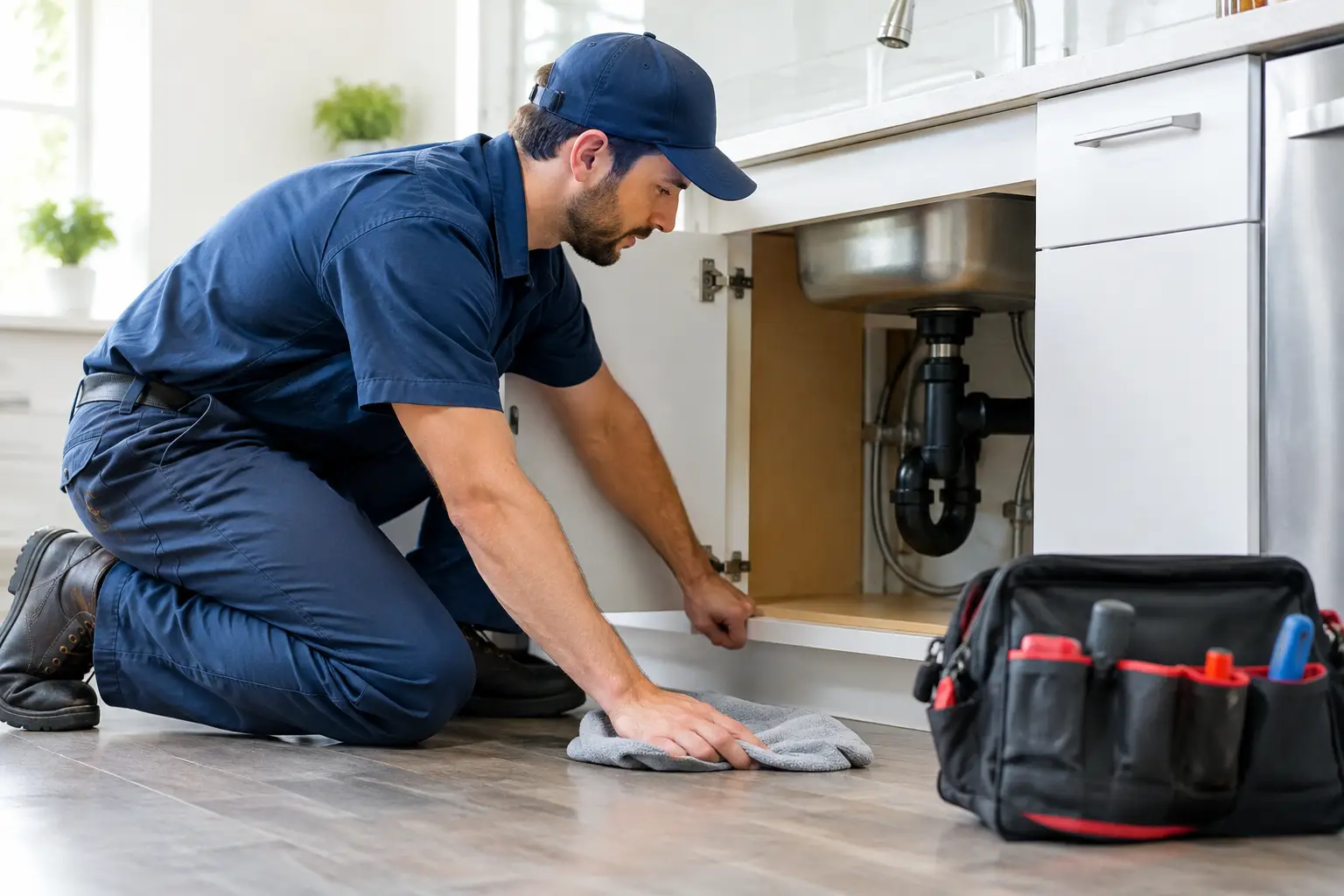
Do Plumbers Clean Up After Work? What to Expect
Do plumbers clean up after work? Learn what professional cleanup includes, what to expect after repairs, and how to protect your Albany home from messes.
A burst pipe, backed-up drain, or failed water heater creates enough stress without leaving you to deal with muddy floors, pipe scraps, and a sink full of debris afterward. So, do plumbers clean up after work? A professional residential plumber should leave the work area reasonably clean, remove job-related debris, and make sure you understand what was repaired before they leave.
That does not mean every plumbing visit ends with your home looking untouched. Emergency repairs can involve wet areas, opened walls, excavated soil, or old sewer piping. The real standard is simple: the plumber should take practical steps to protect your home, contain the mess, clean up what their work created, and clearly explain any remaining restoration work.
Do Plumbers Clean Up After Work?
Yes, reputable plumbers generally clean up after themselves. Clean jobsite practices are part of professional service, not an optional extra. A technician entering your Albany-area home should use protective coverings where appropriate, keep tools and materials organized, collect visible debris, and wipe down the immediate work area when the repair is complete.
The exact level of cleanup depends on the job. Replacing a toilet fill valve is very different from clearing a sewer backup or opening a ceiling to find a leaking pipe. In both cases, however, you should not be left with discarded fittings, packaging, sharp pipe sections, or avoidable grime caused by the repair.
A clean finish also helps protect your home. Loose screws can damage flooring or create a hazard for children and pets. Drain-cleaning residue left on a bathroom surface can stain it. Water tracked through the house can spread contamination after a sewage-related backup. Careful cleanup is part of doing the job correctly.
What Professional Plumbing Cleanup Usually Includes
For a typical repair, cleanup starts before the first wrench turns. The plumber may lay down floor protection, use shoe covers, place a bucket or absorbent material under the work area, and stage tools to limit traffic through your home. These small steps matter most during urgent calls, when there is a lot happening quickly.
Once the repair is complete, a professional crew will generally remove the old part, packaging, cut pipe, and other materials generated by the work. They should pick up visible debris from the immediate area, wipe up water associated with the repair, and return accessible fixtures or access panels to a safe, usable condition.
For drain and sewer service, technicians should contain wastewater and residue as much as possible. If a clog has forced water onto the floor, they may remove the immediate mess and advise you if additional cleaning or disinfection is needed. Sewer-contaminated water is not a normal household spill. Depending on how far it spread and what materials were affected, professional remediation may be the safer next step.
After work on a water heater, sump pump, or gas line, cleanup includes more than appearances. The area should be free of loose materials, and the system should be tested for proper operation and safety. A clean mechanical-room floor is good. Confirming that the equipment works, connections are secure, and code requirements are addressed is better.
What Cleanup Does Not Always Cover
Homeowners should understand the difference between plumbing cleanup and full restoration. A plumber repairs the pipe, drain, fixture, or equipment causing the problem. If the repair required cutting drywall, removing tile, opening a ceiling, or digging in the yard, the final cosmetic repair may be a separate service.
For example, a leak inside a wall may require an access opening. The plumber should make the opening as controlled as practical, remove the damaged plumbing, and clear the work debris. Patching, painting, and matching the wall texture are typically handled by a restoration contractor, drywall professional, or homeowner unless that work was specifically included in the scope.
The same applies outdoors. A sewer line repair may require excavation. The crew should manage the site responsibly, remove construction debris, and leave it in the condition described in your estimate. But final landscaping, sod replacement, or driveway restoration may take place later or require a different contractor. Ask before work begins so there are no surprises.
Cleanup also cannot erase damage that happened before the plumber arrived. If a pipe leak soaked flooring for hours or a sewer backup affected finished basement materials, there may be water damage, odors, or contamination that requires specialized restoration. Fast plumbing repair limits the damage. It does not always eliminate every consequence of the original failure.
Ask About Cleanup Before the Job Starts
The best time to discuss cleanup is during the initial diagnosis and estimate, especially for larger repairs. A straightforward plumbing company will explain what needs to be opened, removed, tested, or excavated. They should also tell you what they will haul away and what will need follow-up work.
You do not need technical plumbing knowledge to ask clear questions. Ask whether floor protection will be used, whether old equipment or damaged pipe will be removed, and whether the quoted work includes basic cleanup. If there is a possibility of wall, ceiling, flooring, or yard disturbance, ask who handles restoration and whether it is included in writing.
This is particularly useful for emergency calls. When water is actively leaking or a drain is backing up, stopping the immediate problem comes first. Once the home is protected, a professional should slow down enough to explain the repair path, the expected mess, and the next steps. Clear communication prevents the frustration of discovering a hidden access opening or restoration need after the crew has left.
Signs a Plumber Takes Your Home Seriously
Clean workmanship usually shows up throughout the service call, not only at the end. The technician arrives prepared, identifies the source of the problem before recommending a major repair, and keeps the work area controlled. They explain the scope, provide clear options when options exist, and avoid treating your home like a construction dumpster.
Licensed, insured plumbing professionals also understand that safe work and clean work are connected. They secure gas-line connections, test water and drain repairs, and follow applicable codes instead of rushing out the door. They do not hide a problem behind a cosmetic cleanup or leave you guessing whether the system was actually repaired.
At Trinity Plumbing & Drains, the focus is diagnosis-first service, code-compliant repairs, and a clean, organized process from arrival through final testing. For homeowners in Albany, Colonie, Troy, Delmar, and East Greenbush, that means clear expectations when a repair involves water, drains, sewer lines, water heaters, sump pumps, or gas piping.
How Homeowners Can Make Cleanup Easier
You should not have to prepare your house like a jobsite, but a little access helps the visit go faster and keeps the work contained. Clear items from under the affected sink, around the water heater, or near the basement drain if it is safe to do so. Keep pets and children away from the work area, particularly during drain or sewer service.
If there has been active leaking, move valuables, rugs, or electronics away from the area when possible. Do not attempt to clean a sewage backup with ordinary household methods if contamination is widespread. Limit contact, keep people away from the area, and tell the plumber exactly where the water traveled.
Before the technician leaves, take a minute to inspect the immediate work area and ask what was repaired. Confirm whether the water, drain, heater, or sump pump was tested. If a wall opening, damp material, or exterior excavation remains, ask what happens next and whether you need a restoration professional. This is not being difficult. It is part of protecting your home.
A plumbing repair should solve a problem, not create a second one. When you hire a professional, expect careful work, honest communication, and a reasonable cleanup that matches the scope of the job. If you are facing an urgent plumbing issue, choose a company that treats both the repair and your home with the attention they deserve.