
Gas Line Leak Repair: What Homeowners Should Do
Gas line leak repair starts with fast action and proper diagnosis. Learn the warning signs, repair process, safety steps, and when to call a pro.
That sulfur smell near the stove, furnace, or basement is not a wait-and-see problem. Gas line leak repair needs to happen fast, and it needs to be handled the right way. For homeowners in Albany, Colonie, Troy, Delmar, and East Greenbush, the biggest priority is simple: protect your household first, then get the leak properly diagnosed and repaired.
Natural gas leaks can range from small fitting failures to damaged branch lines, appliance connector problems, or corrosion in older piping. Some leaks are obvious. Others show up as a faint odor, a hissing sound, or an unexplained spike in gas usage. Either way, this is not the kind of repair to guess at, patch temporarily, or hand off to someone who is not qualified to work on gas piping.
When gas line leak repair becomes urgent
If you smell gas inside the house, urgency matters. Natural gas is combustible, and even a minor leak can create a serious safety risk in an enclosed space. The right response depends on how strong the odor is and whether there are other warning signs, but the general rule is straightforward: do not ignore it.
If the smell is strong, leave the house immediately. Do not flip light switches, use garage door openers, light matches, start vehicles in attached garages, or do anything that could create a spark. Once you are at a safe distance, contact the gas utility and emergency services if needed. After the immediate hazard is addressed, a licensed plumber or gas line specialist can inspect the system and make code-compliant repairs.
If the smell is faint or limited to one area, homeowners sometimes assume it is coming from a pilot light issue or a recent appliance use cycle. Sometimes that is true. Sometimes it is a loose union, a failing shutoff valve, or a connector line that has started leaking. That is exactly why diagnosis comes first. You need to know where the leak is, what caused it, and whether the problem is isolated or part of a larger issue with the gas piping.
Common signs you may need gas line leak repair
The most obvious sign is the rotten egg smell added to natural gas for detection. A hissing or whistling noise near a gas pipe, valve, or appliance connection can also point to a leak. Some homeowners notice dead vegetation along an exterior gas line route, bubbling in wet ground, or persistent symptoms like headaches and dizziness when inside the home.
There are also less obvious cases. An aging basement gas line may develop corrosion around threaded joints. A furnace shutoff may start leaking slowly. A flexible connector behind a range may get damaged during an appliance move. In older homes, previous work may not meet current code, and that can create both leak risks and repair complications.
The challenge is that symptoms do not always tell you the size of the problem. A small odor can still come from a dangerous location. A stronger odor does not always mean the whole system needs replacement. The only reliable path is a hands-on inspection with leak detection methods that identify the source before any repair work is approved.
What causes gas line leaks
Most residential gas leaks come from failed fittings, pipe corrosion, damaged connectors, or poor previous installation. Threaded black iron gas pipe can last a long time, but not forever. Moisture, age, vibration, and movement around appliances can all take a toll over time.
Repairs or renovations can also create problems. A line may get bumped, stressed, or improperly reconnected during work on a stove, dryer, water heater, or furnace. In some homes, outdoor exposure, soil conditions, or settling can affect buried or exterior gas piping. The cause matters because the right repair for a leaking appliance connector is not the same as the right repair for a corroded hard pipe in the basement.
That is why responsible gas line work is not just about stopping the smell. It is about identifying the failed component, checking nearby piping and connections, and making sure the repaired section is safe to put back into service.
How professional gas line leak repair works
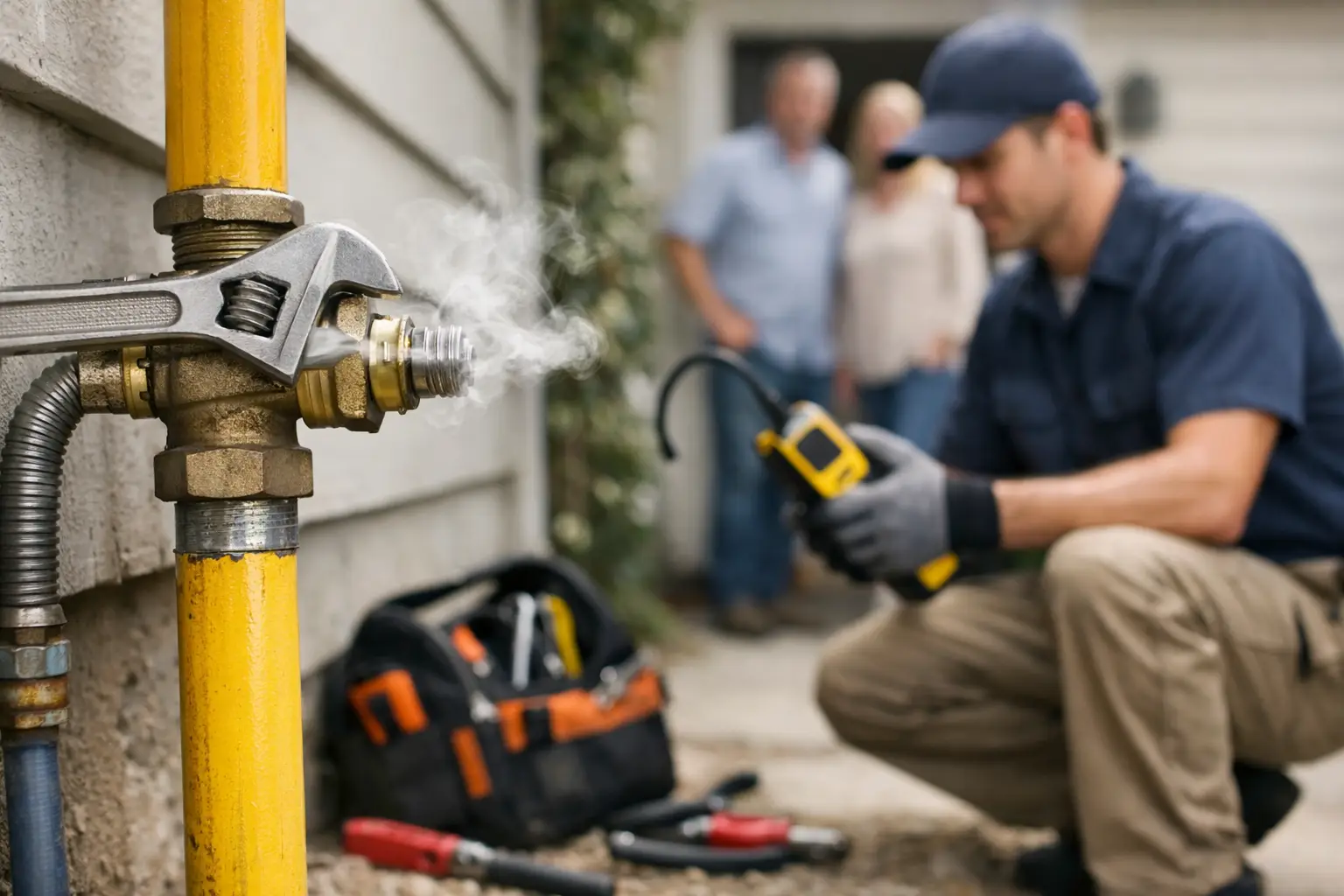
A proper service call starts with safety and diagnosis. The first step is confirming whether there is an active leak and locating it accurately. Depending on the situation, that may involve visual inspection, pressure testing, gas detection equipment, or leak solution at specific fittings and joints.
Once the source is identified, the repair scope should be clearly explained. In some cases, the fix is limited to one fitting, valve, or appliance connection. In others, a larger section of pipe needs to be replaced because corrosion or damage makes spot repair unreliable. Good service is not about overselling a full repipe when a targeted repair will do the job. It is also not about forcing a cheap fix onto a line that should really be replaced.
After the repair is completed, the system should be tested again before it is restored to normal use. That matters for safety, code compliance, and peace of mind. Homeowners should know what was repaired, why it failed, and whether any additional corrections are recommended.
For some jobs, permits or inspections may be required depending on the work performed and local code requirements. That is another reason to hire properly. Gas work is not an area where shortcuts help the homeowner.
Gas line leak repair vs. gas line replacement
Not every leak means the entire gas line has to be replaced. If the issue is isolated to a shutoff valve, union, sediment trap connection, or appliance connector, a focused repair may be enough. When the rest of the piping is in solid condition, that is often the most practical and cost-effective solution.
Replacement becomes the better option when the pipe shows widespread corrosion, multiple leaks, physical damage, improper sizing, or old work that does not meet code. If one section has failed because the system is at the end of its service life, repairing one leak today may only buy a little time before another problem shows up. In that case, replacement can save money and disruption over the long run.
This is where experience matters. Homeowners need a straight answer, not a guess. A qualified plumber should be able to explain whether the issue is localized or systemic and what trade-offs come with each option.
Why DIY is a bad bet
Homeowners can handle many basic maintenance tasks around the house. Gas piping is not one of them. A repair that looks simple on the surface can fail pressure testing, violate code, or create a hidden leak that does not show up until later. Even something as basic as tightening the wrong connection or using the wrong sealant can make the situation worse.
There is also the issue of proper isolation, testing, and safe restoration of service. Gas systems need to be worked on carefully and verified after the repair. If the leak involves an appliance, the problem may be in the connector, shutoff, control, or nearby hard piping. Guesswork is what creates repeat service calls and unnecessary risk.
For homeowners, the practical takeaway is simple. If you suspect a gas leak, focus on safety first and call a qualified professional for diagnosis and repair.
Choosing the right plumber for gas line leak repair
When you call for service, look for a company that treats the job like a safety issue, not just another small plumbing visit. You want a licensed, insured professional who can diagnose the leak, explain the repair clearly, and complete the work to code. Clean workmanship, proper testing, and clear communication matter just as much as speed.
In urgent situations, fast response is important, but fast should not mean rushed. The right company will tell you what they found, what needs to be repaired now, and whether anything else should be monitored or corrected. That kind of process reduces confusion and helps homeowners make the right decision under stress.
Trinity Plumbing & Drains approaches gas line service the same way it handles other high-consequence home repairs: diagnose first, define the scope clearly, and complete the work safely without the runaround.
What to do right now if you suspect a leak
If you smell a strong gas odor, get everyone out and call for emergency help from a safe location. If the concern is less immediate but you suspect a leak near an appliance or exposed pipe, stop using that area and arrange for prompt inspection. Do not test it yourself with open flame, do not assume the smell will pass, and do not put off the call until tomorrow just because the system is still running.
Gas line problems reward quick action. The sooner the leak is found, the more controlled the repair usually is, and the better the chances of avoiding damage, disruption, or a dangerous escalation. If something smells off, trust that instinct and get it checked properly.