
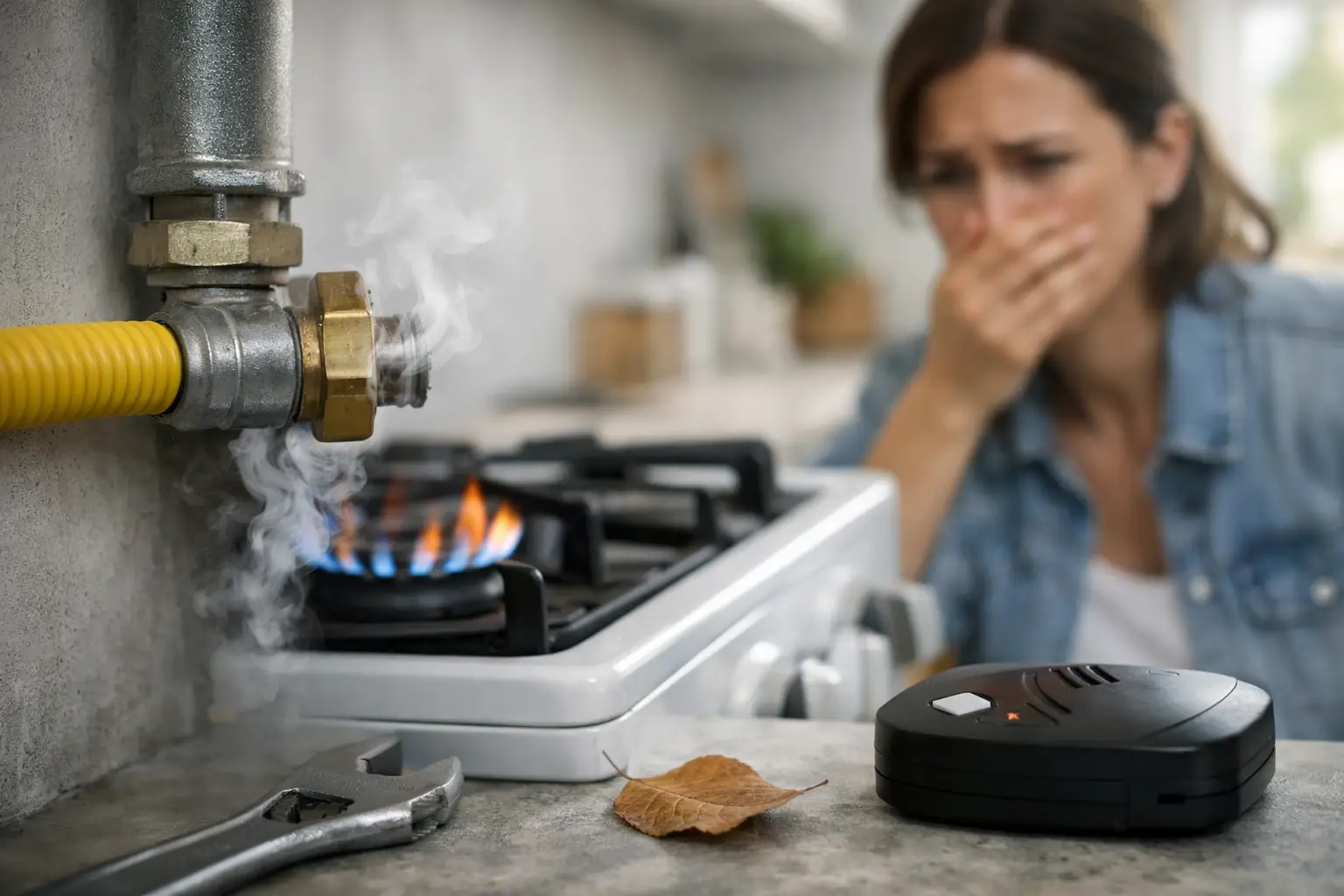
9 Gas Line Leak Warning Signs at Home
Learn the top gas line leak warning signs at home, what they mean, when to leave immediately, and when to call for fast licensed repair.
A gas leak usually does not start with a dramatic event. More often, it starts with a smell near the stove, a faint hissing sound by an appliance, or a utility bill that suddenly makes no sense. Knowing the gas line leak warning signs can help you act early, protect your family, and avoid a much bigger repair.
Natural gas is efficient and reliable, but a leak is a safety issue, not a wait-and-see problem. If you think gas may be escaping in your home, your first job is not diagnosis. Your first job is safety. Leave the area, avoid using switches or electronics, and call for help from a safe location.
The most common gas line leak warning signs
The strongest warning sign is the smell of sulfur or rotten eggs. Utility companies add this odor to natural gas so leaks are easier to detect. If that smell is strong indoors or keeps coming back in one area, take it seriously.
A hissing or whistling sound near a gas line, shutoff valve, water heater, furnace, or stove can also point to escaping gas. Small leaks are not always loud, so the absence of noise does not rule anything out.
You may also notice physical symptoms in people or pets. Headaches, dizziness, nausea, fatigue, or trouble breathing can sometimes happen when gas is leaking into an enclosed space. These symptoms can have other causes, but if they improve once you leave the house, that is a major red flag.
Dead or discolored vegetation outside is another sign homeowners miss. If a buried gas line is leaking, a patch of grass or plants above that line may turn brown for no obvious reason. In some cases, you may also see dirt blowing upward or bubbling in standing water.
Pilot lights that frequently go out, weak burner flames, or gas appliances that stop working properly can also signal a supply issue. That does not always mean there is a leak in the home, but it does mean the system needs attention.
An unexplained increase in your gas bill belongs on the list too. Higher usage during cold weather is normal. A sharp jump without a clear reason is not. If your habits have not changed and the bill has, something should be checked.
When a gas smell means leave now
Some situations call for immediate evacuation, not troubleshooting. If the odor is strong, if multiple rooms smell like gas, if anyone feels sick, or if you hear active hissing near a line or appliance, get everyone out right away. That includes pets.
Do not flip light switches on or off. Do not use a garage door opener. Do not start a car in an attached garage. Do not try to locate the exact source with a flashlight on your phone if you are already inside a suspect area. Even small sparks can create a serious hazard.
Once you are outside and at a safe distance, call the gas utility and emergency services if needed. After the immediate safety response, a licensed plumber with gas line experience can diagnose the cause, define the repair scope, and make code-compliant repairs.
Gas line leak warning signs near specific appliances
Different parts of the house can show different symptoms. Around a stove or range, the smell may be strongest when the appliance is off, which can suggest a valve, connector, or fitting problem. With a water heater, you may notice odor near the base of the unit or around the shutoff area.
At a furnace, symptoms can overlap with normal heating issues, which is where homeowners get stuck. A system that struggles to ignite, cycles oddly, or gives off unusual odor should be checked carefully. The problem may be a gas supply issue, a failing component, or a venting problem. It depends on what the technician finds during diagnosis.
Dryers, fireplaces, and outdoor grills connected to house gas lines can also develop leaks at flexible connectors, valves, or transition fittings. In many homes, these are the areas where aging parts, past DIY work, or movement of the appliance causes trouble.
What causes residential gas leaks
Not every leak comes from an old pipe. Flexible appliance connectors wear out. Fittings can loosen over time. Shutoff valves can fail. Corrosion may affect exposed piping in basements or utility spaces. Remodeling work, foundation movement, or improper installation can also create weak points in the system.
In older homes around Albany and nearby communities, previous repairs are often part of the story. We regularly see situations where a line was extended, capped, or relocated years ago without the level of testing and code review that should have happened. The leak may not show up until much later.
Weather can also play a role. Seasonal temperature swings, freeze-thaw cycles, and movement around the home can put stress on gas piping and fittings, especially where lines pass through walls or connect to appliances.
What not to do if you suspect a gas leak
Homeowners sometimes make a dangerous situation worse by trying to confirm the leak themselves. Do not use an open flame to test anything. Do not tighten fittings if you are not trained to work on gas piping. Do not assume a mild smell means it can wait until next week.
It is also a mistake to rely on smell alone as a long-term screening method. Some people detect gas odor strongly, while others barely notice it. If the warning sign is intermittent, that can be even harder to judge. A proper diagnosis uses testing, inspection, and a clear process to determine where the leak is and what repair is actually needed.
How a licensed plumber checks for a gas leak
A professional gas line service call should start with safety and diagnosis, not guesswork. First, the system is evaluated based on the symptoms you noticed, the appliance locations involved, and whether the utility has already shut gas off.
From there, the plumber may isolate sections of piping, inspect appliance connectors and shutoff valves, and test the system for pressure loss or active leakage. The exact method depends on the type of line, how the home is laid out, and whether the issue appears to be at an appliance connection or in the house piping itself.
This is where experience matters. The goal is not just finding a leak. The goal is identifying the full repair scope so the fix is safe, code-compliant, and less likely to turn into another callback a month later.
Repair or replace - what makes sense?
Sometimes the repair is straightforward, like replacing a failed connector, valve, or damaged fitting. Other times, replacement is the smarter option, especially if corrosion is widespread, the line material is outdated, or multiple sections show wear.
There is no honest one-size-fits-all answer here. A small isolated leak does not automatically mean the whole gas line system needs replacement. On the other hand, patching one visible issue on an aging, poorly configured line may only delay the next problem. Good service starts with diagnosis and a clear explanation of the options.
Why code compliance matters with gas line work
Gas piping is not an area for shortcuts. Materials, shutoff placement, sediment traps, appliance connectors, support spacing, testing, and permit requirements all matter. If the work is not done correctly, the risk is not just another leak. It can affect appliance performance, inspection results, insurance questions, and overall household safety.
That is why homeowners should be cautious about vague estimates or anyone who wants to skip the diagnostic step. A professional repair process protects you by defining the problem first, then completing the work cleanly and to code.
If you are noticing gas line leak warning signs
If something smells off, sounds off, or your gas appliances are behaving strangely, trust that instinct and act quickly. In a true gas leak situation, speed matters. So does getting the right diagnosis once the area is safe.
For homeowners in Albany, Colonie, Troy, Delmar, and East Greenbush, Trinity Plumbing & Drains handles gas line repair with a straightforward process, licensed oversight, and clear communication about what needs to happen next. The best move is the simple one: take the warning signs seriously, get to a safe place if needed, and make the call before a small issue turns into a dangerous one.