
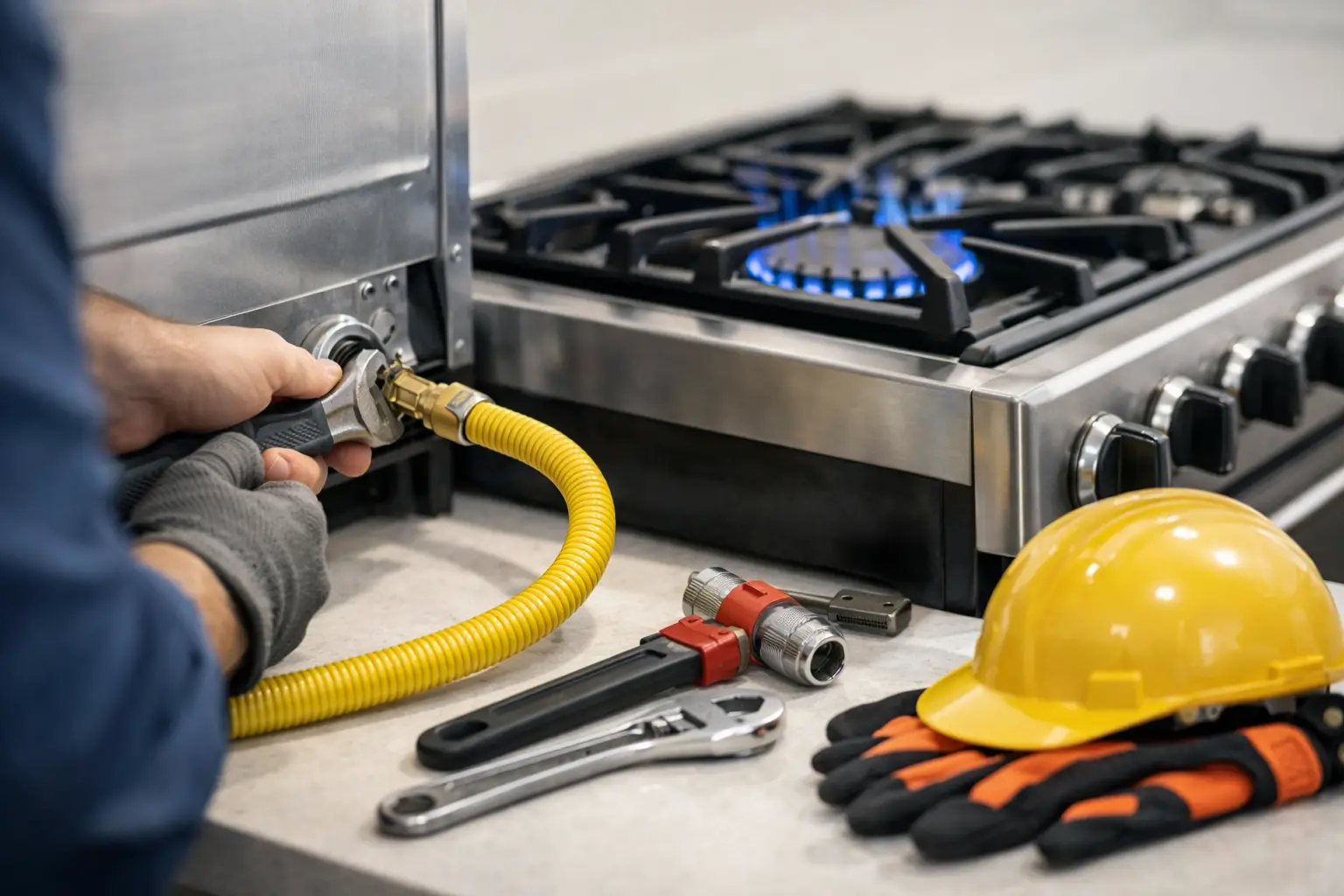
Gas Stove Line Installation Done Safely
Gas stove line installation needs proper sizing, testing, and code compliance. Know what to expect, what can go wrong, and when to call a pro.
A new range should not turn into a gas smell, a failed inspection, or a call to the fire department. Gas stove line installation looks simple from the outside, but the line size, shutoff placement, pressure testing, and code details all matter. If any part of that setup is wrong, the stove may not perform properly, and more importantly, your home may not be safe.
For homeowners in older Albany-area houses, this comes up often during kitchen remodels, appliance swaps, or conversions from electric to gas. Sometimes there is already a gas pipe nearby, but that does not automatically mean it is ready for a new stove. Sometimes the line is undersized, poorly located, missing a proper shutoff, or installed in a way that will not pass inspection.
When gas stove line installation is needed
The most obvious case is adding a gas stove where there was no gas appliance before. That requires a new branch line from the existing gas system to the kitchen. The work may also involve verifying the gas meter capacity, checking appliance load, and making sure the rest of the home system can handle the added demand.
Another common situation is replacing an old stove with a newer model that has different BTU requirements. Homeowners are often surprised by this. Just because the old stove ran on gas does not mean the existing connector, shutoff, or branch line is still the right setup for the replacement appliance.
Kitchen remodeling is another trigger. Cabinets move. Appliance locations shift a few inches or a few feet. Once that happens, the existing gas piping may no longer line up safely behind the range. Flexible connectors are not a fix for bad pipe placement. They have specific limits and must be installed correctly.
What the job actually involves
Good gas stove line installation starts with diagnosis, not with cutting into pipe. The first step is confirming what fuel the appliance uses - natural gas or propane - and verifying the manufacturer requirements. From there, the installer looks at the home gas system, available pipe routing, demand load, shutoff location, and local code requirements.
If a new line is needed, the pipe has to be sized correctly for the total system demand and the run length. This is where guesswork causes problems. An undersized line can lead to weak burner performance or intermittent appliance issues, especially when multiple gas appliances run at the same time.
The line also has to terminate in the right location. Too far off center, too high, or too low can interfere with the appliance fit or create stress on the connector. A proper shutoff valve must be accessible, and the final connection has to be compatible with the appliance and approved for the application.
Once the piping is installed or modified, it needs to be tested. That means checking for leaks and confirming the system is holding pressure as required. This is not a spray-and-hope situation. Proper testing is one of the most important parts of the job.
Line sizing is not a minor detail
This is one of the biggest reasons homeowners call for help after someone else has already "hooked it up." Burners that light slowly, flames that look weak, or performance issues when the furnace or water heater kicks on can point back to gas supply problems.
The correct line size depends on the total connected load, not just the stove by itself. If your home already has a furnace, water heater, dryer, or fireplace on the same gas system, that calculation matters. A professional installer accounts for the whole system so the new appliance does not create problems somewhere else.
Code compliance matters in kitchens
Kitchen gas piping has to do more than work. It has to meet code. That includes approved materials, proper shutoff access, sediment trap requirements where applicable, secure connections, and safe routing. In many cases, permits and inspections are part of the process, especially when a new line is added.
That may feel like extra hassle, but it protects you. Code-compliant work reduces the chance of leaks, appliance issues, and problems during resale. It also helps avoid the mess of having a finished kitchen opened back up because something was done wrong the first time.
Common problems found during gas stove line installation
In older homes, it is common to find piping that has been altered several times over the years. A capped line may be hidden in the wall or basement. A previous owner may have added fittings that are no longer acceptable. In some houses, the gas system was expanded over time without proper load calculations.
Another issue is poor appliance placement planning. The stove cavity may look standard, but the gas stub-out can still interfere with the back of the appliance. That can keep the range from sitting properly against the wall, which creates both functional and safety concerns.
Corroded piping, outdated shutoff valves, and improper flexible connectors also show up regularly. None of those should be ignored just because the stove seems to turn on. Gas work is not a place for "good enough."
Can you reuse an existing gas line?
Sometimes yes, sometimes no. If the existing line is correctly sized, properly located, in good condition, and set up to current code expectations, it may be reusable. That can save time and reduce the scope of work.
But that decision should be based on inspection, not assumption. An old line may be physically present while still being the wrong size or in the wrong place for the new appliance. Reuse only makes sense when the full setup checks out.
This is especially important during appliance conversions. Homeowners switching from electric to gas often focus on the stove itself, but the real question is whether the house has a safe and adequate path to supply it.
What homeowners should not do
Trying to handle gas stove line installation as a weekend project is where avoidable risk enters the picture. Gas piping is not like replacing a faucet or swapping out a toilet supply line. The stakes are higher, and the margin for error is smaller.
Store-bought parts do not solve sizing problems, routing issues, or code requirements. Even if a connection seems tight, an improper installation can still leak, restrict flow, or fail inspection. A bad gas connection may not announce itself right away. Sometimes the warning signs are subtle until they are not.
If you smell gas, hear hissing, or suspect a leak, leave the area and follow emergency gas safety procedures right away. Do not keep testing appliances or trying to tighten fittings yourself.
What to expect from a professional installation
A professional gas stove line installation should start with a clear assessment of the home, the appliance, and the available gas system. From there, you should get a direct explanation of what is needed, whether the existing setup can be used, and what the work will involve.
You should also expect attention to permits, code compliance, and proper testing. Clean workmanship matters too. Kitchen and basement work should not leave you with unnecessary mess, confusion, or unanswered questions.
For local homeowners, this is where working with an experienced plumbing and gas line service matters. Trinity Plumbing & Drains approaches this type of work the same way it handles other high-consequence home system issues - diagnosis first, clear scope, code-compliant repair or installation, and no guessing.
Gas stove line installation and local homes
In Albany, Colonie, Troy, Delmar, and East Greenbush, housing stock varies a lot. Some homes have updated gas systems. Others still have older piping layouts that need careful review before a new kitchen appliance goes in. That is why the right approach is not just "install the line" but confirm the system can support it safely.
Weather also matters more than some homeowners realize. During cold months, your furnace is already drawing from the gas system regularly. If the system is marginal or improperly sized, those performance issues are more likely to show up when multiple appliances are operating at once.
How to know it is time to call
If you are adding a gas stove, moving one, replacing an older range, converting from electric, or dealing with any uncertainty around the existing line, it is time to get the setup checked. The same goes for yellow flames, weak burner performance, gas odor, or a stove that does not sit correctly after installation.
A safe kitchen starts behind the appliance, where most homeowners never look. When the gas line is installed correctly, the stove works the way it should and the rest of the house stays protected. That is the kind of job worth doing right the first time.