
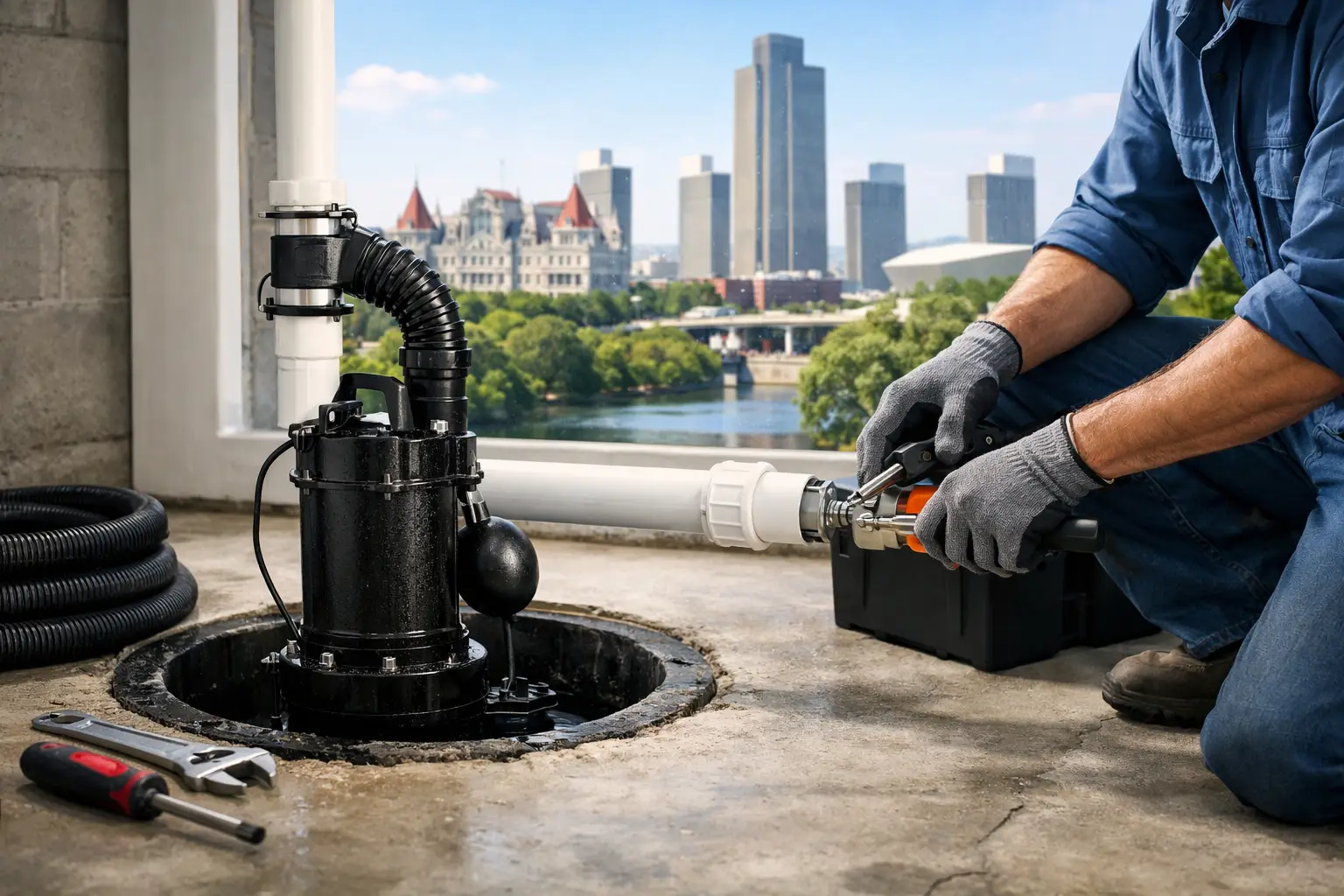
Guide to Sump Pump Installation for Albany Homes
A guide to sump pump installation for Albany homeowners: choose the right system, avoid common mistakes, and protect your basement from flooding year-round.
A wet basement can turn from a nuisance into expensive damage quickly, especially after a heavy Albany-area rainstorm or rapid snowmelt. This guide to sump pump installation explains what a properly installed system needs to do, where homeowners commonly run into trouble, and when it makes sense to bring in a licensed plumber rather than risk a failed pump when you need it most.
Start With the Cause of Water in the Basement
A sump pump is designed to collect groundwater that enters a drainage system below or around the foundation, then pump it safely away from the house. It is not a cure-all for every wet-basement problem. Before installing one, identify where the water is coming from.
If water appears along the basement floor perimeter, near foundation walls, or during prolonged rain, a sump system may be part of the right solution. If water is coming through a cracked wall, a failed window well, an overflowing gutter, or a leaking plumbing line, those issues need attention too. Pumping water out without correcting the source can leave you dealing with the same problem every season.
A diagnosis-first approach matters here. The goal is not simply to install equipment. The goal is to create a drainage path that keeps water away from your foundation and out of your living space.
What a Complete Sump Pump Installation Includes
A dependable system is more than a pump sitting in a hole. The installation starts with a properly sized sump basin, usually set at the lowest practical point of the basement or crawl space. Water from interior drain tile or other approved drainage pathways flows into that basin.
The pump sits inside the basin and activates when the water level rises. It sends water through a discharge pipe that leads outdoors and releases it far enough from the home that it will not drain back toward the foundation. A check valve on the discharge line prevents water from falling back into the pit after the pump cycles off.
The pump also needs a safe, dedicated electrical connection. Electricity and standing water are not a place for shortcuts. Depending on the home and local requirements, the electrical work may involve GFCI protection, proper outlet placement, and a code-compliant power source. A licensed professional can confirm that the setup is safe and appropriate for the equipment being installed.
Choosing the Right Pump for Your Home
The most powerful pump is not automatically the best pump. Pump selection depends on how much water the system must move, how high it needs to lift that water, the length and layout of the discharge line, and whether the basement has a history of serious flooding.
Most residential systems use either a submersible pump or a pedestal pump. A submersible unit sits inside the pit, runs more quietly, and is generally the better fit when the basin has adequate space. A pedestal pump keeps its motor above the pit, which can make service access easier, but it is louder and requires more clearance.
Horsepower is only one part of the decision. A pump must have enough capacity at its actual lifting height, often called total dynamic head. Long runs of pipe, vertical lift, elbows, and restrictions can reduce performance. Installing an oversized pump without considering the drainage system can lead to frequent short cycling, while an undersized pump may not keep up during a major storm.
For many Albany, Colonie, Troy, Delmar, and East Greenbush homes, the right choice also depends on the seasonal water table and the age of the foundation. A plumber can assess the site conditions rather than guess based on a pump label alone.
Guide to Sump Pump Installation: The Professional Process
A proper installation begins with confirming the location of the basin and protecting the work area. Basement floors may need to be opened carefully to create space for the pit and connect it to the drainage system. The basin must sit level, be supported correctly, and have a sealed or fitted cover to keep debris out and reduce moisture exposure.
Next, the pump is placed in the basin and connected to the discharge piping. The discharge route should be direct, supported, and protected from damage. It must carry water away from the house without creating an icy walkway, flooding a neighboring property, or discharging where local rules prohibit it.
The check valve is installed in the correct direction and positioned where it can be serviced. This small component does important work. Without it, water in the vertical discharge pipe can rush back into the pit each time the pump stops, forcing unnecessary cycles and putting added wear on the motor.
After the plumbing and electrical connections are complete, the system should be tested with water. The pump should activate, discharge water efficiently, shut off properly, and leave no leaks at fittings or connections. The installer should also verify that the float switch moves freely and cannot get caught against the basin wall, power cord, or piping.
Clean workmanship matters. A sump pump installation often involves concrete, drainage materials, piping, and electrical connections in a finished or partially finished basement. The job should be contained, the area cleaned, and the homeowner shown how the system operates before the work is complete.
Do Not Overlook the Discharge Line
A good pump can still fail to protect the basement if the discharge line is poorly planned. The water has to go somewhere, and that location matters.
The outlet should be far enough from the foundation that water does not simply seep back into the same soil the pump is trying to drain. It should also account for grading, sidewalks, driveways, landscaping, and winter conditions. In the Capital Region, a discharge line that freezes during a cold snap can leave the pump running against a blocked pipe. That can overheat the pump or send water back into the basement.
Some homes need a buried discharge line, while others may use a properly positioned above-ground extension for part of the year. The best setup depends on the property layout, drainage conditions, and local requirements. This is one area where a quick, bargain installation can create a recurring headache.
Backup Power Is Worth Considering
Storms that bring groundwater into the basement can also knock out power. If your primary sump pump runs only on household electricity, it cannot operate during an outage unless there is a backup plan.
A battery backup sump pump provides a second pump or backup system that activates if the primary pump fails or power is lost. It is not a replacement for a properly installed primary pump, but it can provide valuable protection during a short outage. Homes with finished basements, stored valuables, frequent water issues, or a history of storm-related outages are strong candidates for backup protection.
Water-powered backup systems are another option in some homes, although they require adequate municipal water pressure and may not be suitable for every property. A plumber can explain the trade-offs, including equipment cost, maintenance needs, and expected runtime.
Common Installation Mistakes That Lead to Flooding
Sump pumps usually fail for predictable reasons. The equipment may be old, the pit may be too small, the float switch may be obstructed, or the discharge line may be clogged or frozen. In other cases, the pump is fine but the home has no backup power during an outage.
Homeowners should also avoid plugging a sump pump into an extension cord, placing it in an undersized pit, or routing discharge water directly beside the foundation. These shortcuts can compromise safety, performance, and reliability.
A system needs periodic attention after installation. Test it before the spring thaw and before periods of heavy rain by slowly adding water to the pit. Confirm that it turns on, moves water, and shuts off. Check that the outdoor discharge point is clear. If the pump runs continuously, makes unusual noise, fails to start, or leaves water in the basin, schedule service before the next storm tests it for you.
When to Call a Plumber
A homeowner can monitor and test a sump pump, but new installation is often a job for a professional, particularly when it involves cutting concrete, installing drainage, adding electrical protection, or determining a compliant discharge route. The same applies if you have water entering the basement but are unsure whether the problem is groundwater, foundation drainage, a sewer issue, or a plumbing leak.
Trinity Plumbing & Drains provides straightforward sump pump diagnosis, installation, and repair for homeowners who need clear answers without the runaround. A properly planned system protects more than a basement floor. It helps protect finishes, belongings, indoor air quality, and your ability to use the space with confidence.
If your basement has started taking on water, do not wait for the next hard rain to find out whether your pump can keep up. Get the cause identified, make the right repair or installation decision, and have the system tested while conditions are still dry.