
A Homeowner’s Guide to Water Heater Replacement
A practical guide to water heater replacement: signs, sizing, fuel choices, code requirements, and what Albany homeowners should expect from installation.
A cold shower is usually the first warning, but it is rarely the only one. Rust-colored water, water around the tank, strange popping sounds, and rising utility bills can all point to a heater near the end of its service life. This guide to water heater replacement explains what Albany-area homeowners should check before a small problem becomes a no-hot-water emergency or a damaging leak.
Guide to Water Heater Replacement: Know When to Act
Most traditional tank water heaters last roughly 8 to 12 years. Some make it longer with good water conditions and regular maintenance, while others fail sooner due to sediment buildup, corrosion, or an overworked system. The age of your unit matters, but its condition matters more.
A leaking tank is the clearest reason to plan a replacement. If water is coming from the tank body itself rather than a fitting, valve, or nearby pipe, repair is usually not the right answer. Internal tank corrosion cannot be reversed. A failed pressure relief valve, loose connection, or worn drain valve may be repairable, but the source needs to be diagnosed before anyone recommends a new heater.
Other signs are less obvious. Rumbling or popping during heating often means sediment has collected on the bottom of a gas tank. The burner has to work harder through that buildup, which can reduce efficiency and shorten the tank’s life. Rusty hot water can indicate corrosion inside the heater, although old galvanized piping can cause similar discoloration. An experienced plumber should separate those possibilities before setting a replacement scope.
If your household is regularly running out of hot water, replacement may make sense even if the unit still operates. Your family’s demand may have changed, or the existing heater may have been undersized from the beginning. A larger tank, a faster-recovery gas model, or a properly sized tankless unit may solve the issue. Bigger is not automatically better, though. Oversizing can add unnecessary equipment and operating costs.
Start With the Right Water Heater Size
Water heater sizing is not a guess based on the old tank’s label. It should reflect the number of people in the home, the number of bathrooms, fixture use, laundry habits, and fuel source. A home with two adults who shower at different times has a very different hot-water demand than a household with teenagers, multiple bathrooms, and back-to-back morning showers.
For tank-style units, capacity is only part of the picture. First-hour rating is often more useful because it estimates how much hot water the heater can provide during a busy hour. A 50-gallon tank with a strong recovery rate may serve a home better than a larger tank with slower recovery.
Tankless water heaters are sized by flow rate and temperature rise. Albany winters matter here. Incoming water is colder than it is in warmer climates, so the unit needs more heating power to deliver the same gallons per minute. A tankless system that looks sufficient on paper can disappoint if it is not sized for local winter conditions and simultaneous fixture use.
A proper evaluation should also account for the home’s gas supply, electrical capacity, venting path, and available installation space. These are not minor details. They determine whether a particular model can be installed safely and code-compliantly.
Choose the Fuel Type That Fits Your Home
The best replacement often depends on what the house already supports. Gas storage-tank heaters remain a practical choice for many local homes because they offer reliable recovery and can keep operating during many power outages, depending on the ignition system. They do require correct combustion air, venting, gas piping, and safe connections.
Electric tank heaters can be a straightforward option where gas is unavailable or where venting is difficult. They are generally simpler to install from a combustion standpoint, but they can cost more to operate depending on local electricity rates. They also require enough electrical capacity and properly sized wiring.
Heat pump water heaters use electricity but move heat from surrounding air rather than creating all heat directly through electric elements. They can be very efficient, especially in a basement or utility area with enough space and suitable temperatures. The trade-off is that they are not ideal for every location. They can cool and dehumidify the surrounding room, make some noise, and may need more vertical clearance than a standard electric tank.
Tankless water heaters provide hot water on demand and save floor space, but they are not a universal upgrade. Many gas tankless installations require a larger gas line, new venting, condensate drainage for high-efficiency models, and electrical power for controls. The installation cost can be higher, and annual maintenance is still needed. For the right household, the long service life and continuous hot water can be worthwhile. For another home, a properly sized tank heater is the better value.
What a Professional Replacement Should Include
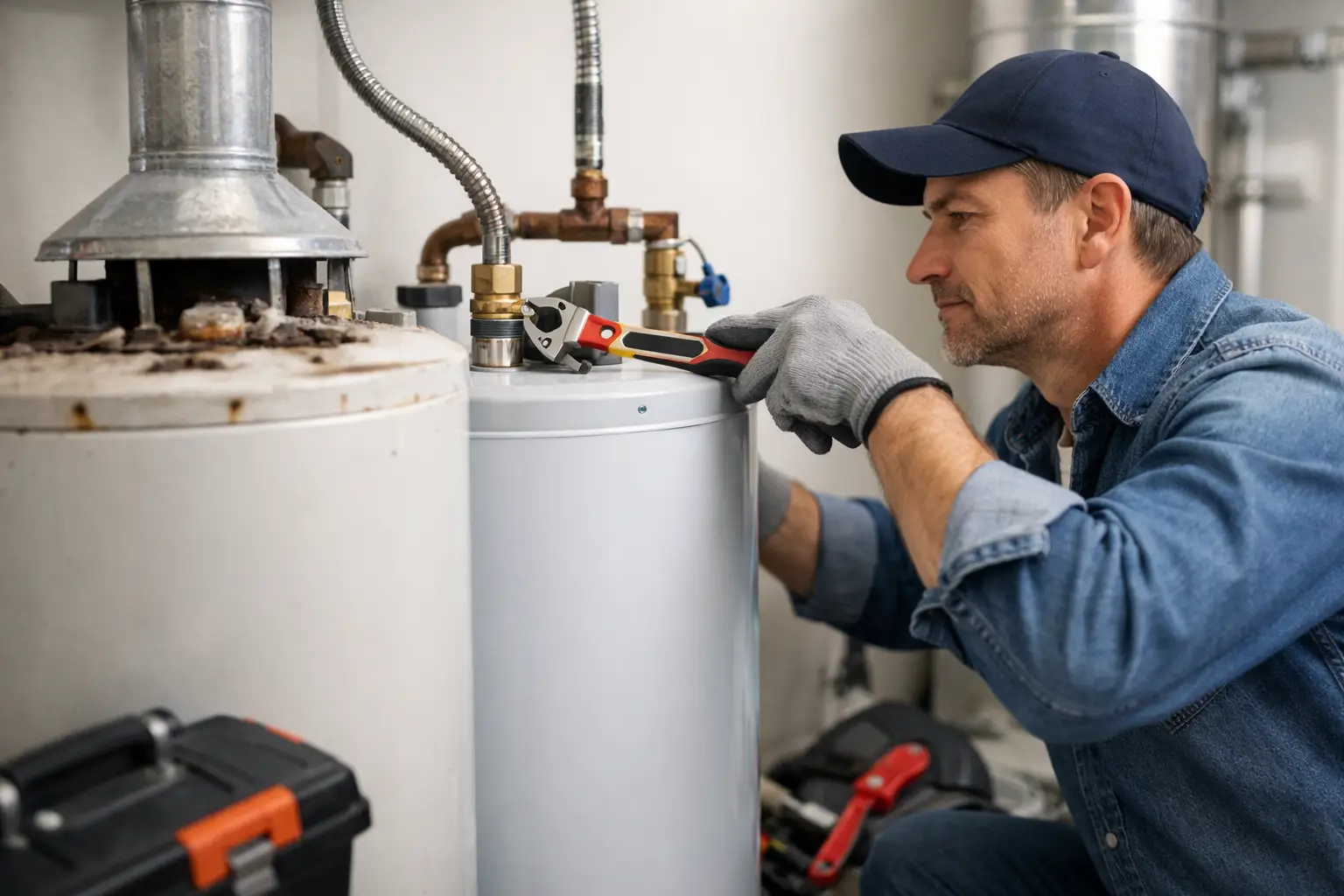
Water heater replacement is not simply a swap. The old unit may have been installed years ago under different code requirements, or it may have had problems that were never corrected. A professional installation begins with checking the existing setup, not hauling in a replacement based on a phone description alone.
The work should include safe shutdown and removal of the old unit, inspection of water and gas or electrical connections, and installation of required safety components. Depending on the equipment and location, that can include a properly routed temperature and pressure relief valve discharge pipe, an expansion tank where required, a drain pan and drain connection, correct venting, gas shutoff access, and earthquake strapping where applicable.
Gas water heaters deserve special attention. Combustion venting must be correctly sized, pitched, and connected. Gas piping needs to be properly tested after the work is completed. If the home has a power-vent or direct-vent model, the replacement must match the venting design or be reconfigured correctly. Shortcuts in these areas can create carbon monoxide, fire, or water-damage risks.
Permits and inspections may be required based on the municipality and scope of work. A licensed plumbing professional can explain what applies to your home and complete the installation to current code rather than repeating an outdated setup. That is particularly important in older homes around Albany, Colonie, Troy, Delmar, and East Greenbush, where utility rooms and venting arrangements can be less straightforward.
Prepare for Installation Day
Before the plumber arrives, clear a path from the entry door to the water heater and remove stored items from around the unit. Water heaters are heavy, and a clear workspace helps protect your home and allows the crew to work efficiently. If the heater is in a finished area, basement, or tight mechanical room, mention that when scheduling so the service team can plan appropriately.
Expect the water and, in some cases, gas or electricity to be shut off during the replacement. A standard replacement can often be completed the same day when the correct equipment is available and the existing setup does not need major changes. Venting corrections, electrical upgrades, gas-line modifications, permit requirements, or access issues can extend the job. Clear communication about those conditions should happen before work begins whenever possible.
Once the new heater is installed, the system should be filled, tested, and checked for leaks and proper operation. Ask where the shutoff valves are, how to adjust the temperature, and what maintenance the model needs. For most homes, a water temperature around 120 degrees Fahrenheit balances comfort, energy use, and scald protection, although household needs can vary.
Do Not Wait for a Full Tank Failure
A water heater can leak hundreds of gallons before the problem is under control, especially if it fails while no one is home. If you see active leaking, shut off the cold-water supply valve above the heater if it is safe to reach, keep clear of any electrical hazards, and call for service. If there is a gas smell, leave the area and contact the gas utility or emergency services before calling for plumbing work.
For a heater that is aging, noisy, rusty, or unreliable, scheduling an evaluation gives you more choices than waiting for an emergency. Trinity Plumbing & Drains can assess the condition of the existing unit, explain practical replacement options, and install the right system with clean, code-compliant workmanship. A planned replacement protects your home, restores dependable hot water, and keeps a worn-out tank from choosing the worst possible day to fail.