
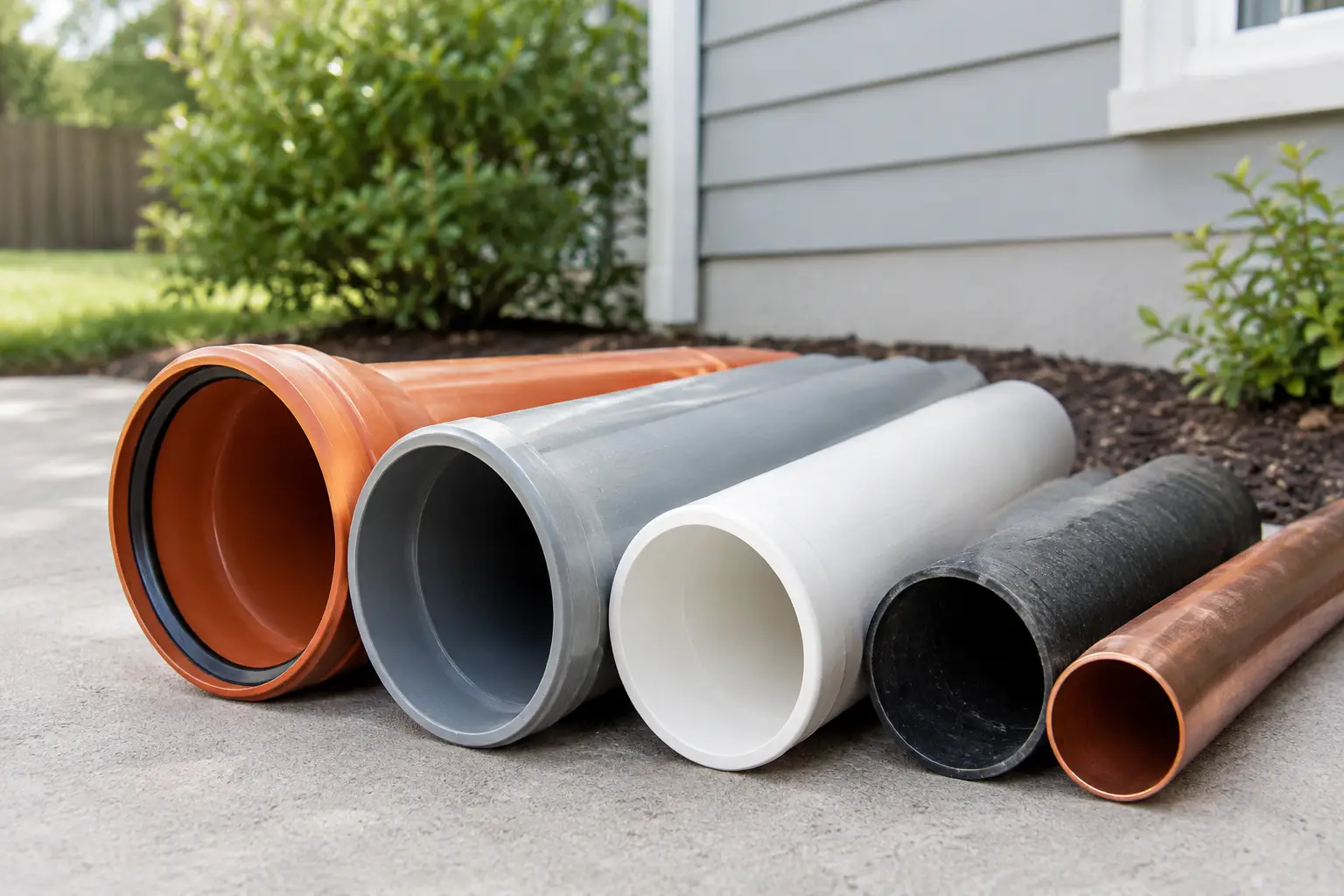
A Homeowner Guide to Sewer Pipe Materials
A homeowner guide to sewer pipe materials: compare cast iron, clay, PVC, and Orangeburg, spot warning signs, and plan a code-compliant repair decision.
A sewer backup rarely starts with an obvious warning. You may notice one slow tub drain, a toilet that gurgles when the washer drains, or a damp spot near the basement floor drain. The right repair depends heavily on what your sewer line is made of and what condition it is in. This homeowner guide to sewer pipe materials explains what may be under your yard or basement floor, what usually fails, and how a proper diagnosis helps avoid paying for the wrong fix.
Your main sewer line, often called the sewer lateral, carries wastewater from your home to the municipal sewer connection or a septic system. It is separate from the smaller drain pipes inside the house. In older Albany-area homes, that line may be decades old and made from materials no longer used for new residential sewer installations.
Why Sewer Pipe Material Changes the Repair Plan
Pipe material affects how a line clogs, cracks, settles, and responds to roots. It also affects whether a plumber can clear the blockage safely, repair one damaged section, or should recommend replacement. A recurring clog in a modern PVC line may be caused by a localized obstruction. The same symptoms in an old Orangeburg line can point to a pipe that is flattening or collapsing.
Age alone does not determine whether a sewer line needs replacement. Some older cast iron and clay lines continue to work for many years. The practical question is whether the pipe still has a clear, stable interior channel and sound joints. A sewer camera inspection provides the answer far better than guesswork based on the age of the home.
Local soil conditions, freezing weather, mature trees, and prior excavation can all affect a buried sewer line. That is why a professional should identify the material, locate the problem, and explain the repair scope before work begins.
Homeowner Guide to Sewer Pipe Materials
Cast Iron: Durable but Prone to Internal Corrosion
Cast iron was widely used in older homes, especially from the early 1900s through the mid-20th century. It is strong, quiet, and resistant to crushing from normal soil loads. You may find it in basement drain piping as well as in the underground sewer lateral.
Its main weakness is corrosion. Over time, the inside of cast iron can develop scale, rust, and rough buildup that catches paper and waste. The pipe may look solid from the outside while its interior diameter has narrowed considerably. At joints, corrosion can also create openings where roots enter.
Cleaning may restore flow when buildup is the main issue, but it does not reverse severe corrosion or a cracked pipe. A camera inspection helps distinguish between a line that needs professional cleaning and one with structural damage. If only one accessible section has failed, a targeted repair may be practical. If the pipe is deteriorating along much of its length, replacement is often the more reliable long-term choice.
Clay Tile: Long-Lasting Material With Vulnerable Joints
Vitrified clay pipe is common in many older sewer systems. Individual pipe sections are hard and can last a long time, but each section has a joint. Those joints are the usual trouble spots.
As soil shifts over the years, clay sections can separate, offset, or crack. Tree roots are drawn to the moisture and nutrients around a leaking joint, then grow into the opening. Once roots enter, they can create recurring clogs even after the line has been cleared.
A clay line does not automatically need replacement because roots are present. If the pipe is generally aligned and the joints are stable, periodic root removal may be a reasonable short-term maintenance approach. But if the camera shows multiple offsets, broken sections, or heavy root intrusion throughout the line, repeated drain cleaning becomes a temporary fix. Replacement provides a more dependable solution.
Orangeburg: A Material That Deserves Close Attention
Orangeburg is a fiber-based pipe material used in many homes from roughly the 1940s through the 1970s. It was inexpensive and easy to install, but it does not hold its shape as well as clay, cast iron, or modern plastic pipe.
With age and ground pressure, Orangeburg can blister, deform, flatten, or split. It may also develop a ridged interior that catches debris. A cable machine can sometimes open a blockage, but aggressive cleaning can damage a weakened line further. This is one reason material identification matters before a drain-clearing method is selected.
When an Orangeburg sewer line is visibly misshapen, collapsed, or repeatedly clogged, replacement is typically the sound recommendation. A plumber should verify the condition by camera, locate the failed area, and discuss whether a spot repair is realistic or whether the remaining pipe is likely to fail next.
PVC: The Standard for Modern Sewer Replacements
PVC is the most common material for modern residential sewer line replacement. It has smooth interior walls, does not corrode like metal, and uses sealed joints that limit root entry when installed correctly. It is also available in sizes and fittings designed for code-compliant residential sewer work.
PVC is durable, but installation quality still matters. A new pipe needs proper slope so wastewater flows without leaving solids behind. It also needs stable bedding and backfill so the pipe does not sag or shift after the trench is closed. Poor slope, loose connections, or improper support can cause trouble even with brand-new materials.
For most full sewer lateral replacements, PVC is a practical, long-lasting choice. The exact pipe type, size, depth, cleanout requirements, permits, and connection details depend on the property and local code.
ABS and Other Plastics
ABS is a black plastic pipe commonly found in some drain and vent systems, though it is less common for exterior sewer laterals in this region than PVC. Older homes may also contain unusual transition fittings or mixed materials from past repairs.
Mixed-material systems are not necessarily a problem. The concern is the connection between materials. A proper transition coupling and correct installation help prevent separation, leakage, and root intrusion. If a camera inspection shows a defect at a transition, a localized repair may be enough.
Warning Signs That Point to a Sewer Line Problem
One slow drain does not always mean the main sewer line has failed. A clog may be limited to a sink, shower, or branch drain. The pattern matters. When several fixtures drain slowly, the lowest drains back up first, or toilets gurgle during laundry or showers, the main line should be checked.
Watch for these signs, particularly in an older home:
- Sewage backing up into a basement drain, tub, or shower
- Repeated clogs that return soon after clearing
- Gurgling toilets or bubbling water in nearby fixtures
- Wet, sunken, or unusually green areas in the yard above the sewer route
- Strong sewer odors indoors, outdoors, or near the foundation
A backup requires prompt action. Avoid running water, flushing toilets, or using the dishwasher until the issue is diagnosed. Continued use can send more wastewater into the home.
Camera Inspection Comes Before Major Sewer Work
A professional sewer camera inspection is the practical first step when the main line is backing up or repeatedly clogging. It can show roots, grease buildup, cracked pipe, separated joints, standing water, bellies, offset sections, and collapse. The plumber can also locate the issue from above ground, which helps define the repair area before excavation begins.
Camera footage is useful, but the interpretation matters just as much. A root-filled clay joint and a collapsed Orangeburg line may both look obstructed at first. The repair recommendation should be based on the pipe condition after it is properly cleared enough to inspect, not simply on the fact that water is not moving.
Ask for a clear explanation of what was found, where it is located, and why a cleaning, repair, or replacement is being recommended. For permitted work, the plan should also account for local requirements, utility markings, proper slope, and safe restoration of the work area.
Repair, Replacement, or Maintenance: Making the Call
The least expensive option is not always the best value. If roots enter through one otherwise stable clay joint, cleaning and a targeted repair may make sense. If a cast iron line has widespread internal corrosion, repeated cleaning can become an ongoing expense with no lasting improvement. If Orangeburg is deforming in several locations, replacing only the first failed section may leave the homeowner facing another excavation soon after.
A good sewer recommendation should explain the trade-off in plain language. It should identify what is urgent, what can be monitored, and what work is needed to restore reliable drainage. It should also separate the immediate need to stop a backup from the longer-term decision about replacing aging pipe.
For Albany-area homeowners, Trinity Plumbing & Drains approaches sewer problems diagnosis first: identify the pipe, inspect the condition, explain the scope, and complete code-compliant work without the runaround. When wastewater is backing up, the next right step is not guessing what lies underground. It is getting a clear look at the line before a small drainage warning becomes a major cleanup.