
How to Clear a Floor Drain Without Making It Worse
Learn how to clear a floor drain safely, spot a deeper sewer problem, and know when Albany-area homeowners should call a licensed plumber for fast help.
A floor drain is supposed to be the last line of defense when water ends up where it should not be. When it backs up in a basement, laundry room, utility area, or garage, the problem can move quickly from a minor inconvenience to a wet-floor emergency. Knowing how to clear a floor drain safely can help with a simple clog, but it also helps you recognize when the drain is warning you about a larger sewer issue.
Start by looking at what is coming up through the drain. Clear or slightly dirty water may point to a local clog. Dark water, sewage odor, toilet paper, or water that rises when you flush a toilet or run the washing machine usually means the issue is farther down the line. In that situation, do not keep pouring products into the drain or repeatedly run water. That can turn a manageable backup into a cleanup problem.
How to Clear a Floor Drain Safely
Before you begin, protect yourself. Put on rubber gloves, wear old clothes, and keep children and pets away from the area. If the drain has overflowed, avoid direct contact with the water, especially if there is any chance it contains sewage. If electrical cords, appliances, or outlets are near standing water, shut off power to that area only if you can do so safely. Otherwise, leave it alone and call for help.
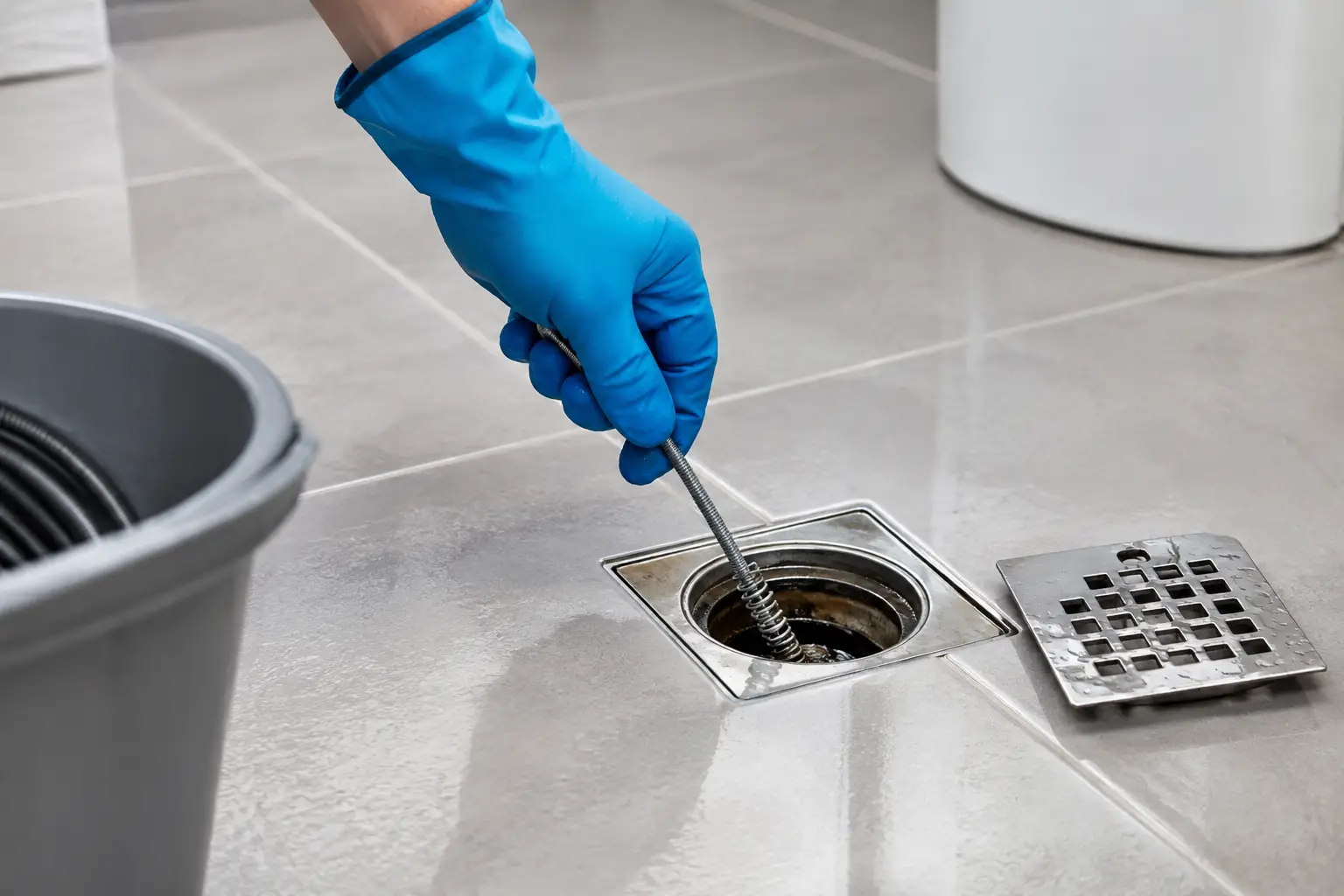
First, remove the drain cover or grate. Most covers lift out, although some are secured with screws. Clear away visible debris such as hair, lint, leaves, dirt, and small objects. A wet/dry vacuum can be useful for pulling standing water and loose material from the drain opening. Do not force tools into the drain if you meet hard resistance. You could damage the drain body, dislodge a fitting, or push the clog farther into the pipe.
Next, inspect the trap. Many basement floor drains have a trap below the opening that holds water to block sewer gas. Sometimes, the obstruction is right at this point. Use a flashlight and carefully remove whatever you can reach with a small hand tool or drain brush. If you find thick sludge, mineral buildup, or hardened debris, the clog may require more than surface cleaning.
A plunger can work on a floor drain, but only when there is enough water around the opening to create a seal. Cover nearby drain openings if possible, then use steady, firm plunges. The goal is to move the blockage, not hammer the plumbing. After several attempts, wait a moment and see whether the water level drops.
If plunging does not work, a hand-crank drain snake may clear a shallow clog. Feed the cable slowly into the drain while turning the handle. When you feel resistance, keep a light, controlled pressure on the cable. Do not spin aggressively or force it forward. Older homes around Albany and the Capital Region can have aging drain piping, and rough use can create a bigger repair than the original clog.
Once water begins draining, flush the line with hot tap water for several minutes. Do not use boiling water, particularly if you have plastic drain piping. Then test the drain by slowly adding a few gallons of water. If it drains freely without gurgling or backing up, you may have cleared a local blockage.
What Not to Put Down a Floor Drain
Chemical drain cleaners are often the wrong choice for a floor drain. They may not reach the real blockage, especially when the clog is deep in the branch line or main sewer. Strong chemicals can also sit in the trap, damage certain pipe materials, create fumes, and make the drain more hazardous for the person who eventually has to service it.
Skip acids, caustic cleaners, and homemade mixtures of multiple chemicals. Never combine drain products. Even mixing common household cleaners can create dangerous fumes or heat. If you have already used a chemical cleaner, tell the plumber before work begins so the drain can be handled safely.
A toilet auger is also not the right tool for most floor drains. It is designed for a toilet trapway, not a long drain line. Likewise, avoid using a pressure washer hose, metal coat hanger, or improvised hook. Those methods can scratch pipe interiors, damage seals, and leave part of the tool stuck in the line.
Signs the Clog Is in the Sewer Line
A single slow floor drain can be a local problem. A floor drain that backs up when other fixtures run is different. It often points to a blockage in the building sewer, the line that carries wastewater from the home to the municipal sewer or septic system.
Call for professional drain service if you notice water rising from the floor drain when you flush toilets, drain a bathtub, use the dishwasher, or run the washing machine. Other warning signs include several slow drains at once, gurgling toilets, sewage smells, recurring backups, or wastewater spreading across the basement floor.
Tree roots, grease accumulation, wipes, collapsed piping, scale buildup, and damaged older sewer lines can all cause these symptoms. The correct repair depends on the diagnosis. A cable machine may clear some blockages, while others require drain cleaning equipment, camera inspection, or sewer line repair. Guessing wastes time and can leave the actual problem in place.
Why Basement Floor Drains Back Up During Heavy Rain
Heavy rain creates another set of possibilities. In some homes, the floor drain connects to piping affected by stormwater, groundwater, or a municipal sewer system under pressure. If the drain backs up only during major storms, the issue may involve a sewer surcharge, a blocked exterior line, or a drainage system problem rather than an ordinary indoor clog.
Do not assume a rainy-day backup will solve itself once the water recedes. Take note of when it happened, what the water looked like, and whether other plumbing fixtures were affected. That information helps identify whether the source is a drain blockage, a sewer problem, or water entering the basement from elsewhere.
If your home has a sump pump, check that it is operating and that its discharge line is directing water away from the foundation. A sump pump problem and a floor drain backup can happen at the same time, but they are not always the same issue. Each needs a clear diagnosis before repair work starts.
When a Professional Drain Cleaning Is the Better Call
A homeowner can often remove hair, lint, or surface debris from a floor drain. Beyond that, professional equipment and experience matter. A drain technician can cable the line to the proper distance, identify repeat-problem areas, and determine whether the blockage is in a branch drain or the main sewer line.
This is especially true if the drain is full of sewage, the water will not go down after basic clearing, or the backup returns within days or weeks. Repeated clogs are not normal. They usually mean debris remains in the pipe, the line has a structural issue, or the drainage system is being overloaded.
For homeowners in Albany, Colonie, Troy, Delmar, and East Greenbush, Trinity Plumbing & Drains provides diagnosis-first drain and sewer service without the runaround. The goal is not just to get water moving for the moment. It is to identify what caused the backup and explain the right repair path clearly.
Keep the Drain Clear After the Repair
After the drain is cleared, replace the cover and keep it free of stored boxes, rugs, and debris. A covered drain still needs access in an emergency. Check it periodically by pouring in a small amount of water. This also keeps the trap filled, which helps prevent sewer gas from entering the room.
In laundry areas, keep lint under control and make sure the washer discharge is connected correctly. In garages and utility rooms, sweep up dirt and leaves instead of rinsing them toward the drain. If your floor drain handles groundwater or occasional moisture, regular maintenance is less expensive and less stressful than waiting for the next backup.
A floor drain should quietly do its job in the background. If it is filling up, smelling bad, or backing up when other fixtures run, treat that as a reason to act early. Fast diagnosis can protect your basement, your home, and your peace of mind.