
How to Clear a Shower Drain Without Damage
Learn how to clear shower drain clogs safely, when to stop DIY work, and when Albany-area homeowners need fast professional drain cleaning service today.
A shower that drains slowly is usually giving you a warning before it becomes a standing-water problem. Hair, soap residue, body oils, and hard-water buildup collect just below the drain cover, where a simple cleaning may solve the issue. If you are searching for how to clear shower drain clogs, start with the least aggressive method. The goal is to remove the blockage without damaging the drain, trap, or plumbing behind the wall.
Start With a Quick Drain Check
Before reaching for chemicals or tools, look at what the shower is doing. If water drains slowly but eventually clears, the clog is often near the top of the drain. If water backs up quickly, smells foul, or rises in nearby fixtures, the problem may be farther down the branch line or sewer connection.
Remove the drain cover if it is accessible. Many covers lift out, while others are held by one or two screws. Set screws aside where they will not fall into the drain. Use a flashlight to look inside. A visible mass of hair and soap buildup is good news because it is usually reachable.
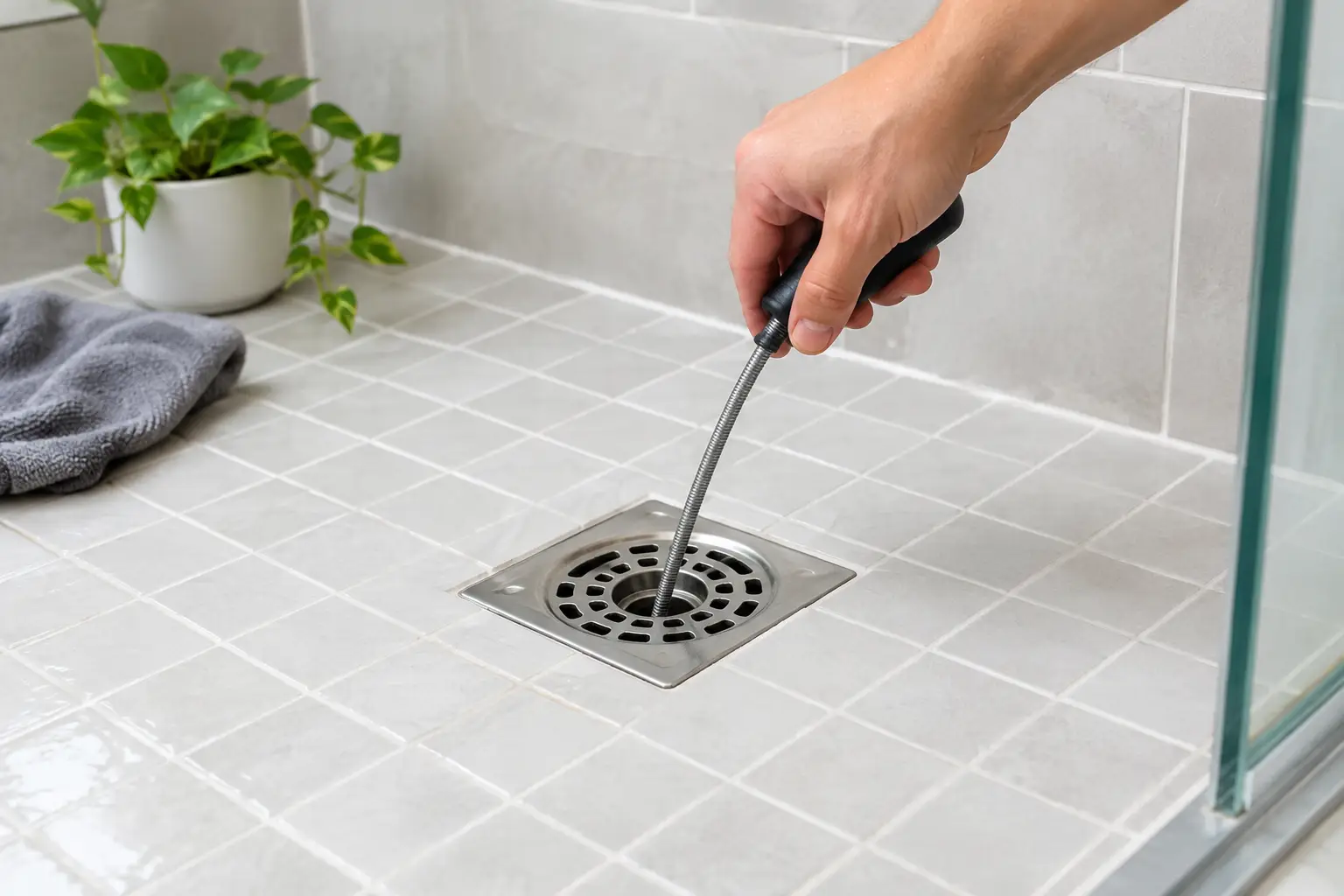
Put on gloves and pull out what you can see with a bent wire hook, plastic drain-cleaning tool, or long tweezers. Work slowly. The object is to grab the clog and lift it out, not push it farther into the pipe. You may need to repeat this several times before the water begins moving normally.
Clean the Drain Cover Too
Do not put the cover back on while it is coated in hair and soap film. Rinse it, scrub the openings with an old brush, and clear debris from around the rim of the drain. This small step helps water enter the drain freely and makes future cleaning easier.
How to Clear a Shower Drain With Hot Water and Dish Soap
Once visible hair is removed, flush the drain with hot water. For most shower drains, hot tap water is the safer choice. Avoid pouring a large pot of boiling water into a fiberglass or acrylic shower base, since extreme heat can damage some finishes or fittings.
Run hot water for several minutes. If soap scum and oily residue are part of the blockage, add a small amount of grease-cutting dish soap first, then follow with hot water. This approach will not remove a heavy hair clog, but it can loosen the film that causes hair to stick inside the pipe.
Baking soda and vinegar are often suggested for slow drains. They can provide mild cleaning action and may help with odors, but they are not a replacement for physically removing hair. If you use them, pour baking soda into the drain, follow it with vinegar, wait 15 to 30 minutes, and flush with hot tap water. Skip this method if you have already added a commercial chemical drain cleaner. Mixing products can create harmful fumes or a dangerous reaction.
Use a Plunger the Right Way
A clean cup plunger can help when the clog is below the visible portion of the drain. Use a plunger reserved for sinks and showers, not one used for toilets.
Add enough water to cover the rubber cup. Place the plunger flat over the drain and create a good seal. Give it several firm, controlled plunges, then lift and check whether the water begins to move. Repeat a few times if needed.
Some showers have an overflow opening or a drain arrangement that makes plunging less effective. Do not force it. Excessive pressure can move loose connections or push debris deeper into the line. If the drain is still slow after a few attempts, move on to a drain snake or call for service.
Use a Drain Snake for a Deeper Clog
A hand-crank drain snake, also called an auger, can reach farther into the pipe than a plastic hair tool. This is often the best DIY option for a clog that is beyond the drain opening but still limited to the shower line.
Feed the cable slowly into the drain until you feel resistance. Do not jam it. Turn the handle gently while applying light forward pressure. When the cable catches the clog, pull it back slowly and clean off the debris. Run water to test the drain before repeating the process.
There is a trade-off here. A small hand snake can be useful, but an aggressive cable or powered machine can scratch fixtures, damage older piping, or get stuck in the line when used incorrectly. If you cannot get the cable through the trap easily, stop rather than forcing it. That resistance may be a tight bend, a larger obstruction, or a pipe issue that needs proper diagnosis.
Avoid Chemical Drain Cleaners When Possible
Chemical drain cleaners promise a quick fix, but they are often a poor choice for shower clogs. Many do not dissolve hair completely, especially when the clog is dense. They can also sit in a blocked pipe, create heat, damage some plumbing materials, and expose you or a plumber to caustic liquid later.
They are particularly risky in older homes, where pipe condition may already be a concern. If a chemical product does not work, do not add another one or combine products. Tell the plumber exactly what was used before service begins.
Signs the Shower Clog Is Not a Simple DIY Job
A single slow shower drain often has a straightforward cause. Multiple slow drains are different. When a shower, tub, toilet, or bathroom sink all drain poorly, the blockage may be in a shared drain line rather than at the shower itself.
Call a professional drain service if you notice any of these conditions:
- Water comes up in the tub or shower when a toilet is flushed.
- The shower drain repeatedly clogs after you remove hair near the opening.
- There is sewage odor, dark wastewater, or debris backing up into the shower.
- You hear frequent gurgling from drains or toilets.
- The drain is completely blocked and plunging or a small hand snake does not help.
- You have used chemicals and the drain is still clogged.
These symptoms can point to a deeper branch-line clog, a main sewer issue, root intrusion, pipe damage, or a venting problem. Guessing at the cause can waste time and make a backup worse. A proper service call starts with identifying where the restriction is and choosing the right equipment for that line.
What Professional Drain Cleaning Does Differently
Professional drain cleaning is not just a stronger version of a store-bought cleaner. The right method depends on the location and nature of the blockage. A technician may use a cable machine to remove a solid obstruction, specialized tools to clear accumulated hair and soap buildup, or camera inspection when recurring clogs suggest a deeper pipe problem.
For Albany-area homes, age matters. Older properties may have original drain piping, offsets, corrosion, or previous repairs that change how the line should be cleared. A diagnosis-first approach helps avoid treating a recurring plumbing problem like a one-time hair clog. It also protects the fixture and piping from unnecessary damage.
Trinity Plumbing & Drains provides clear scope before work begins, so homeowners know whether the problem is a shower drain clog, a shared bathroom drain issue, or something farther down the sewer line. If the drain problem is urgent or wastewater is backing up, do not wait for it to become a larger cleanup.
Keep the Shower Drain Clear After the Repair
Once the water is flowing, use a simple hair catcher that fits your drain properly. Clean it after each shower or whenever hair begins to collect. That is the most effective prevention step for households with long hair, pets bathed in the shower, or several people using the same bathroom.
Flush the drain regularly with hot tap water, and remove the cover for a more thorough cleaning every few months. Do not rinse grout, waxy products, heavy scrubs, or large amounts of shaving debris into the shower drain. Those materials can cling to pipe walls and give hair something to build on.
A shower drain should clear water quickly and quietly. If yours is slowing down again, address it early while the blockage is still small. A timely drain cleaning is usually simpler, cleaner, and less disruptive than dealing with a complete backup.