
How to Find Hidden Plumbing Leaks Before Damage Spreads
Learn how to find hidden plumbing leaks with practical checks for Albany homes, plus signs that mean it is time for fast professional repair quickly.
A water bill that jumps for no clear reason is often the first warning. By the time water shows through a ceiling, stains a wall, or soaks a basement carpet, the leak may have been causing damage for weeks. Knowing how to find hidden plumbing leaks helps you act early, limit repairs, and avoid a small problem turning into mold, damaged framing, or a major insurance claim.
Some leaks are simple to spot. Others sit behind finished walls, under slabs, beneath floors, or in a buried water service line. The goal is not to start opening walls at random. It is to narrow down where the water is going, protect the home, and bring in a licensed plumber when the evidence points to a concealed failure.
Start With the Water Meter Test
The water meter is one of the most useful tools for finding a hidden leak. First, make sure no one in the house is using water. Do not run the dishwasher, washing machine, shower, faucets, ice maker, or irrigation system. If possible, wait until everyone is out of the house or complete the test overnight.
Locate your water meter and write down the reading. Many meters have a small leak indicator, often a star, triangle, or dial that moves with even a small amount of water flow. Check it again after 30 minutes to two hours without using water. If the indicator moved or the reading increased, water is being used somewhere in the plumbing system.
This test tells you that a leak may exist, but not where it is. A running toilet, a dripping faucet, or a malfunctioning water softener can also cause meter movement. Check the obvious fixtures before assuming the leak is inside a wall or underground.
Separate Indoor Leaks From Underground Service-Line Leaks
If your home has a main shutoff valve inside, turn it off after recording the meter reading. Leave the meter side of the system pressurized. If the meter continues to move with the house shutoff closed, the likely issue is between the meter and the shutoff valve. That can indicate a leaking underground water service line.
If the meter stops moving after the shutoff is closed, the leak is likely inside the home plumbing system. That is useful information for a plumber and can speed up diagnosis.
Do not force an old valve that is corroded or difficult to turn. A failed shutoff valve can create a second problem. If it will not operate normally, leave it alone and schedule service.
Check Toilets Before Looking for Hidden Plumbing Leaks
Toilets are among the most common sources of wasted water, and the leak is usually invisible. Water can quietly pass from the tank into the bowl because of a worn flapper, damaged flush valve, or improperly adjusted fill valve.
Remove the toilet tank lid and place a few drops of food coloring in the tank. Do not flush. Wait about 15 to 20 minutes. If color appears in the bowl, the toilet is leaking internally. This is often a straightforward repair, but it should not be ignored. A toilet that runs intermittently can waste hundreds of gallons over time.
Also look around the toilet base. A loose toilet, failed wax ring, or cracked flange can allow wastewater to seep beneath the flooring. Soft vinyl, loose tile, darkened grout, musty odors, or staining on the ceiling below a bathroom are all reasons to call for an inspection. Wastewater leaks require prompt attention because they affect both the structure and indoor sanitation.
Watch for Quiet Signs in Walls, Floors, and Ceilings
Hidden leaks rarely stay completely hidden forever. The materials around them usually provide clues. Walk through the house with the plumbing in mind, especially around bathrooms, kitchens, laundry rooms, water heaters, and basement utility areas.
Look for changes that do not belong: a yellow or brown ceiling stain, peeling paint, bubbling drywall, warped baseboards, cracked or loose floor tile, or a section of flooring that feels warmer or softer than the surrounding area. A musty smell in a closet, cabinet, or finished basement can also signal moisture behind a surface.
Pay attention to location. A stain beneath an upstairs bathroom may come from a shower drain, toilet seal, supply line, or a leaking drain connection. But water travels. The visible stain is not always directly below the source. That is why diagnosis should come before repair. Cutting into the wrong area adds cost without solving the problem.
In winter, Albany-area homes can also experience pipe damage from freezing. A pipe may crack during a cold spell but leak slowly once temperatures rise. If you notice a new stain, reduced water pressure, or unexplained moisture after a freeze, have it checked even if the pipe did not burst dramatically.
Inspect Cabinets, Appliances, and Mechanical Equipment
Open the cabinets under every sink and use a flashlight. Check supply valves, flexible supply hoses, drain traps, garbage disposal connections, dishwasher lines, and the bottom of the cabinet. A slow leak often leaves swollen particleboard, rust on valve hardware, mineral deposits, or a persistent damp spot before you ever see standing water.
Move carefully around appliances where practical. Refrigerators with ice makers, dishwashers, washing machines, and water heaters all have supply connections that can fail. Washing machine hoses deserve particular attention, especially if they are older rubber hoses or show bulging, cracking, or corrosion at the fittings.
At the water heater, inspect the floor, drain valve, temperature-and-pressure relief discharge pipe, and nearby fittings. A small amount of water may come from condensation in some situations, but regular puddling, rust, or active dripping needs a professional assessment. Water heater leaks can worsen quickly when a tank is failing.
Use Your Senses, but Do Not Rely on Them Alone
A hidden leak may produce a sound before it produces visible damage. In a quiet house, listen for hissing, faint spraying, or the sound of water moving when all fixtures are off. You may hear it near a wall, floor, water heater, or in the basement near exposed piping.
A warm spot on a slab floor can point to a hot-water line leak. A cold, damp spot may indicate a leak from a water line or drain. Odors matter, too. Musty odors suggest ongoing moisture, while sewer gas odors can indicate a problem with a drain, vent, trap, or sewer line. Sewer odors are not a problem to cover up with air freshener. They need to be diagnosed.
These clues are useful, but they are not proof on their own. Moisture can come from condensation, roof leaks, foundation seepage, poor ventilation, or plumbing. A proper inspection separates those causes before anyone recommends a repair.
When a Leak Is an Emergency
Turn off the main water supply and call for emergency plumbing service if water is actively flowing from a wall, ceiling, floor, or pipe. Do the same if a ceiling is sagging, water is near electrical outlets or a breaker panel, or sewage is backing up into tubs, showers, or floor drains.
Move valuables away from the area, but do not stand under a swollen ceiling or attempt electrical repairs. If water is close to outlets, avoid touching switches or plugged-in devices in the wet area. The immediate job is to stop the water and keep people safe.
For a suspected frozen pipe, do not use an open flame, torch, or high-heat tool to thaw it. Heat can damage piping, create fire risk, or cause a weakened pipe to split. A plumber can determine whether the line is frozen, cracked, or leaking and address it safely.
Why Professional Leak Detection Is Worth It
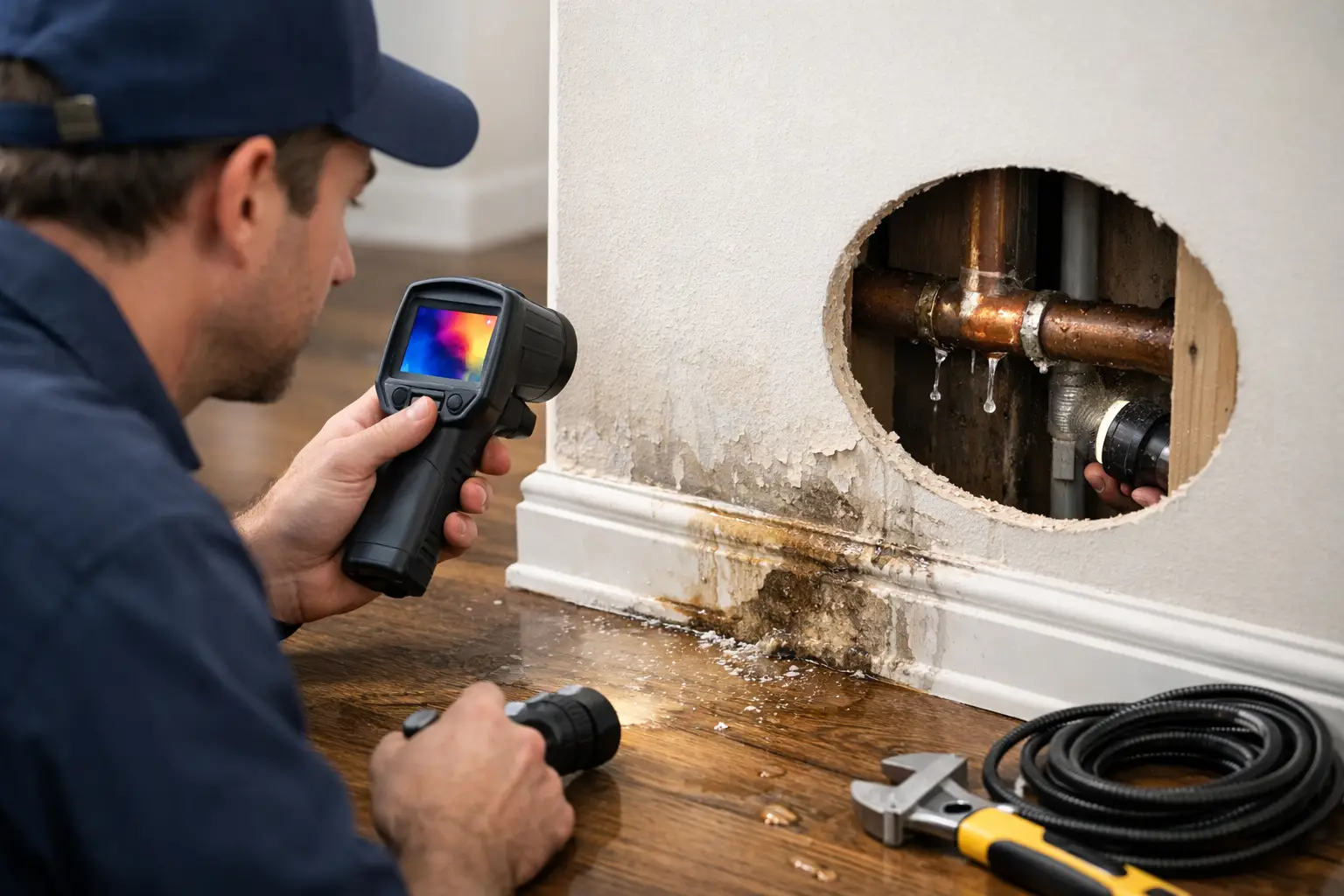
Finding the general symptoms is something a homeowner can do. Confirming the exact source without unnecessary demolition usually requires professional tools and experience. Depending on the situation, a plumber may use pressure testing, moisture detection, thermal imaging, acoustic listening equipment, camera inspection, or targeted access points to locate the problem.
The right method depends on the type of plumbing and the evidence at the home. A drain leak behaves differently from a pressurized water-line leak. A slab leak requires a different approach than a leaking shower pan or underground service line. There is no one test that fits every house.
Trinity Plumbing & Drains takes a diagnosis-first approach: identify the source, explain the scope, and make the repair that addresses the actual problem. For homeowners in Albany, Colonie, Troy, Delmar, and East Greenbush, that means clear answers without guessing or opening up more of the home than necessary.
If your meter is moving, your bill is climbing, or you see new moisture where it does not belong, do not wait for the damage to become obvious. Document what you found, stop the water if needed, and get the leak checked while it is still a manageable repair.