
How to Fix Slow Drains Without Making It Worse
Learn how to fix slow drains safely, what causes them, and when Albany-area homeowners should call a plumber before a clog becomes a backup in your home.
A bathroom sink that takes two minutes to empty is not just annoying. It is often the first warning that buildup is narrowing the drain line. Knowing how to fix slow drains can save you from a messy backup, but the right approach depends on where the blockage is and what is causing it.
Start with the simplest checks. If the drain does not improve, or if more than one fixture is affected, stop treating it like a minor clog. That is when a professional diagnosis can prevent damage, sewer exposure, and repeated repair costs.
First, Determine Whether It Is One Drain or the Whole System
A single slow sink, shower, or tub usually points to a local obstruction near that fixture. Hair, soap residue, toothpaste, grease, and small objects collect in traps and branch lines over time. This is often a manageable issue if the drain is still moving water and there are no signs of a larger problem.
If multiple drains are slow at the same time, the concern is different. A slow kitchen sink combined with a gurgling toilet, water rising in the shower when the washing machine drains, or a basement floor drain backing up can indicate a main sewer line restriction. Tree roots, grease accumulation, a damaged pipe, or a partial sewer blockage may be involved.
Do not keep running water through a suspected main-line blockage to test it. Every flush, shower, or laundry load adds more wastewater to a line that may already be close to backing up.
Safe Ways to Fix a Slow Drain at Home
For a single slow fixture, begin with the least aggressive method. The goal is to remove accessible buildup without damaging the pipe or forcing a clog farther down the line.
Remove Hair and Debris From the Drain Opening
In showers and bathroom sinks, hair is frequently the problem. Take off the stopper or drain cover and use a plastic drain-cleaning tool or a small hooked tool to pull out visible hair and soap buildup. Wear gloves and have a trash bag ready. The material can be unpleasant, but removing it directly is usually more effective than pouring products into the drain.
Clean the stopper while it is out. Sink pop-up assemblies often collect a thick coating of hair, toothpaste, and soap underneath the visible portion. Reinstall the stopper, then run hot water for a minute to see whether drainage improves.
Use a Plunger Correctly
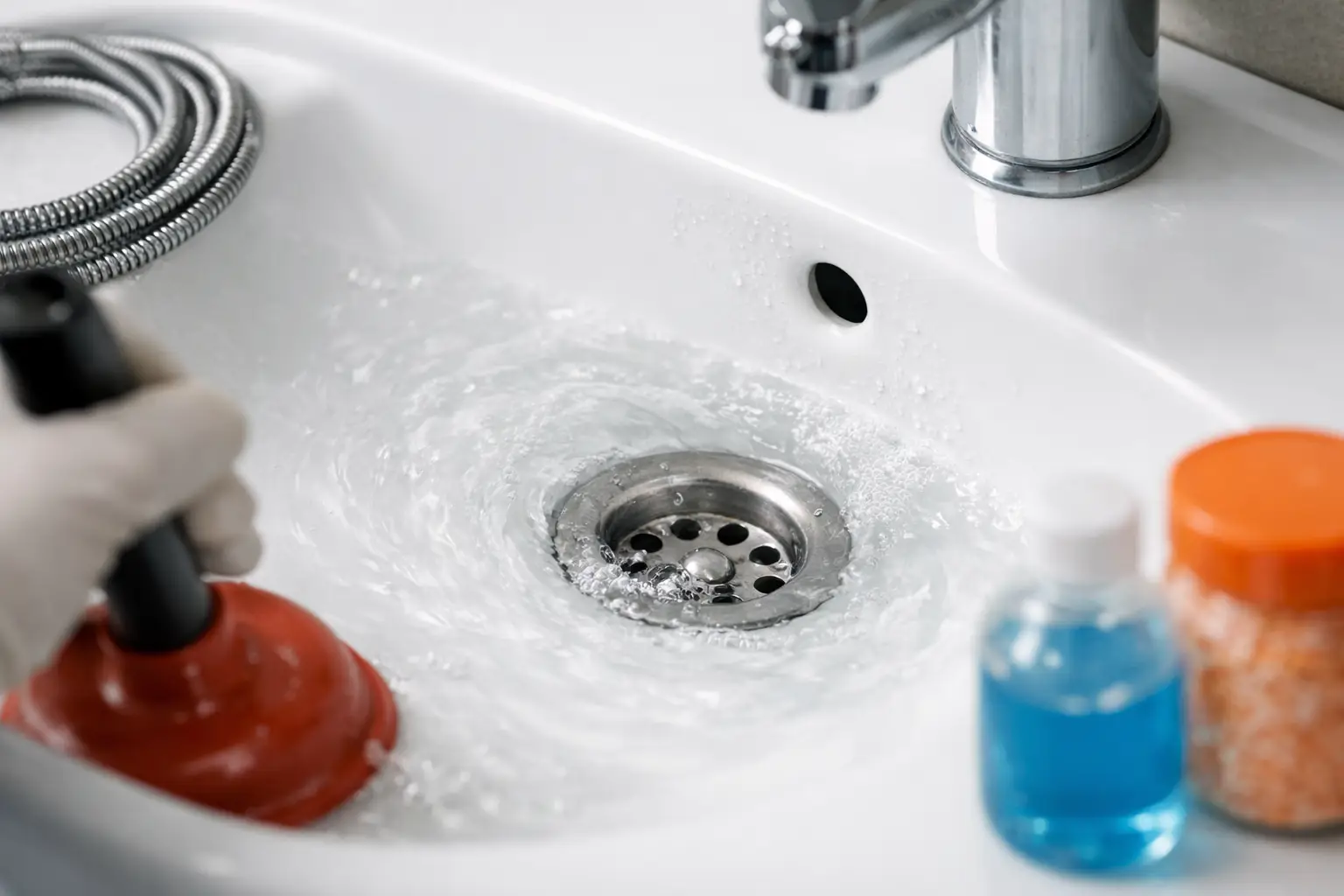
A plunger can work well on a sink, tub, or shower when there is a partial clog near the trap. For a sink, block the overflow opening with a wet rag before plunging. That creates the seal needed for pressure to reach the clog rather than escaping through the overflow channel.
Use short, firm strokes rather than a few hard pushes. Add enough water to cover the plunger cup, then plunge for 15 to 20 seconds. Check the drain, and repeat once or twice if needed. If the water level rises instead of falling, stop. The obstruction may be too solid or too far into the pipe for plunging to solve safely.
Clean the P-Trap Under a Sink
If a bathroom or kitchen sink remains slow, the P-trap may be holding debris. Place a bucket and towels underneath it, then carefully loosen the slip nuts by hand. Empty the trap into the bucket and inspect it for buildup or a dropped object.
This works best on accessible plastic or metal sink traps in good condition. If connections are corroded, the cabinet area is wet, or you are not comfortable taking the assembly apart, leave it alone. Older fittings can crack or fail when disturbed, turning a slow drain into a cabinet leak.
After cleaning, reinstall the trap and test it with water while watching every connection. Hand-tighten first. Over-tightening plastic fittings can damage the threads or washers.
What Not to Put Down a Slow Drain
Chemical drain cleaners are a common first move, but they create more problems than they solve in many homes. Strong liquid or gel cleaners can sit in a partially blocked line, generate heat, damage older pipes, and leave hazardous chemicals behind for the next person who opens the drain.
They are especially risky when a homeowner has already tried one product and the drain is still blocked. Mixing chemicals, even unintentionally, can create dangerous fumes or reactions. Never combine drain cleaner with bleach, ammonia, vinegar, or another cleaner.
Skip makeshift methods that involve excessive force as well. Aggressively pushing a wire hanger into a drain can scratch fixtures, damage a trap, or push the clog deeper. A homeowner-grade auger may help with a straightforward hair clog, but it can also become stuck or damage a pipe if used incorrectly.
For kitchen drains, avoid relying on boiling water as a cure. Hot water may loosen small amounts of grease, but it will not clear a heavy grease blockage. In some plumbing systems, extremely hot water can also stress plastic drain components. The better prevention is keeping cooking grease, coffee grounds, food scraps, and starchy residue out of the drain in the first place.
Signs the Problem Is Beyond a Simple Clog
A slow drain needs professional attention when it comes with warning signs that point to the main sewer, a venting issue, or a damaged line. Call for drain service if you notice any of the following:
- Water backs up into a tub or shower when a toilet is flushed.
- More than one sink, tub, or toilet is draining slowly.
- Toilets gurgle, bubble, or change water level without being used.
- You smell sewage indoors or near the foundation.
- A floor drain in the basement has standing water or wastewater coming up.
- The clog returns soon after plunging or cleaning the trap.
- You have tried a drain cleaner and the line is still blocked.
These symptoms should not be ignored, particularly in homes with older sewer piping or mature trees near the sewer route. In Albany-area neighborhoods, root intrusion and aging underground lines are common causes of recurring drainage trouble. A cable may open the line temporarily, but a camera inspection can show whether roots, scale, a broken pipe, or a sagging section is causing the repeat blockage.
Why Diagnosis Comes Before Drain Cleaning
The right drain-clearing method depends on the blockage. A kitchen line packed with grease needs a different approach than a shower line full of hair. A sewer line affected by roots may need professional cabling and further evaluation. A cracked or collapsed line will not be permanently fixed by repeated snaking.
That is why a professional service call should start with clear symptom review and targeted diagnosis, not guesswork. A plumber can determine whether the issue is isolated to one fixture, located in a branch line, or affecting the main sewer. When needed, camera equipment provides a direct view inside the pipe so the repair recommendation is based on the actual condition of the line.
Trinity Plumbing & Drains provides diagnosis-first drain and sewer service for homeowners who need a clear answer, clean work area, and a repair plan without the runaround. For an active backup or wastewater coming into the home, treat the situation as urgent and limit water use until help arrives.
Keep Slow Drains From Coming Back
Once the drain is flowing, a few habits make a real difference. Use a hair catcher in showers and tubs. Wipe grease from pans before washing them. Run cold water when using a garbage disposal, and do not treat the disposal as a substitute for the trash can.
Bathroom drains benefit from regular stopper cleaning, especially in households with long hair. Kitchen drains need more care around grease, rice, pasta, coffee grounds, and fibrous vegetable scraps. None of these items belong in a drain just because water can carry them away.
If a drain slows down again within weeks, do not keep repeating the same DIY fix. Recurring clogs are useful information. They often mean there is a larger buildup or pipe issue that needs to be located and corrected before it turns into a backup at the worst possible time.
A slow drain is easiest to handle while it is still a small problem. Clear the accessible debris, avoid harsh chemicals, and pay attention to what the rest of your plumbing is telling you. When several fixtures are involved or water starts coming back up, stop using the system and call for professional drain service before a slow drain becomes a cleanup job.