
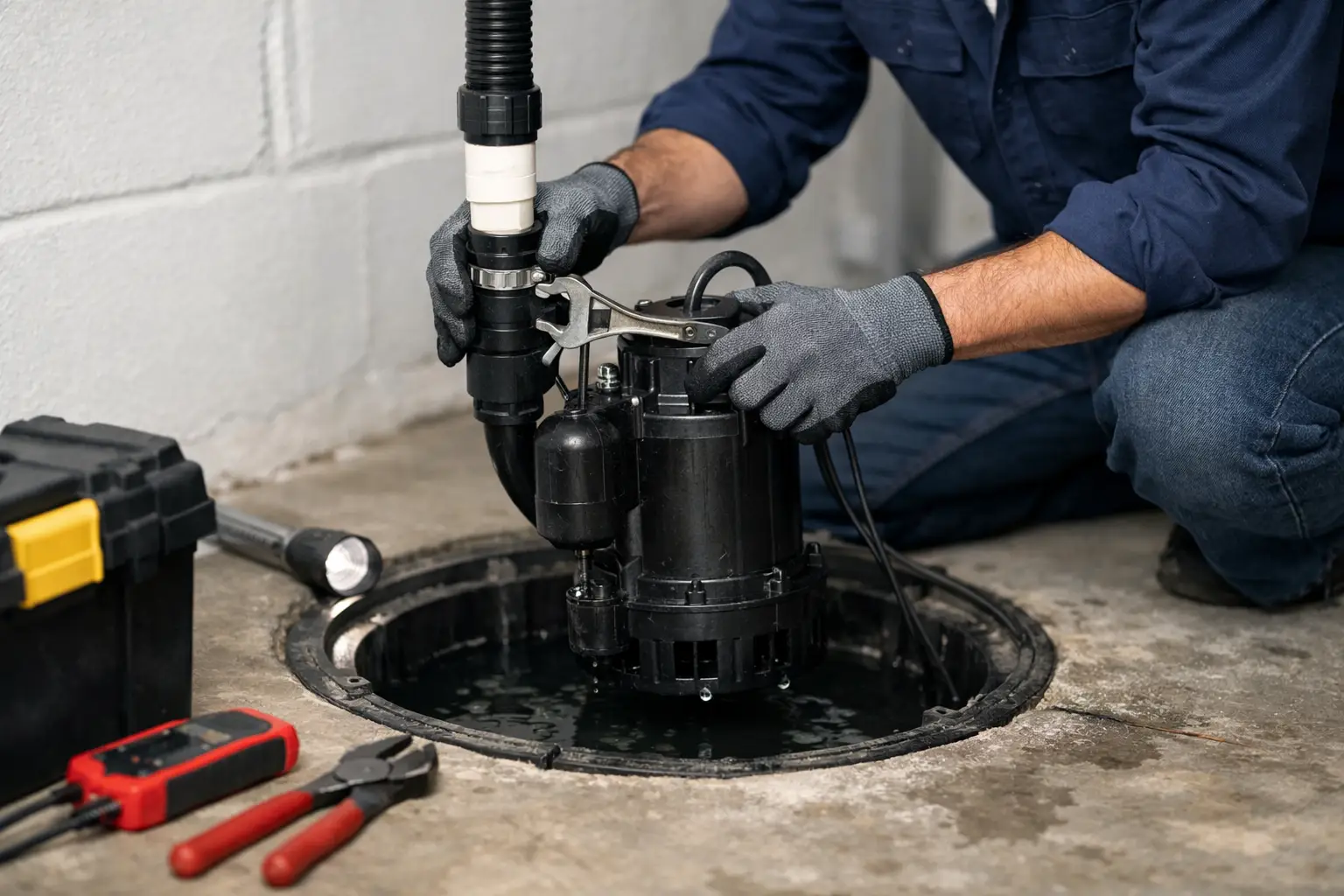
How to Fix Sump Pump Problems Fast
Learn how to fix sump pump issues fast, from power loss to clogs and switch failure, and know when to call a licensed plumber for repair.
A sump pump usually waits until the worst possible moment to fail - during heavy rain, spring thaw, or right after your basement already starts taking on water. If you are searching for how to fix sump pump problems, the first step is not guessing. It is figuring out whether the issue is power, float switch failure, discharge blockage, or a pump that has simply reached the end of its service life.
For homeowners in Albany and the surrounding area, that distinction matters. Some sump pump problems can be handled with a quick reset or cleanup. Others point to electrical risk, hidden drain issues, or a failing system that needs a proper repair before the next storm hits.
How to fix sump pump issues starts with the symptom
The fastest way to narrow down the problem is to pay attention to what the pump is doing, or not doing. A sump pump that is completely silent usually points to power loss, a tripped breaker, a failed outlet, or a dead motor. A pump that hums but does not move water often has a jammed impeller or a blocked discharge line. A pump that runs nonstop may have a stuck float, a check valve problem, or more groundwater entering the pit than the system can handle.
If the pump turns on and off too often, that is usually a float switch issue, a poorly sized pit, or a pump that is too powerful for the basin. Short cycling wears the unit out fast. If you hear grinding, rattling, or unusually loud vibration, do not ignore it. That usually means worn internal parts or debris inside the pump housing.
Start with power and safety
Before you touch the unit, unplug it or shut off the breaker to the sump pump circuit. Water and electricity are a bad combination, and basement conditions are not the place to take chances.
Check whether the pump is plugged directly into a working outlet. Some pumps share a GFCI outlet that may have tripped. Reset it once and test again. If the breaker trips repeatedly, stop there. That is no longer a simple reset issue. Repeated tripping can mean motor failure, damaged wiring, or moisture where it should not be.
If you have a battery backup system, check that separately. Sometimes the main pump is fine, but the backup alarm is what alerted you. Other times the backup has taken over because the primary pump already failed.
Check the float switch before replacing the pump
A stuck float switch is one of the most common reasons a sump pump stops working properly. The float is what tells the pump when to turn on and off. If it gets caught on the side of the basin, tangled in the cord, or blocked by debris, the pump may not activate when water rises.
Lift the float gently by hand after restoring power. If the pump turns on, the switch may still work but is being obstructed. Clear out anything inside the pit that could interfere with movement. Mud, gravel, loose pipe, and even the pump cord itself can block the float.
If the float does not activate the pump, the switch may have failed. Some switch components can be replaced on certain models, but not all repairs make financial sense. If the unit is older and already showing wear, replacing the pump may be more reliable than replacing one part and hoping the rest holds up.
Clear the sump pit and pump intake
If the pump has power and the switch works, the next problem may be clogging. Sump pits collect sediment over time. That buildup can choke the intake screen or jam the impeller.
Disconnect power, remove the pump if the setup allows it, and inspect the bottom intake. Clear away mud, grit, or small stones. Wash down the basin if there is heavy sludge. This is a practical fix in many homes, but it depends on access. In a tight pit or hard-piped installation, forcing the pump out can damage fittings or create a leak at reconnection.
If the impeller is jammed, you may be able to free it by removing debris. If the motor has been humming against a jam for too long, the pump may already be burned out.
Inspect the discharge line
A sump pump can sound like it is working and still fail to protect the basement if the discharge line is blocked. Water has to leave the house. If the line is frozen, clogged, or installed with a bad slope, it can force water back into the pit.
Go outside and confirm water is discharging where it should. If there is no flow during operation, check for visible blockage at the outlet. In cold weather, frozen discharge lines are common. A buried line can also clog with debris or collapse over time.
This is where quick homeowner fixes have limits. If the line is frozen near the exterior end, warming that section may help. If the blockage is deeper, repeated pump cycling can overheat the motor and do more damage. A proper diagnosis matters more than guessing.
Do not overlook the check valve
The check valve on the discharge pipe stops water from flowing backward into the pit after the pump shuts off. If it fails, the pump may run more often than it should, and the pit may refill immediately after each cycle.
A bad check valve can sound like a loud thump or cause erratic cycling. In some cases, you can see the problem if the pipe drains backward right after shutoff. Replacing a check valve is usually straightforward for a plumber, but it still needs to be installed in the correct direction and sealed properly. A sloppy installation creates a different leak than the one you started with.
When a sump pump runs but the basement still gets wet
Not every wet basement means the pump itself is broken. The basin may be too small, the pump may be undersized, or groundwater volume may be exceeding what the system can handle. You can also have water entering from foundation cracks, poor grading, window wells, or a blocked footing drain.
That is why a diagnosis-first approach matters. Homeowners sometimes replace a working sump pump only to find the real issue was outside drainage or a bad discharge setup. Other times the pump is technically running but is the wrong type for the home. A pedestal pump and a submersible pump do not perform the same way in every application, and horsepower matters more than people think.
When to stop troubleshooting and call for repair
If the pump has no power and electrical resets do not solve it, if the motor hums without moving water, if the unit trips the breaker, or if the basement is actively taking on water, it is time to bring in a licensed plumber. The same goes for a cracked basin, damaged discharge piping, repeated backup alarms, or a system that is clearly beyond its service life.
There is also the code and safety side of the job. Improper discharge routing, missing check valves, unsecured electrical connections, and makeshift backup setups create real risk. In an emergency, fast service matters, but so does getting the repair done correctly the first time.
For homeowners who want a clear answer without the runaround, Trinity Plumbing & Drains approaches sump pump issues the same way any urgent plumbing problem should be handled - inspect the system, identify the actual failure point, explain the repair options clearly, and fix what needs fixing.
How to fix sump pump problems before they become emergencies
The best repair call is the one you avoid during the next storm. Test the pump every few months by pouring water into the pit until the float rises. Listen for smooth startup, steady discharge, and normal shutoff. Clean the pit if sediment is building up. Check that the discharge line outside stays open and directs water away from the foundation.
If your home depends heavily on the sump pump in spring or during major rain, think about age and backup protection. Many pumps give warning signs before total failure. More noise, more frequent cycling, and slower drainage are not minor quirks. They are signs the system needs attention.
A sump pump does not need to be fancy. It needs to be reliable when the water starts rising. If your fix is simple, handle it early. If the problem is bigger than a clog or reset, get it diagnosed before a wet basement turns into a cleanup job, damaged storage, or water where it should never be.