
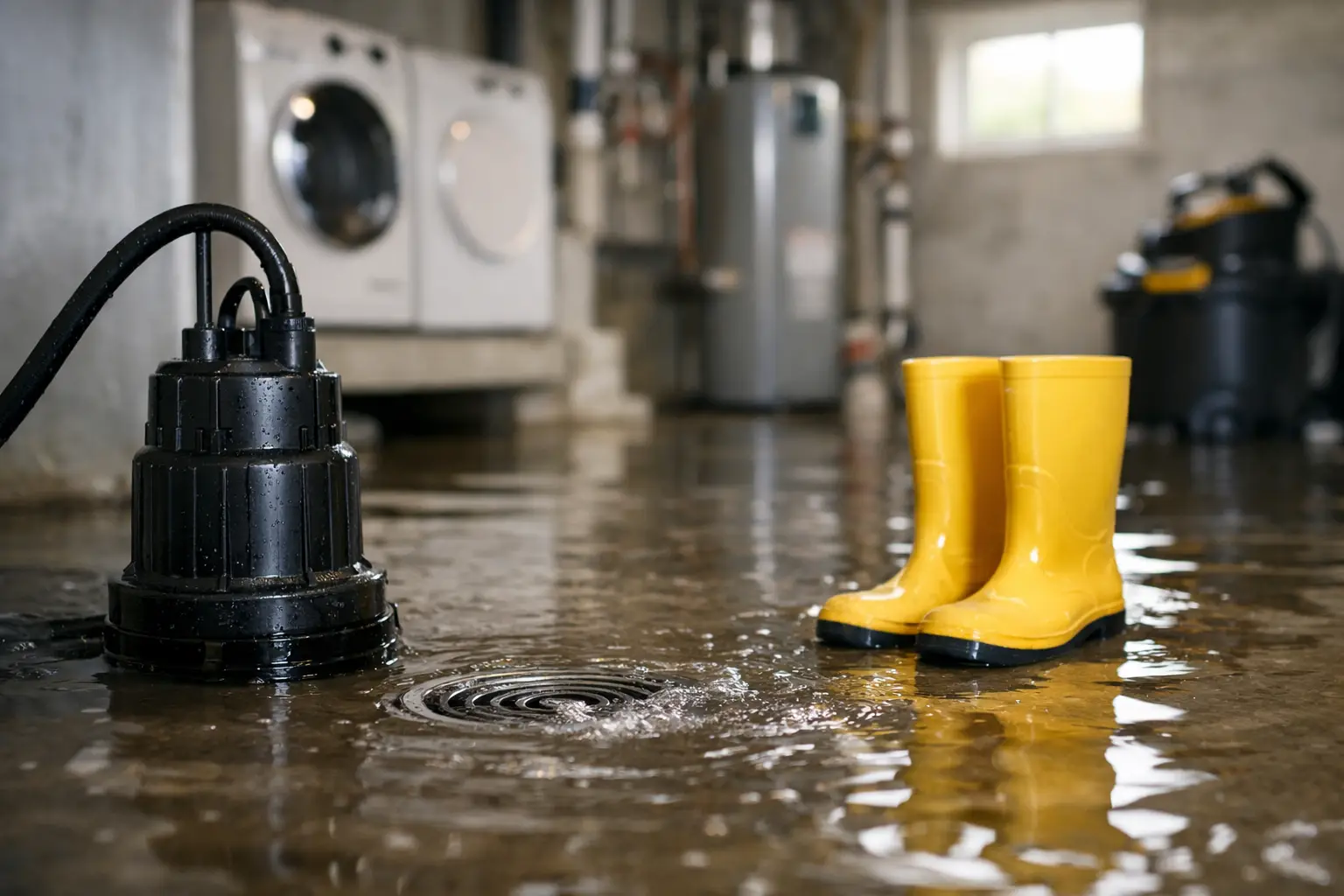
How to Prevent Basement Flooding
Learn how to prevent basement flooding with practical steps to protect your home from sump pump failure, poor drainage, backups, and leaks.
A wet basement usually starts with something small that got ignored. One heavy rain, one failed sump pump, or one clogged drain later, you are dealing with damaged flooring, soaked storage, and the question every homeowner asks too late - how to prevent basement flooding before it happens again.
The short answer is that basement flooding is rarely caused by just one thing. In Albany-area homes, it is often a combination of surface water, foundation seepage, drain problems, and sump pump issues. If you want a dry basement, you need to address the water outside the house, the drainage systems inside it, and the equipment that is supposed to protect you when conditions get bad.
How to prevent basement flooding starts outside
The first place to look is not the basement floor. It is the grading, gutters, downspouts, and drainage around the outside of the home. If rainwater is collecting near the foundation, it will eventually find a way in.
Gutters need to move water off the roof and into downspouts that discharge far enough away from the house. If a downspout ends right next to the foundation, it is doing half the job. Extensions should carry water several feet away so it does not soak the soil around the basement walls. If gutters are clogged with leaves or sagging in sections, water can overflow and drop straight down along the foundation line.
Grading matters just as much. The soil around the home should slope away from the structure, not toward it. Over time, mulch beds settle, patios shift, and low spots form along the foundation. Homeowners often do not notice until a major storm sends water pooling near the basement wall. Regrading is not always a big project, but it has to be done correctly. If the slope is wrong, water pressure builds against the foundation and seepage becomes much more likely.
Window wells are another common weak point. If a basement window sits below grade and the well fills with water, that water can push through old seals or cracked frames. Keeping wells clear and making sure they drain properly is a simple step that prevents expensive damage.
Common causes of basement flooding inside the home
Not every flooded basement is caused by rain pushing in from outside. Plumbing and drainage failures are also common, and they require a different fix.
A failed sump pump is one of the biggest risks. Many homeowners assume the pump is ready until the day it does not turn on. Sometimes the float switch sticks. Sometimes the discharge line is blocked or frozen. Sometimes the pump is undersized for the amount of incoming groundwater. If the pit fills faster than the system can pump, the basement floor becomes the overflow point.
Floor drains and main sewer lines can also back up during heavy use or heavy storms. If the lowest drain in the house starts receiving wastewater instead of draining it away, the result is not just water damage. It can become a sanitation issue fast. That is why basement flooding tied to drain or sewer problems should be handled quickly and correctly, not guessed at.
Then there are foundation cracks and wall seepage. Small cracks may not look like much during dry weather, but when the ground becomes saturated, those openings can let in a steady amount of water. Some homes also get seepage where the wall meets the floor slab. That joint is a common entry point when hydrostatic pressure builds around the foundation.
Sump pump maintenance is not optional
If your home has a sump pump, that system is one of the most important lines of defense against basement flooding. It should be tested before the rainy season, after major storms, and any time you notice unusual cycling or noise.
Pouring water into the sump pit is a simple way to confirm the pump turns on and discharges properly. You also want to check that the discharge pipe is clear and directing water away from the home. A pump that runs but sends water right back toward the foundation is not solving much.
Battery backup matters more than many homeowners realize. Storms often bring power outages, and that is exactly when a sump pump may be needed most. A backup system gives you protection when the primary pump loses power or fails mechanically. It is not an extra for every house, but in homes with a history of water intrusion or a finished basement, it is often worth it.
There is also a sizing issue. Bigger is not always better, but the pump does need to match the home’s water conditions. A diagnosis-first approach matters here. Replacing a failed pump with the same model without confirming why it failed can lead to the same problem again.
How to prevent basement flooding from sewer backups
If your concern is sewage coming up through a basement drain, the strategy is different from dealing with rainwater seepage. In that case, the focus is on maintaining the drain and sewer system and adding protection where appropriate.
A sewer line inspection can identify roots, scale buildup, offsets, or partial collapses that increase the chance of a backup. In older homes around Albany and nearby communities, aging sewer lines are not unusual. If the line already has restricted flow, a major storm or heavy household usage can push it over the edge.
A backwater valve may help in some homes by preventing sewage from reversing direction into the basement. This is not a one-size-fits-all recommendation. It depends on the layout of the plumbing system and local code requirements. But where it fits, it can be a strong preventive measure.
Routine drain cleaning can also reduce the odds of backups, especially if the home has a history of slow drains, recurring clogs, or tree root intrusion. The right solution depends on the actual cause. A quick snaking might restore temporary flow, but if the line has deeper issues, it is better to identify them before the next storm does it for you.
Basement waterproofing has limits
Homeowners often use the word waterproofing to mean any method of keeping a basement dry. In practice, there are different levels of protection, and not all of them address the same problem.
Sealing a visible crack may help if there is one isolated entry point. Applying an interior waterproof coating might reduce minor dampness on some wall surfaces. But if outside drainage is poor or hydrostatic pressure is significant, surface treatments alone are rarely enough.
That is where expectations matter. If your basement floods because water is collecting against the foundation, the long-term fix may involve exterior drainage corrections, sump improvements, interior drain systems, or foundation repair. The right answer depends on the source of the water. Guesswork wastes time and money.
Warning signs you should not ignore
Basement flooding usually gives some warning before it becomes a full emergency. Damp walls, musty odors, white chalky residue on masonry, rust on appliances, and water stains near the floor are all signs that moisture is getting in.
You may also notice the sump pump running more often, standing water in the yard after rain, or slow floor drains in the basement. None of these guarantee a flood, but they do tell you the system is under stress. Waiting for visible standing water is the expensive version of home maintenance.
If you have a finished basement, timing matters even more. Carpet, drywall, trim, and stored belongings can be damaged quickly. Mold becomes part of the problem if moisture is not handled fast.
When professional help makes sense
Some preventive steps are homeowner-level tasks. Cleaning gutters, extending downspouts, and checking for obvious drainage issues are good places to start. But when the problem involves a sump system, a recurring backup, a sewer line concern, or unexplained water entry, it makes sense to get the cause diagnosed properly.
That is especially true if you have already tried one fix and the basement still gets wet. Replacing a pump, sealing a crack, or clearing a drain without confirming the source can leave the real issue untouched. A professional inspection can narrow down whether the problem is groundwater, surface runoff, a plumbing leak, a sewer restriction, or a combination of issues.
For homeowners in Albany, Colonie, Troy, Delmar, and East Greenbush, basement water problems tend to get worse during the exact times when service demand spikes - heavy rain, snowmelt, and emergency backup events. Planning ahead is better than scrambling once water is already on the floor.
If you want to know how to prevent basement flooding, start before the next storm. Keep water moving away from the house, keep drainage systems maintained, test the sump pump, and take early warning signs seriously. A dry basement is usually the result of several small preventive decisions made at the right time.