
How to Protect Pipes in Winter
Learn how to protect pipes in winter with practical steps to prevent freezing, burst lines, and water damage in Albany-area homes.
A frozen pipe usually does not start with a dramatic burst. It starts with a cold snap, a draft you forgot about, and a section of pipe tucked behind a wall or in a basement corner that gets colder than the rest of the house. If you are wondering how to protect pipes in winter, the goal is simple: keep water lines warm enough to avoid freezing, and catch weak points before they turn into an emergency.
In the Albany area, that matters more than most homeowners would like. Older homes, uninsulated crawl spaces, attached garages, exterior walls, and sudden temperature drops all create the kind of conditions that freeze pipes fast. Once that happens, you are not just dealing with no water at a sink. You could be dealing with a split copper line, a flooded basement, or water damage behind finished walls.
Why pipes freeze in the first place
Pipes freeze when the temperature around them drops low enough for standing water inside the line to turn to ice. The ice expands, pressure builds, and the pipe can crack or split. What causes the damage is often not the frozen section itself. It is the pressure trapped between the ice blockage and a closed faucet.
The highest-risk areas are usually unfinished basements, crawl spaces, attics, exterior walls, garages, and cabinets under sinks on outside walls. Homes with poor insulation are more vulnerable, but even newer homes can have trouble spots if there is an air leak or a line was run through a cold cavity.
If you have had freezing issues before, pay attention to those same locations first. Pipes tend to freeze in repeat areas because the underlying problem often stays the same until someone corrects it.
How to protect pipes in winter before the cold hits
The best time to prevent frozen pipes is before temperatures drop below freezing for several days in a row. A little preparation now is far cheaper than emergency water cleanup later.
Start by identifying exposed water lines. Look at pipes in the basement, garage, crawl space, utility room, and under sinks on exterior walls. If you can easily see the pipe and the space gets cold, that section deserves attention.
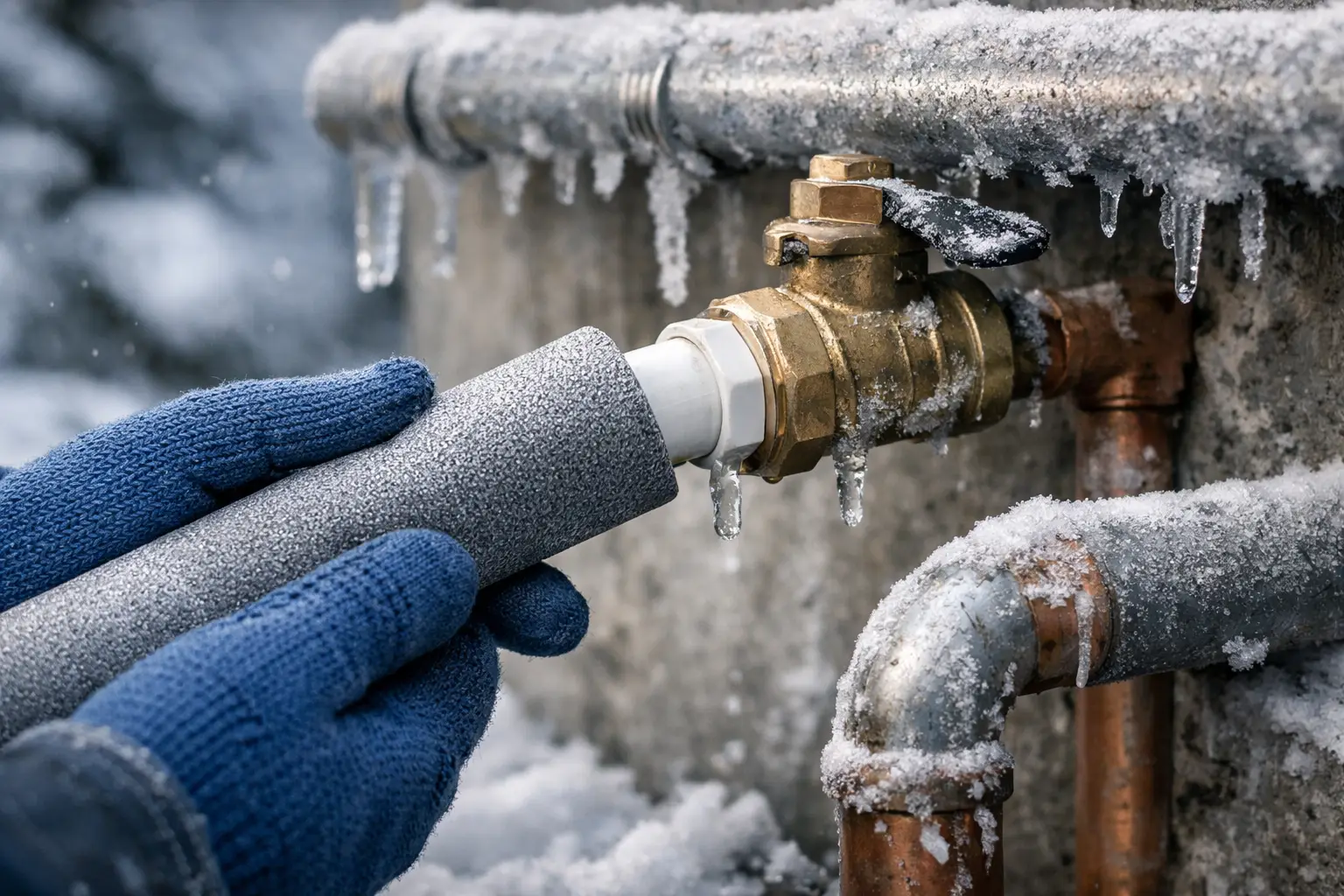
Insulation is the first line of defense. Foam pipe insulation is affordable and effective for exposed lines, especially in unheated spaces. It is not magic - if the area gets extremely cold for long enough, insulated pipes can still freeze - but it slows heat loss and gives you a much better margin of safety.
Just as important, seal cold air leaks. Gaps around rim joists, foundation penetrations, dryer vents, sill plates, and pipe entry points can let in enough freezing air to create a localized problem. Homeowners often focus on the pipe and miss the draft causing the issue.
Keep garage doors closed if there are water lines in the garage or in rooms next to it. If you have a kitchen or bathroom sink on an exterior wall, open the cabinet doors during severe cold so warmer indoor air can circulate around the plumbing. Remove anything stored inside that blocks airflow.
Outdoor hose bibs need attention too. Disconnect hoses before winter. If a hose stays attached, water can remain trapped in the faucet and freeze back into the pipe. If you have interior shutoffs for outside faucets, close them and drain the line. Frost-free hose bibs help, but only if the hose is removed.
The indoor temperature mistake that causes trouble
One of the biggest mistakes homeowners make is lowering the heat too much overnight or while traveling. Saving a little on utility costs is not worth the risk of a frozen pipe and major water damage.
Keep the home heated consistently, even if nobody is there. A common safe baseline is at least 55 degrees, but the right number depends on the home, insulation quality, and where your plumbing runs. Older homes and homes with known cold spots may need a higher setting.
If you are leaving town during winter, do not assume everything will be fine because the house is closed up. Have someone check in if possible. If a pipe freezes and bursts while you are away, the damage can continue for hours or days before anyone notices.
When to let faucets drip
During extreme cold, a slow drip can help prevent freezing in vulnerable lines. Moving water is less likely to freeze than standing water, and opening the faucet also reduces pressure in the system.
This is most useful for pipes with a history of freezing or lines that run along exterior walls and cannot be easily insulated. Let both hot and cold lines trickle if the fixture is supplied by both. A steady drip is usually enough. You do not need a full stream.
That said, dripping faucets is not a substitute for fixing the real problem. If a pipe freezes every winter, there is likely an insulation issue, air leak, or poor pipe routing that should be corrected properly.
Warning signs a pipe may be freezing
Frozen pipes do not always announce themselves clearly. Sometimes the first sign is reduced water flow at one fixture. Sometimes there is no water at all from a faucet that worked normally a few hours earlier.
Other warning signs include frost on visible piping, unusual odors coming from a drain or faucet line, or cold spots along a wall where plumbing runs. If one fixture stops working during a cold snap while the rest of the house still has water, that is a strong clue a branch line may be freezing.
Act early. The sooner you respond, the better your chance of thawing the line before it splits.
What to do if a pipe is already frozen
If you suspect a frozen pipe, start by shutting off the water if you see any crack, leak, or bulging section. If the pipe has not burst, you may still be able to prevent a bigger failure.
Open the affected faucet so pressure can release as the ice starts to melt. Then warm the pipe gradually. A hair dryer, space heater used carefully at a distance, or warm towels can help on exposed piping. Start near the faucet end and work back toward the colder section.
Never use an open flame, propane torch, or any direct high-heat method. That can damage the pipe, create a fire hazard, and make a bad situation worse fast.
If the frozen section is inside a wall, if you cannot locate it, or if the pipe has already burst, it is time to call for service. This is where a diagnosis-first approach matters. You need to know whether the line can be safely thawed, whether hidden damage is already present, and whether the repair needs to be brought up to code.
The pipes that need the most attention
Not every line in your house carries the same risk. The most vulnerable pipes are the ones exposed to cold air, but some fixtures deserve special attention.
Washing machine lines are often installed against exterior walls in utility spaces that are not well insulated. Bathroom sink lines in vanity cabinets on outside walls are another common problem area. Kitchen sink pipes can freeze if the cabinet stays closed and the wall behind it gets cold enough. Basement lines near foundation vents or windows are also high on the list.
If your home has had remodeling work over the years, do not assume all pipe routing was ideal. Additions, enclosed porches, and converted spaces sometimes leave plumbing in places that were never designed to stay warm in winter.
When prevention should become a repair
Some winter pipe problems are not one-time events. If you need to drip faucets every cold snap, if a certain bathroom loses water every January, or if you have patched freeze damage before, the issue should be evaluated properly.
A permanent solution may involve better insulation, air sealing, rerouting a line, replacing a damaged shutoff, or protecting an exposed section with the right materials. In some cases, the best fix is simple. In others, especially in older Albany-area homes, it takes a closer look to find out why that section is getting so cold.
This is also where professional workmanship matters. Pipe repairs done without proper support, insulation, or code compliance can leave the same problem waiting for the next freeze. Trinity Plumbing & Drains handles these situations with a clear diagnosis first, so homeowners know what failed, what needs to be corrected, and what can help prevent a repeat emergency.
A practical winter checklist for homeowners
Before the next hard freeze, disconnect outdoor hoses, shut off and drain exterior faucets if your setup allows it, insulate exposed interior lines, seal obvious drafts, and keep the home heated consistently. During severe cold, open sink cabinets on exterior walls and let vulnerable faucets drip if needed. If water flow slows down or stops, do not wait and hope it fixes itself.
Winter pipe protection is really about taking small warning signs seriously. A little prevention is manageable. Water damage, drywall removal, and emergency pipe repair in the middle of a cold night is a different story entirely. If something seems off, trust that instinct and deal with it before the cold makes the decision for you.