
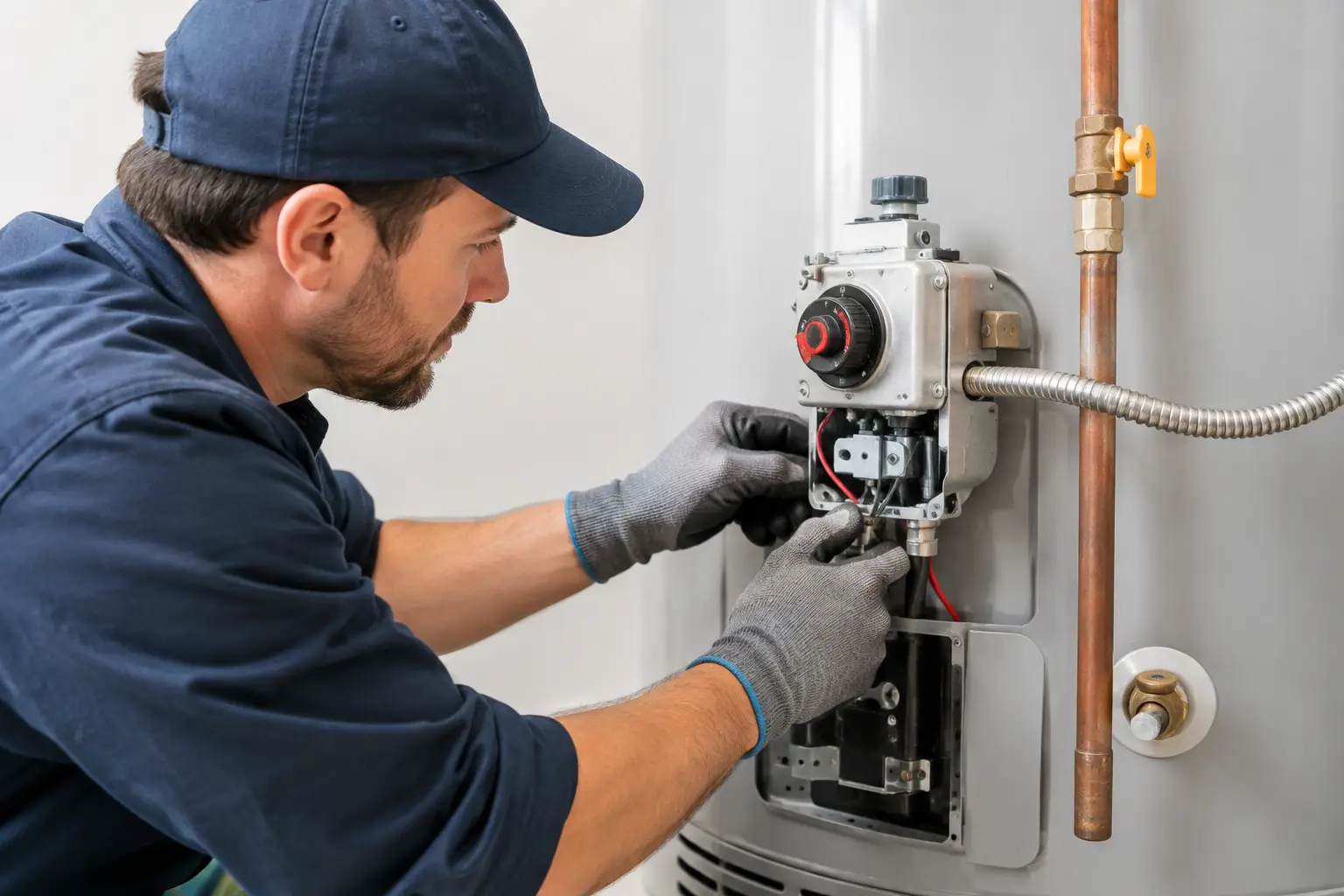
How to Relight Water Heater Safely at Home
Learn how to relight water heater pilot lights safely, spot gas-safety warning signs, and know when Albany homeowners should call a licensed plumber today.
No hot water is inconvenient. A gas smell, a pilot that will not stay lit, or an unfamiliar water heater control is a safety issue. Knowing how to relight water heater pilot lights can save time after a brief outage or shutdown, but only when the appliance is designed for homeowner relighting and there are no warning signs.
Many gas water heaters have standing pilot lights that can be relit at the unit. Others use electronic ignition and do not have a pilot light to light manually. Before touching the controls, identify which type of water heater you have and follow the lighting instructions printed on its label. If anything does not match the instructions below, stop and call a licensed plumber.
First, make sure it is safe to relight the water heater
Do not attempt to light a water heater if you smell natural gas or propane. Gas odor may be described as sulfur-like or similar to rotten eggs. Leave the home immediately, avoid using lights, switches, phones, appliances, or vehicles near the building, and call 911 or your gas utility from a safe location away from the home.
You should also stop and call for service if you see black soot around the burner area, signs of scorching, water pooling under the heater, a damaged gas line, or a vent pipe that has come loose. Those conditions point to problems beyond a simple extinguished pilot.
If there is no gas odor and the area around the tank is dry, clear, and well ventilated, look at the water heater's manufacturer label. It is usually on the front or side of the tank and gives the correct pilot-lighting sequence for that model. Use that sequence first. The general steps below apply to many conventional atmospheric-vent gas water heaters, but labels and controls vary.
How to relight a water heater pilot light
Before starting, remove anything stored near the heater. Keep flammable products, paint, gasoline, cleaners, and cardboard well away from the appliance. Open the access panel near the bottom of the tank if your model has one, then locate the gas control valve, pilot setting, and igniter button.
For a typical standing-pilot water heater, follow these steps:
- Turn the gas control knob to OFF. Do not force the knob if it will not turn.
- Wait at least five minutes. This gives any unburned gas time to clear from the burner chamber.
- Check again for a gas odor near the floor and around the water heater. If you smell gas, stop, leave the area, and call for help from outside.
- Turn the control knob to PILOT. Press and hold the pilot button or control knob, depending on the model.
- While holding the control in, press the igniter button several times. Look through the sight glass or access opening for a small blue pilot flame.
- Continue holding the pilot control for 30 to 60 seconds after the flame appears. This heats the thermocouple or flame sensor that keeps the gas valve open.
- Release the control slowly. If the pilot remains lit, turn the knob to ON and set the temperature to the recommended setting, commonly around 120°F.
- Replace the access panel if applicable. Listen for the burner to ignite when the tank calls for heat.
Do not use a match, lighter, or improvised flame unless the manufacturer specifically instructs you to do so. Most modern standing-pilot water heaters have a built-in piezo igniter. If the igniter is not producing a spark or the pilot will not light after a reasonable attempt, forcing the issue is not the answer.
What a normal flame should look like
A properly burning pilot is generally steady and blue. A small amount of yellow at the tip may occur, but a mostly yellow, lazy, flickering flame can signal a combustion or air-supply problem. Black soot, rumbling sounds, or exhaust odors are also reasons to stop using the appliance until it has been inspected.
Once the burner starts, you may hear a soft whoosh. That is normal. Loud banging, popping, or roaring is not. Turn the control off and arrange professional service if the heater makes unusual combustion noises.
If your water heater has electronic ignition
Many newer gas water heaters do not use a standing pilot. Instead, they use an electronic igniter, hot-surface igniter, or sealed combustion system. These units may show a status light or error code on the gas control valve.
With an electronic ignition model, there may be no pilot to relight by hand. A power interruption, failed igniter, dirty flame sensor, locked-out control, venting issue, or gas supply problem can prevent it from starting. Some models have a reset procedure, but that procedure must come from the unit's label or manual. Repeatedly cycling the gas control or attempting to bypass safety controls can create a larger repair and a real safety risk.
If the status light is flashing, count the flashes and compare them with the diagnostic chart on the water heater. A single reset may be appropriate if the manufacturer allows it. If the code returns, the heater needs diagnosis, not repeated resets.
Why a pilot light will not stay lit
If the pilot lights but goes out as soon as you release the button, the thermocouple may not be sensing the flame correctly. On some units, the pilot flame is weak or misdirected. On others, the thermocouple, thermopile, gas control valve, or pilot assembly has failed.
A pilot that keeps going out can also point to a blocked vent, downdraft, combustion-air issue, or moisture in the burner chamber. That is especially relevant in older Albany-area homes where mechanical rooms, basements, and venting arrangements may have changed over time. The issue is not always the part that is easiest to see.
This is why diagnosis comes before repair. Replacing a thermocouple may solve a straightforward pilot failure, but it will not correct a venting problem or a failing gas valve. A qualified plumber can test the components, inspect combustion and venting conditions, and make sure the repair is code-compliant.
Do not keep trying if any of these signs appear
One careful relighting attempt is reasonable when the heater has a clear standing-pilot procedure and there are no safety concerns. Multiple failed attempts are a reason to stop. Call for service if the pilot will not ignite, will not remain lit, or if you notice any of the following:
- A gas smell at any point during the process
- Yellow flames, soot, scorching, or smoke
- Water leaking onto the burner or gas controls
- A loose, corroded, or disconnected vent pipe
- Error lights or codes that return after the approved reset procedure
- No burner ignition after the pilot stays lit
- A water heater located in a confined area without clear ventilation
Do not remove burner assemblies, disconnect gas piping, or take apart the gas control valve to troubleshoot. Gas appliance repairs require the right testing equipment and a clear understanding of combustion, venting, and local code requirements.
When no hot water is not a pilot-light problem
A lit pilot does not guarantee hot water. If the pilot is on but the main burner never fires, the thermostat or gas control may be failing. If the burner fires but the water remains lukewarm, the tank may have sediment buildup, a damaged dip tube, an incorrect temperature setting, or a failing appliance near the end of its service life.
If the water heater is leaking from the tank itself, relighting it will not solve the problem. Shut off the water supply if it is safe to do so and call for repair or replacement guidance. A leaking tank can worsen quickly, particularly when it is installed in a finished basement or near stored belongings.
For homeowners in Albany, Colonie, Troy, Delmar, and East Greenbush, Trinity Plumbing & Drains can diagnose water heater ignition, burner, venting, and gas-line concerns without the runaround. A proper service call identifies why the pilot went out, not just how to get it burning again for the moment.
When your water heater will not relight cleanly on the first attempt, treat that as useful information. Stop before a small ignition issue becomes a gas-safety concern, and get the system checked so your hot water returns safely and reliably.