
How to Shut Off Water Fast at Home
Learn how to shut off water fast at home, from fixture valves to your main shutoff, so you can limit damage and act quickly in a plumbing emergency.
A leaking supply line can turn into floor damage in minutes. If you want to know how to shut off water before a small problem becomes an expensive one, the key is knowing which valve to close and when to stop and call a plumber.
For most homeowners, the biggest mistake is wasting time looking under the wrong sink, turning the wrong handle, or assuming the main valve will be easy to find in an emergency. It usually is not, especially if it has not been touched in years. The right move is simple - shut off the smallest section of plumbing you can first, then shut off the whole house only if you need to.
How to shut off water at the fixture
If the problem is isolated to one sink, toilet, dishwasher, washing machine, or water heater, start with the local shutoff valve. This is the fastest way to stop the flow without taking water away from the rest of the house.
Under most bathroom and kitchen sinks, you will find small shutoff valves on the hot and cold supply lines. Turn the handle clockwise until it stops. If it is a quarter-turn style valve, rotate it a quarter turn so the handle is perpendicular to the pipe. Do not force it. Older valves can seize up, and too much pressure can cause the valve to fail or start leaking around the stem.
Toilets usually have a single shutoff valve on the wall below the tank. Turn it clockwise until it closes. Washing machines typically have hot and cold valves behind the unit. Dishwashers often have a shutoff under the kitchen sink. Water heaters may have a cold-water shutoff on the inlet pipe above the tank.
If the valve closes and the water stops, you have bought yourself time. If it does not fully shut off, or if turning it causes dripping at the valve itself, move on to the main water shutoff.
How to shut off water to the whole house
The main shutoff valve stops water from entering your home. If you have a burst pipe, a broken fitting, a major leak in the ceiling, or water coming through a wall, this is the valve that matters.
In many Albany-area homes, the main shutoff is located where the water service line enters the house. That is often in the basement near the front foundation wall, near the water meter, or close to where the line comes up through the floor. In slab homes or homes without basements, it may be in a utility area, crawl space, or mechanical room.
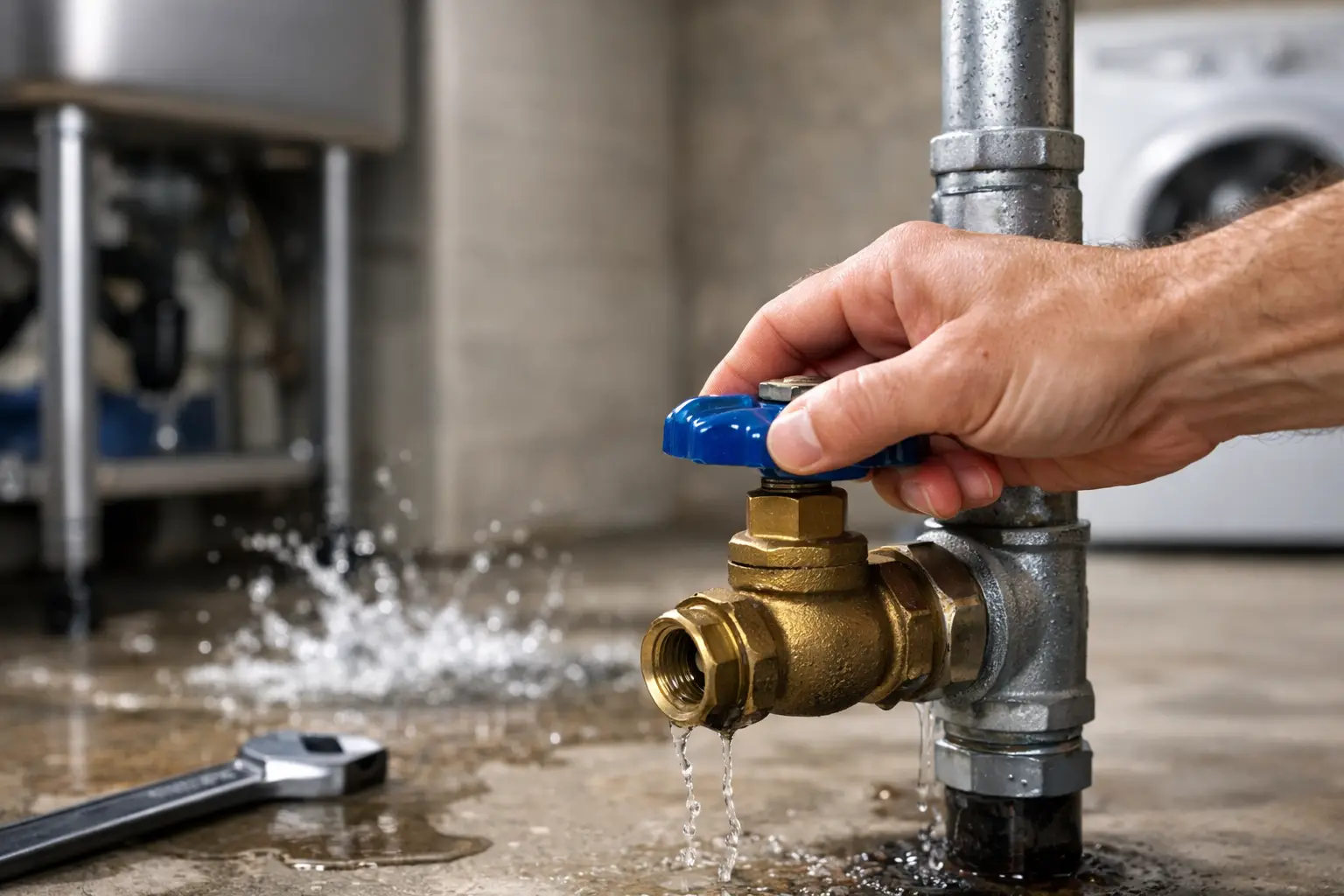
There are usually two common types of main shutoff valves. A gate valve has a round handle you turn clockwise several turns to close. A ball valve has a lever handle that turns a quarter turn. When the lever is in line with the pipe, it is open. When it is perpendicular to the pipe, it is off.
Once you find the valve, turn it slowly. If it feels stuck, do not put a wrench on it and muscle it closed unless you are prepared for the possibility that it could break. Old shutoff valves are one of those cases where it depends on the age of the plumbing and the condition of the valve. Sometimes they close cleanly. Sometimes they leak the moment they are disturbed.
After closing the main valve, open a faucet at the lowest level of the house and another on an upper floor. That helps relieve pressure and drains some of the water left in the system.
When the main shutoff does not work
A main valve is supposed to stop all incoming water, but older valves do fail. If you still have strong water flow after closing it, the valve may not be shutting completely.
At that point, you may need the curb stop shutoff near the street or property line. This is not something most homeowners should treat as a DIY step. It often requires a special tool, and forcing the issue can damage the municipal shutoff or create liability if something breaks. If your interior main valve fails during an active leak, that is the time to call for emergency plumbing service.
What to do right after you shut the water off
Stopping the water is step one. Limiting damage is step two.
If the leak is near electrical outlets, appliances, or your breaker panel, stay clear and shut off power to the affected area only if you can do it safely. Move rugs, towels, paper goods, and small furniture out of the wet zone. Use buckets or pans to catch dripping water, and take a few clear photos of the damage for insurance records if needed.
Then figure out whether this is a simple fixture problem or a repair that needs a licensed plumber. A loose supply line under a sink may be straightforward. Water staining on a ceiling, a split pipe inside a wall, or a failed shutoff valve is not a guess-and-check situation.
Common places homeowners lose time
The most common delay is not knowing the difference between a fixture shutoff and the main shutoff. The second is assuming every plumbing fixture has a working local valve. In older homes, those valves may be missing, frozen, or unreliable.
Another problem is storage. Basements and utility rooms tend to collect boxes, shelving, and seasonal items. If the main shutoff is buried behind stored items, access gets harder when minutes matter. Make sure the path to the valve stays clear.
It also helps to test your shutoff valves before you have an emergency. That does not mean cranking on every old valve aggressively. It means locating them, identifying what they control, and making a plan if one appears corroded or outdated. If your main valve looks heavily rusted, drips, or has not been exercised in years, replacing it on your terms is better than discovering the problem during a burst pipe event.
How to shut off water in a few specific emergencies
If a toilet is overflowing, shut off the toilet valve first. Then remove the tank lid and lift the float if water is still rising. If the shutoff valve does not work, use the main house valve.
If a sink supply line bursts, go straight under the sink and close both hot and cold valves. If the leak is at the wall or the valve body itself, shut off the main.
If a washing machine hose ruptures, shut off the hot and cold washer valves behind the machine. If you cannot reach them safely or they do not close, shut off the main water supply.
If a pipe has frozen and split, shut off the main even if you do not see active spraying yet. Frozen pipes often start leaking as they thaw.
If your water heater is leaking from the tank body, shut off the cold-water inlet valve above the heater. For gas or electric units, the power source should also be addressed safely. A leaking tank usually means replacement is not far behind.
A quick note on shutoff valves and older homes
Older homes in places like Albany, Troy, and Delmar often have a mix of original plumbing and newer repairs. That matters because not every valve will match, and not every repair over the years was done with long-term reliability in mind.
You may find older gate valves that no longer seal well, saddle valves that should have been replaced years ago, or improvised shutoffs installed in tight spaces. That is why the answer to how to shut off water is not always as clean as a basic plumbing diagram makes it seem. Real houses have history, and plumbing systems show it.
If your shutoff strategy depends on a questionable valve, it is worth having it inspected and replaced before it becomes an emergency. That is routine prevention, not overkill.
When to stop troubleshooting and call a plumber
If the leak is active and you cannot get the water fully off, call right away. The same goes for broken main valves, leaking shutoff valves, water inside walls or ceilings, wet basements, sewer smells, or any situation involving both water and electricity.
A good service call should not feel like guesswork. The plumber should identify the actual failure point, explain what needs to be repaired or replaced, and tell you clearly what happens next. That is especially important in urgent situations, where rushed decisions often lead to incomplete repairs.
For homeowners in the Albany area, Trinity Plumbing & Drains handles these calls with a diagnosis-first approach, clear scope, and code-compliant repair options when the shutoff will not hold or the leak goes beyond a simple valve issue.
The best time to learn how to shut off water is before you need it. Find the valves, make sure you can reach them, and if one looks suspect, deal with it now while the floor is still dry.