
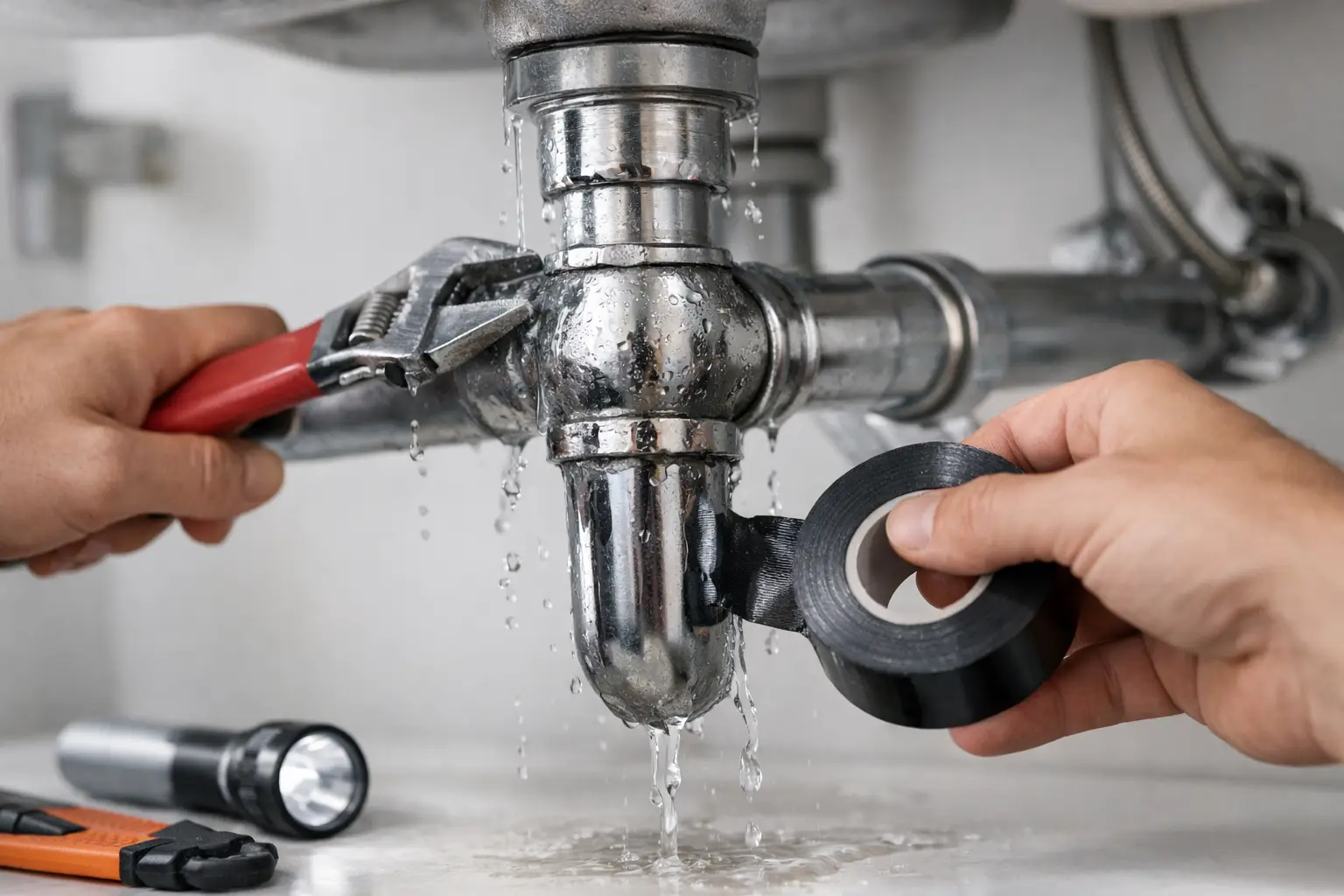
How to Stop a Pipe Leak Fast
Learn how to stop a pipe leak fast with safe, practical steps for homeowners, plus signs it is time to call a licensed plumber for repair.
A pipe leak usually shows up at the worst possible time - under a sink before guests arrive, behind a wall after dinner, or in the basement when you are already dealing with enough. If you are searching for how to stop a pipe leak, the first priority is simple: limit water damage, reduce pressure in the line, and avoid turning a small problem into a major repair.
The good news is that some leaks can be slowed or temporarily contained long enough to protect your home. The bad news is that a temporary fix is still temporary. If the pipe is split, corroded, loose at a fitting, or leaking inside a wall, the right repair depends on the actual cause. Diagnosis comes first. That is how you avoid repeat leaks, hidden damage, and repairs that fail a week later.
How to stop a pipe leak safely
Start by shutting off the water feeding the leak. If the leak is under a sink or behind a toilet, there may be a local shutoff valve nearby. Turn it clockwise until it stops. If the valve is stuck, do not force it hard enough to break it. Go to the main water shutoff for the house instead.
Once the water is off, open the nearest faucet to drain pressure from the line. Keep a bucket and towels in place to catch what is still in the pipe. If water is near an outlet, appliance cord, or breaker panel, stay clear of that area until the electrical risk is addressed.
Dry the pipe as much as possible before attempting any temporary patch. Most quick repair products do not hold well on a wet or dirty surface. Wipe off standing water, soap residue, and loose corrosion so you can actually see where the leak is coming from.
At this point, take a close look at the type of leak. A pinhole in a copper line is different from a loose slip nut under a sink. A cracked drain pipe is different from a pressurized supply line. What works in one case can completely fail in another.
Temporary ways to stop a pipe leak
If the leak is active and you need to buy time, there are a few practical options. These are damage-control steps, not final repairs.
Tighten a loose connection
If water is coming from a threaded fitting or compression nut, the connection may simply be loose. Try tightening it gently with the correct tool. Do not overdo it. Overtightening can crack plastic fittings, distort washers, or make the leak worse.
This works best on visible plumbing under sinks or at shutoff valves. If the fitting is corroded, misaligned, or still leaking after a careful adjustment, stop there. The issue may be a failed seal or damaged hardware that needs replacement.
Use plumber's tape for threaded fittings
If you have already shut off the water and can disconnect a threaded joint, plumber's tape may help reseal the threads during reassembly. This is only for threaded connections. It will not fix a crack in the pipe itself, and it is not a solution for compression fittings or slip joints.
If you are not sure what type of fitting you are looking at, forcing it apart can create a bigger leak. That is where a service call is usually the safer move.
Apply epoxy putty or pipe repair tape
For a small pinhole or hairline crack on an exposed pipe, epoxy putty or silicone-based repair tape can sometimes hold temporarily. Follow the product directions exactly. Most require the area to be dry, and some need curing time before water is turned back on.
Repair tape is usually wrapped tightly over the leak and stretched as it is applied. Epoxy putty is pressed into the damaged area after kneading. Neither product is a dependable long-term fix on a pressurized line, especially if the pipe is old, corroded, or vibrating from water movement.
Use a pipe repair clamp
A pipe repair clamp can be effective for a straight section of accessible pipe with a localized leak. It uses a rubber gasket and metal clamp to compress over the damaged spot. For homeowners with a visible basement or utility-room pipe leak, this is often the strongest temporary option.
It still depends on the condition of the surrounding pipe. If corrosion has thinned the pipe wall, the leak you see may be only one weak point in a larger failing section.
When a leak is not a DIY problem
Some leaks should not be handled with a patch kit and good intentions. If the pipe has burst, the leak is inside a wall or ceiling, or the material is badly corroded, temporary repairs are unlikely to last. The same goes for leaks near a water heater, main shutoff, gas line area, or sewer-related piping.
You should also take a step back if the source is unclear. Homeowners often see water under a sink and assume the supply line is leaking, when the actual problem is a drain connection, faucet body, sink rim, or even water traveling from another area. Repairing the wrong part wastes time and leaves the real issue active.
In older homes around Albany and nearby communities, pipe age matters. Galvanized steel, aging copper, and older shutoff valves can fail in clusters. Fixing one visible drip may reveal another weak point once pressure is restored. That is why professional diagnosis matters more than a quick patch when the plumbing system is showing its age.
How to limit water damage while you wait
If you cannot fully stop the leak right away, focus on protecting the house. Move stored items, rugs, and furniture out of the wet area. Place a container under the leak and empty it often. Use towels to keep water from spreading under cabinets or into adjacent rooms.
If water has reached drywall, trim, or flooring, dry the area as quickly as possible with fans and ventilation. The goal is to reduce swelling, staining, and mold risk. For ceiling leaks, watch for bulging drywall. That can mean trapped water overhead, and it may need to be safely drained before the ceiling gives way.
Photos are also worth taking before cleanup if the damage is significant. That can help with documentation if repairs extend beyond the pipe itself.
Signs the pipe needs repair, not a patch
A good rule is this: if you are asking how to stop a pipe leak because it has happened more than once, the pipe probably needs repair or replacement.
Recurring leaks at the same fitting, green staining on copper, rust on steel pipe, mineral buildup, low water pressure, and discolored water all point to a broader issue. So do leaks that start after temperature swings, heavy water use, or recent drain and plumbing work. Those patterns suggest wear, corrosion, movement, or pressure problems that a surface patch will not solve.
A proper repair may involve replacing a section of pipe, rebuilding a drain connection, swapping out a failed valve, or correcting poor installation. The right answer depends on the material, the location, and whether the leak is isolated or part of a larger system problem.
What a professional plumber looks for
A licensed plumber does more than stop the visible drip. The real job is identifying why the leak happened and whether anything else is likely to fail next.
That starts with isolating the line, checking pressure, inspecting fittings, and looking for corrosion, movement, freeze damage, or code issues. In some homes, especially where repairs have been done in stages over many years, you may find mixed materials, outdated valves, or questionable connection methods. Those details matter. A repair that ignores them may hold for now and fail under normal use later.
For homeowners who want the problem handled cleanly and correctly, this process matters. Trinity Plumbing & Drains approaches leaks the same way we approach any urgent residential repair - diagnose first, define the scope clearly, and make the repair to code.
Preventing the next leak
Not every pipe leak is preventable, but some are. Pay attention to small warning signs. A slow drip under a sink, a valve that is hard to turn, unexplained moisture in the basement, or a sudden jump in the water bill should not be ignored.
It also helps to know where your main water shutoff is before an emergency happens. That one step can save flooring, cabinets, drywall, and a lot of stress. If your shutoff does not work properly, replacing it before you need it is a smart move.
In winter, protect exposed pipes from freezing. In utility areas, check visible pipes occasionally for corrosion or mineral buildup. And if you have had one leak in an older section of plumbing, it is worth asking whether that area should be inspected more closely.
A leaking pipe does not always mean a disaster, but it does mean the system needs attention. Stop the water, protect the area, and use a temporary fix only if it is safe and appropriate. If the cause is not obvious or the pipe is damaged, the best next step is a proper repair before the leak turns into structural damage, mold, or another emergency call later.