
How to Unclog Bathroom Drain Fast
Learn how to unclog bathroom drain problems fast with safe DIY steps, warning signs, and when to call a plumber for a proper fix.
That slow swirl in the sink or tub usually starts small. Then one morning the water stops draining altogether, and now you need to know how to unclog bathroom drain lines without making the problem worse. In most homes, the cause is simple - hair, soap residue, toothpaste sludge, or a blockage sitting close to the drain opening. The trick is knowing when a basic fix is enough and when the clog is deeper in the line.
How to unclog bathroom drain without causing damage
Start with the least aggressive method. Many bathroom drain clogs are close enough to the surface that you can clear them without chemicals, pipe damage, or guesswork.
If the drain is in a bathroom sink, remove the stopper first. In many sinks, the stopper lifts out after a slight twist or after disconnecting the pivot rod under the sink. Once it is out, look down into the drain with a flashlight. Hair wrapped around the stopper or lodged just below the opening is one of the most common causes of a slow drain.
For a tub or shower, remove the drain cover carefully. You may need a screwdriver, depending on the style. As soon as the cover comes off, you will often see the problem right away - a compacted mat of hair mixed with soap scum. Pull out as much as you can by hand while wearing gloves or use a plastic drain tool designed to hook debris.
After removing visible debris, flush the drain with hot water. Not boiling water if you have older drain components or PVC that may already be under stress, but very hot tap water is usually safe. Run it for a minute or two and see whether the flow improves. If the water still backs up, move to the next step.
Use a plunger the right way
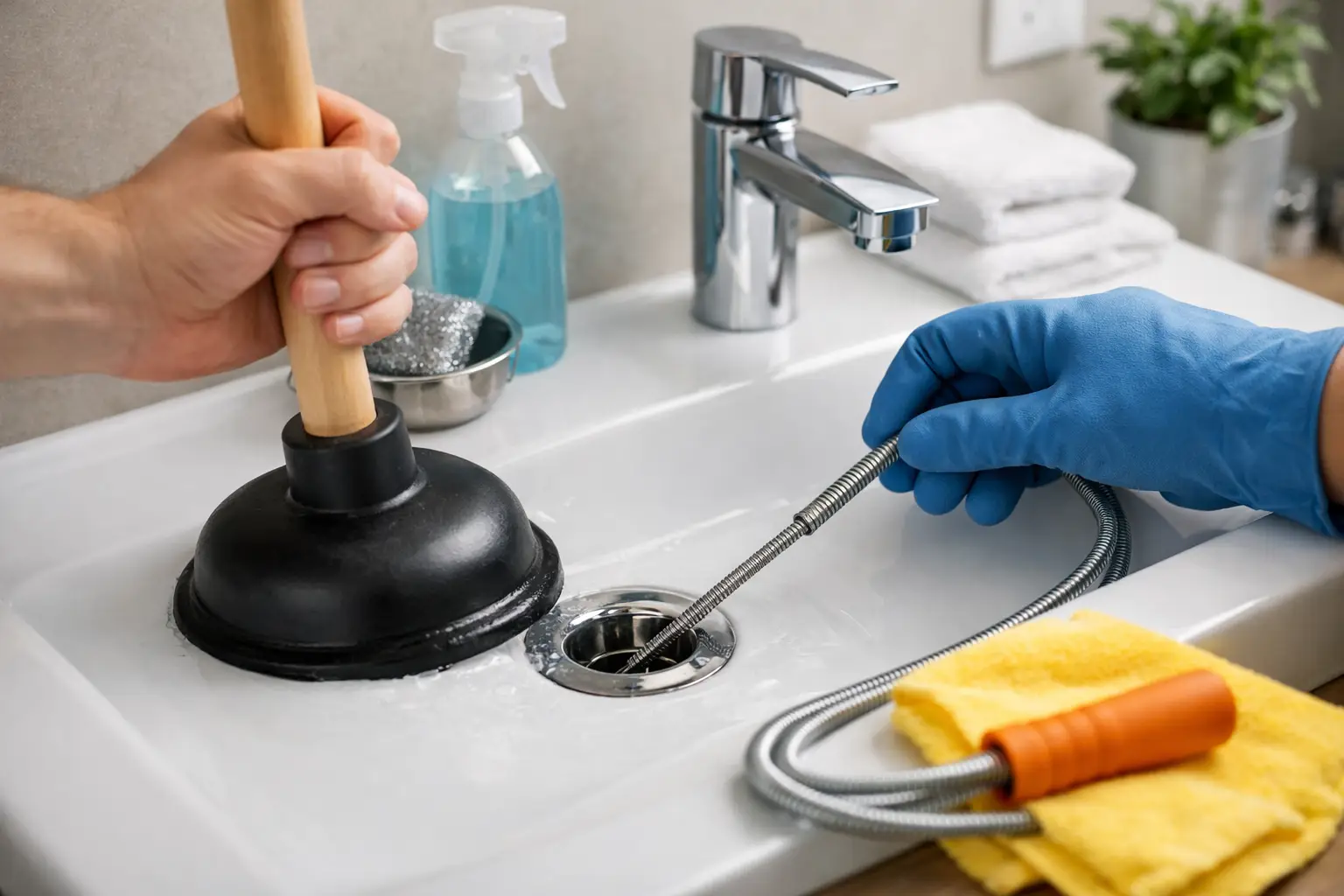
A plunger can work well on bathroom sinks, tubs, and showers, but only if you create a proper seal. For sinks, cover the overflow opening with a wet rag so air does not escape. Add enough water to cover the plunger cup, then use short, controlled plunges instead of wild force. Too much pressure can loosen old fittings, especially under a bathroom sink.
For tubs, the same principle applies. Cover the overflow plate and keep the plunger centered over the drain. A few firm plunges can break up a soft clog and get water moving again.
If the drain improves but still runs slowly, that usually means the clog is only partially cleared. You may need to physically remove the remaining debris rather than pushing it farther down the line.
A drain snake is often the most effective DIY fix
If you are serious about how to unclog bathroom drain clogs at home, a small hand snake or plastic drain weasel is usually the best next step. This is especially true for repeated bathroom drain backups caused by hair.
Feed the tool into the drain slowly. Rotate it as needed, then pull it back out. Expect it to bring up a foul mix of hair, soap, and buildup. That is normal. Wipe the cable clean and repeat until you are no longer retrieving debris.
For bathroom sinks, the clog may also be sitting in the pop-up assembly or the trap below the sink. If you are comfortable with basic home repair, place a bucket under the trap and remove it carefully. Many sink clogs collect there. Clean it out fully before reinstalling. Just do not force plastic nuts or misalign the washers during reassembly, or you may trade a clog for a leak.
What not to do when the drain is clogged
The fastest way to turn a simple clog into a bigger plumbing problem is to use the wrong method.
Chemical drain cleaners are the biggest risk. They may eat through part of a soft clog, but they also sit in the pipe, generate heat, and can damage older metal lines, weaken fittings, and create a hazard for anyone opening the drain afterward. If the cleaner fails, the next person working on that line may be dealing with caustic liquid in a confined space.
Boiling water is another common mistake. It sounds harmless, but if there is a full blockage and standing water, boiling water can splash back and cause burns. In some systems, repeated exposure to extreme heat can also stress plastic components.
It is also a mistake to keep plunging or snaking aggressively when there is no progress. At that point, the issue may not be a simple hair clog near the drain. It could be deeper in the branch line, in the venting, or tied to a broader drainage problem in the home.
Signs the clog is deeper than the bathroom drain
Not every bathroom backup starts and ends at the fixture. Sometimes the bathroom drain is just where the problem becomes visible.
If multiple fixtures are draining slowly, the issue may be farther down the line. For example, if the bathroom sink is slow and the tub also backs up, that points to a shared drain issue. If flushing a toilet causes water to rise in a shower, that is a stronger sign of a blockage deeper in the system.
Gurgling sounds matter too. If the drain gurgles after water runs or you smell sewer gas in the bathroom, there may be a venting issue or a partial blockage affecting pressure in the line. That is not a good candidate for trial-and-error fixes.
Recurring clogs are another red flag. If you clear the bathroom drain and it clogs again a week later, the blockage may only be part of the story. Heavy buildup inside the pipe, improper slope, old drain materials, or a problem farther along the line can all cause repeat backups.
When to call a plumber
Call for service if the drain is fully blocked and DIY steps are not working, if more than one fixture is involved, or if you notice sewage odor, leaks under the sink, or water coming back up in another drain. Those are signs that the problem needs proper diagnosis, not more guessing.
This is where professional drain cleaning makes a difference. A licensed plumber can determine whether the clog is local to the fixture, sitting in the trap or branch line, or connected to a larger drainage issue. That matters because the right repair depends on the actual cause. Snaking a sink line may solve one problem. A camera inspection or more advanced drain cleaning may be needed for another.
For homeowners in Albany and nearby communities, speed matters, but so does getting the diagnosis right the first time. Trinity Plumbing & Drains handles bathroom drain clogs with a clear service process, clean workmanship, and code-compliant repair recommendations when the issue goes beyond a simple blockage.
How to prevent the next bathroom drain clog
Prevention is usually simple. In showers and tubs, use a hair catcher that actually fits the drain opening and clean it regularly. In bathroom sinks, do not let shaving residue, dental floss, cotton products, or heavy soap paste wash into the drain.
Run hot water after heavy sink use, especially if multiple people use the same bathroom. It will not remove a real clog, but it can help slow down the buildup of soap and toothpaste residue near the trap. Periodically removing and cleaning the sink stopper also helps more than most homeowners expect.
Older homes may need more attention. In parts of the Albany area, aging drain lines can collect buildup faster or react poorly to off-the-shelf drain chemicals. If your home has older plumbing and the same drain keeps acting up, preventive maintenance may be cheaper than repeated emergency calls.
The bottom line on a clogged bathroom drain
A basic bathroom drain clog is often manageable with manual removal, careful plunging, or a small hand snake. The goal is not to attack the drain with the harshest product on the shelf. It is to remove the blockage safely and figure out whether the problem is isolated or part of a bigger issue.
If the clog clears easily, great. If it keeps coming back, affects more than one fixture, or shows signs of a deeper drainage problem, stop before a minor inconvenience turns into pipe damage or a messy backup. A bathroom drain should be simple. When it is not, a proper diagnosis saves time, money, and a lot of frustration.