Hydro Jetting vs Snaking: Which Clears Drains?
Hydro jetting vs snaking: learn which drain-cleaning method fits grease, roots, and recurring clogs, and when Albany homeowners need service. Fast help.
A kitchen sink that drains slowly is frustrating. A main sewer line that sends water back into the tub or basement is a problem that needs fast attention. When homeowners compare hydro jetting vs snaking, the right choice depends on what is actually inside the pipe, where the blockage is located, and the condition of the drain line itself.
Both methods can restore drainage, but they do very different jobs. A professional diagnosis should come first. Clearing a clog without identifying its cause can leave you dealing with the same backup again a few weeks later.
Hydro Jetting vs Snaking: The Main Difference
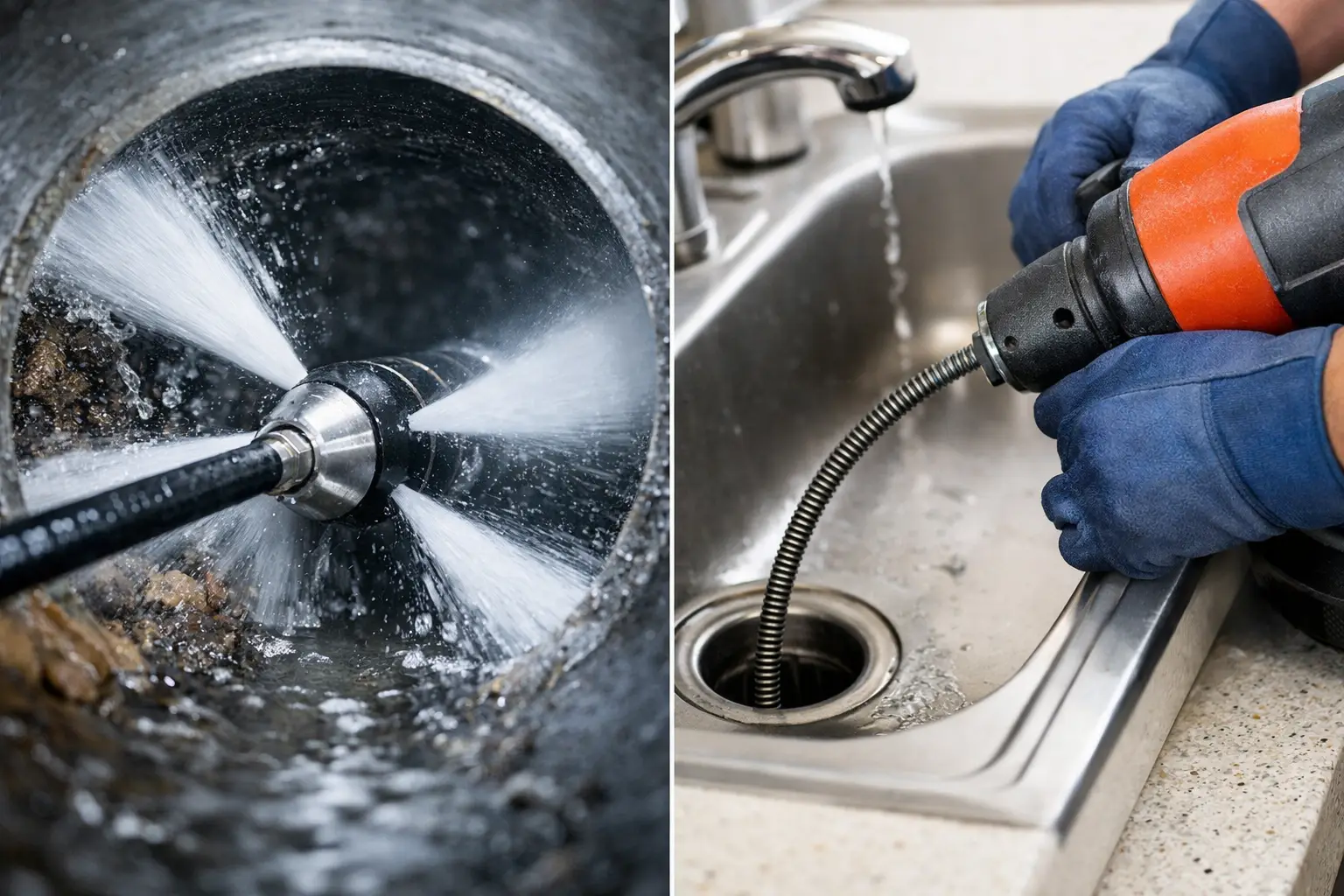
Drain snaking uses a flexible cable with a cutting or boring head to break through a blockage. The technician feeds the cable through the drain or sewer cleanout, works it into the obstruction, and either opens a path through it or pulls material back out. It is a targeted mechanical method and is often the practical first choice for a straightforward clog.
Hydro jetting uses a specialized hose and nozzle that sends high-pressure water through the pipe. The water scours the pipe walls while pushing loosened buildup down the line. Rather than simply making a hole through the clog, hydro jetting is designed to remove grease, sludge, scale, soap residue, and other debris along a larger section of pipe.
Neither service is automatically better in every situation. Snaking is often faster and less involved for a single blockage. Hydro jetting can provide a more complete cleaning when buildup or recurring sewer problems are the real issue.
When Drain Snaking Is the Right Call
Snaking works well when the problem is localized. A wad of hair in a shower drain, a small object caught in a bathroom sink trap, or a toilet blockage may not need high-pressure cleaning. A cable machine can often clear the obstruction efficiently without treating more pipe than necessary.
It is also commonly used when there is an urgent backup and the immediate priority is getting the line flowing again. If a drain is stopped completely, opening the line quickly can prevent further overflow and give the plumber a better view of what needs to happen next.
For many homeowners, the benefit is simple: snaking can be an effective solution for an isolated clog at a reasonable service scope. But it has limits. A snake may punch through grease or accumulated debris without fully removing the coating left on the pipe walls. Water starts moving, but the conditions that caused the clog can remain.
Snaking may also cut through tree roots in a sewer line, but roots can grow back. If the line has repeated root intrusion, a camera inspection and a longer-term repair plan may be needed rather than repeated cable service alone.
Signs a Snake May Be Enough
A drain snake is often appropriate when a single fixture is affected, the clog is new, or there is no history of recurring backups. For example, a bathroom sink that slows down over time may simply have hair and soap buildup close to the drain opening.
A professional will still check the symptoms carefully. If several fixtures are backing up together, the issue is more likely in a branch line or main sewer line. That calls for a more thorough diagnosis before deciding on the proper equipment.
When Hydro Jetting Makes More Sense
Hydro jetting is built for lines with heavy buildup. Kitchen drains are a common example. Grease, oil, food particles, and detergent residue can collect inside the pipe over time. Even if the sink has been treated with a cable before, the line can clog again because the sidewalls are still coated.
The same is true for older drain lines with scale, sludge, or years of accumulated debris. Hydro jetting can clean a much larger portion of the line than a basic cable pass, helping restore the pipe's usable diameter and improve flow.
It can also be useful for recurring main sewer line clogs, particularly when roots or heavy debris are involved. The high-pressure stream can clear loose root masses and flush out material that would otherwise remain after mechanical cutting. However, jetting does not repair broken pipe, separated joints, or a collapsed sewer line. If a camera inspection shows structural damage, cleaning alone is not the answer.
A Camera Inspection Matters Before Jetting
Hydro jetting is powerful equipment, not a one-size-fits-all drain treatment. Before using it on an older, damaged, or unknown sewer line, a plumber may recommend a camera inspection. This reveals whether the pipe has cracks, offsets, severe corrosion, bellies, or other defects that change the safest repair approach.
That inspection protects the homeowner from spending money on the wrong service. It also prevents a technician from applying high pressure to a line that needs repair or replacement instead of cleaning. A diagnosis-first process is not extra guesswork. It is how you avoid clearing a drain today and facing another sewer backup tomorrow.
Cost Depends on the Problem, Not Just the Tool
Homeowners often ask whether hydro jetting costs more than snaking. In most cases, yes. Hydro jetting requires specialized equipment, setup, and a clear understanding of the pipe condition. The service scope can also be larger because the goal is to clean the line, not only break through one obstruction.
That does not mean snaking is always the lower-cost choice over time. If a kitchen drain needs repeated snaking because grease is still coating the pipe, one proper jetting service may reduce the frequency of future clogs. On the other hand, using hydro jetting for a simple hair clog would usually be unnecessary.
The honest answer is that the best value comes from matching the service to the cause. A clear upfront explanation should cover what is blocked, what method is recommended, what the work is expected to accomplish, and whether additional repair may be required.
What Homeowners Should Not Do Before Service
Avoid pouring repeated doses of chemical drain cleaner into a slow or blocked drain. These products can be hazardous, may damage certain pipes, and can leave caustic liquid sitting in the line for the person who has to service it. They also rarely solve a main sewer line blockage.
Do not keep running water into a drain that is already backing up. If a toilet flush causes water to rise in a tub, or a washing machine drain triggers a basement backup, stop using water fixtures as much as possible. Continued use can turn a drain problem into water damage and sanitation cleanup.
If you can safely identify the affected fixtures, that information helps the technician diagnose the issue faster. Note whether one sink is slow, whether multiple drains are involved, and whether the problem has happened before. Those details point toward a local clog, a branch-line blockage, or a main sewer concern.
A Practical Choice for Albany-Area Homes
Older homes around Albany, Colonie, Troy, Delmar, and East Greenbush can have a mix of aging drain materials, mature trees, and long-established kitchen and sewer lines. That makes assumptions risky. A recurring clog may be grease buildup, roots, a damaged line, or several problems at once.
Trinity Plumbing & Drains approaches drain and sewer service by identifying the source first, then explaining the appropriate repair or cleaning method without the runaround. Whether the line needs a cable machine, hydro jetting, camera inspection, or sewer repair, the goal is the same: get the system working safely and address the reason it failed.
If water is backing up into your home, treat it as an urgent plumbing issue. Stop using affected fixtures, protect the area from overflow when possible, and arrange professional service before a manageable clog becomes a larger cleanup or repair.