
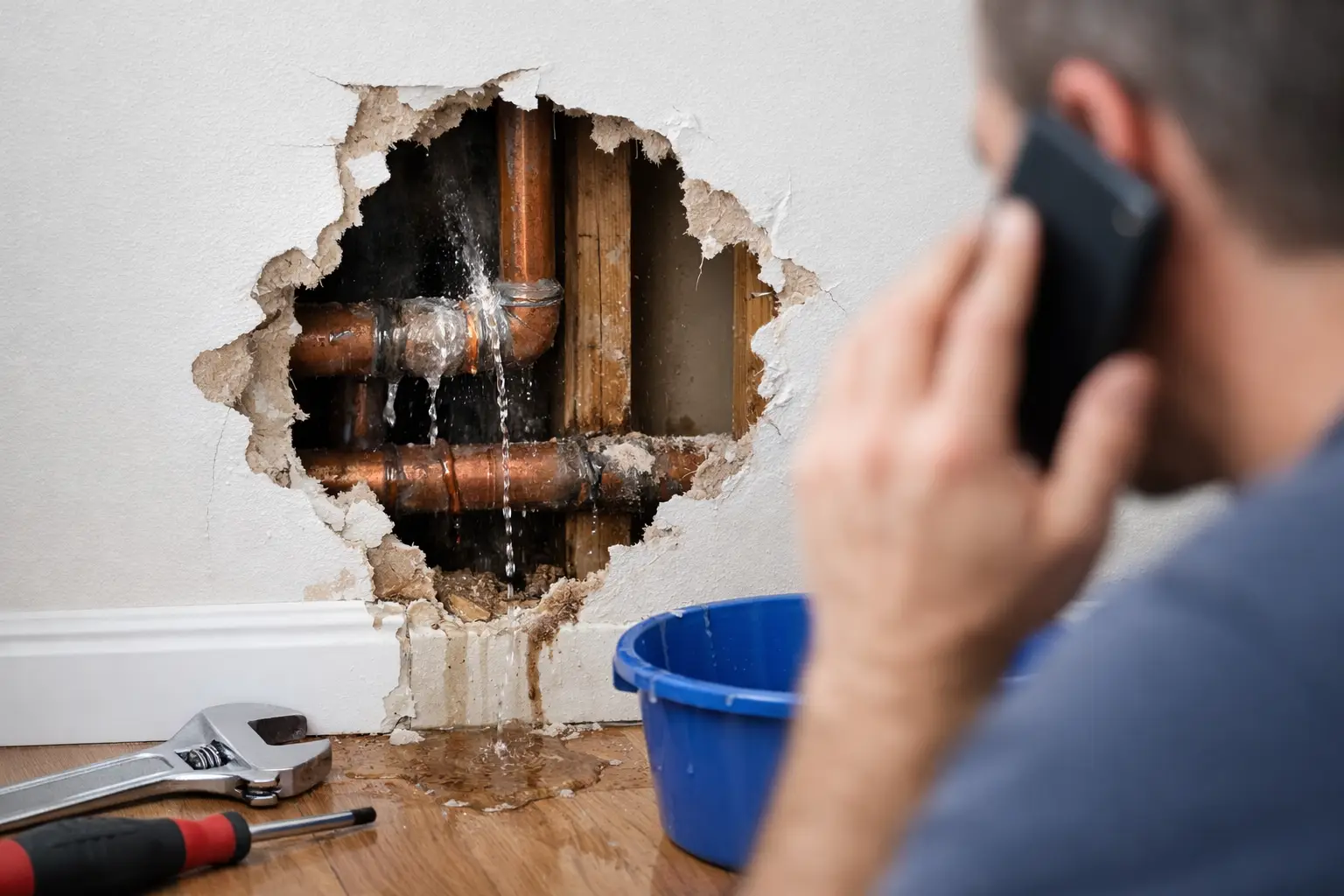
Pipe Leak Behind Wall? What to Do Fast
A pipe leak behind wall can cause mold, rot, and rising water bills. Learn the warning signs, first steps, and when to call a licensed plumber fast.
You usually do not see a pipe leak behind wall right away. You notice the paint bubbling near a baseboard, a musty smell that was not there last week, or a water bill that jumps for no clear reason. By the time water shows itself, the damage may already be spreading into drywall, insulation, trim, and flooring.
That is why the first move is not guessing. It is acting quickly, limiting damage, and getting the source diagnosed correctly. Some hidden leaks are minor pinholes. Others point to pipe corrosion, a bad fitting, freezing damage, high water pressure, or a drain line issue that has been developing for a while. The right fix depends on what is actually leaking, where it is leaking, and how far the moisture has traveled.
Common signs of a pipe leak behind wall
Most homeowners do not find a hidden leak because they hear rushing water inside the wall. More often, they find the symptoms first. A damp patch, stained drywall, soft trim, peeling paint, warped flooring near a bathroom or kitchen wall, or a persistent mildew smell are all strong warning signs.
You might also hear faint dripping when the house is quiet. If the leak is on a pressurized supply line, you may notice your water meter moving even when no fixtures are running. If it is tied to a drain or waste line, the problem may show up only when a sink, shower, dishwasher, or washing machine is used.
Not every wet wall means the same thing. Roof leaks, window leaks, condensation, and bathroom humidity can all create similar stains. That is exactly why diagnosis matters. Opening the wrong section of wall wastes time. Missing the real source leads to repeat damage.
What causes a pipe leak behind wall
There is no single cause. In older homes around the Albany area, pipe material and age can be a factor. Copper can develop pinhole leaks. Galvanized piping can corrode internally. Plastic fittings can crack. Solder joints and mechanical connections can fail over time, especially if there has been movement, poor installation, or repeated temperature changes.
Freezing weather is another major issue in this part of New York. When pipes in exterior walls freeze, pressure builds fast. Sometimes the pipe bursts immediately. Sometimes it cracks and leaks later, after the ice thaws and water pressure returns. Homeowners often think the problem started suddenly when the real cause happened days earlier.
High water pressure can also stress supply lines and fittings. Drain line leaks are different. They may not leak continuously, but when they do, they can soak framing and drywall with dirty water that brings odor and sanitation concerns. If the wall is near a shower, tub, toilet, kitchen sink, or laundry, the source may be a fixture connection as much as the pipe itself.
What to do first when you suspect a hidden wall leak
If you think there is a pipe leak behind wall, do not wait to see if it dries out on its own. Water inside a wall cavity rarely improves by itself. It spreads downward, wicks into materials, and creates a bigger repair.
Start by shutting off the water if the leak seems active or if the stain is growing. If you know the local fixture shutoff and the problem is isolated to one sink or toilet, you can start there. If you are not sure, use the main water shutoff. This is the safest move when water is visibly coming through the wall, ceiling, or floor.
Next, protect the area. Move furniture, rugs, and anything that can absorb water. If there is bulging drywall, do not ignore it. Water can pool inside wallboard and collapse part of the surface. If electrical outlets or switches are near the wet area, leave them alone and avoid that circuit until the area is evaluated.
Then call for service. A hidden leak is not just a wet spot problem. It is a source problem. Until the source is identified and stopped, drying alone is not enough.
How a plumber finds a pipe leak behind wall
A professional diagnosis should start with the least destructive approach possible. That means looking at the location of the stain, the type of fixture on the opposite side of the wall, whether the leak appears constant or use-related, and whether the water is clean, gray, or possibly waste water.
From there, a plumber may check pressure behavior, inspect exposed piping in a basement or crawl space, test nearby fixtures, and use targeted access where it makes sense. In some cases, a small inspection opening is enough to confirm the source. In others, more than one area may need to be checked because water often travels before it becomes visible.
This is where experience matters. A supply line leak behind a second-floor bathroom wall can show up as a first-floor ceiling stain. A shower valve leak can mimic a drain problem. A drain stack issue can leave intermittent staining that confuses homeowners for weeks. Good diagnosis saves time, limits unnecessary wall opening, and gets the repair plan right the first time.
Repair options depend on the type of leak
Once the source is confirmed, the repair can be straightforward or more involved. A failed connection or isolated section of pipe may be repaired by opening the wall, replacing the damaged section, and testing the system. If the leak is due to widespread pipe deterioration, a spot repair may only solve today's problem, not next month's.
That is the trade-off homeowners need explained clearly. A small repair costs less upfront, but if the piping is in poor condition, repeated openings and repeated service calls can add up. In some homes, replacing a branch line or repiping a problem area is the better value. It depends on pipe age, material, accessibility, and whether there have been past leaks.
Drain line repairs also vary. If the issue is at a trap arm, fixture connection, or branch drain, a targeted repair may be enough. If there is movement, poor slope, or damage in the line itself, the scope may widen. The right contractor should tell you what failed, what needs to be opened, what gets replaced, and what happens next with drying and wall restoration.
Why waiting makes the damage worse
A hidden leak does not need to be dramatic to be expensive. Slow leaks are often worse than obvious ones because they stay active longer. Drywall softens. Insulation holds moisture. Wood framing can swell or begin to rot. Mold growth becomes more likely, especially in dark wall cavities with limited airflow.
There is also the cost of secondary damage. Baseboards, paint, cabinets, flooring, and subfloor can all be affected by a leak that started as a tiny pinhole. If the leak is near a bathroom or kitchen, it can impact adjacent rooms before anyone realizes how far the moisture has spread.
For homeowners, this is the practical bottom line: the repair bill is one part of the problem. The cleanup, drying, and rebuilding can become the bigger part if the leak is left alone.
Can you fix it yourself?
Some homeowners are comfortable cutting a small access opening or shutting off a fixture stop. That can help in the first few minutes. But hidden leaks are where DIY often goes sideways. The real issue may not be where the wall is wet. The pipe material may require specific tools and code-compliant repair methods. And if the line serves more than one fixture, an improvised fix can create a larger failure.
There is also the question of what happens after the plumbing repair. Wet materials need to be evaluated properly. If the leak involved waste water or has been active long enough for mold to develop, this is not the place for guesswork.
For emergency situations, fast professional service is usually the least costly path overall. It limits water damage, avoids unnecessary demolition, and gets the system tested before the wall is closed back up.
When to call right away
Some leaks can wait a few hours for a scheduled visit. Others should be treated as urgent. Call right away if water is actively running through a wall or ceiling, if drywall is sagging, if there is water near electrical devices, or if the leak involves an upstairs bathroom, kitchen, or laundry area where damage can spread quickly.
You should also move fast if you smell mildew and cannot find the source, if your water bill has jumped sharply, or if you have had freezing pipe issues recently. In the Albany area, winter-related pipe failures are common enough that a hidden leak after a cold snap should never be brushed off.
A company like Trinity Plumbing & Drains approaches this the right way: diagnose first, define the repair clearly, and handle the plumbing work cleanly and to code. That matters when walls need to be opened and homeowners need real answers, not guesswork.
If you suspect a hidden leak, trust what the house is telling you. Wet drywall, stains, odors, and unexplained water use are early warnings. Acting early gives you more repair options, less damage, and a much better chance of fixing the problem before it turns into a bigger mess.