
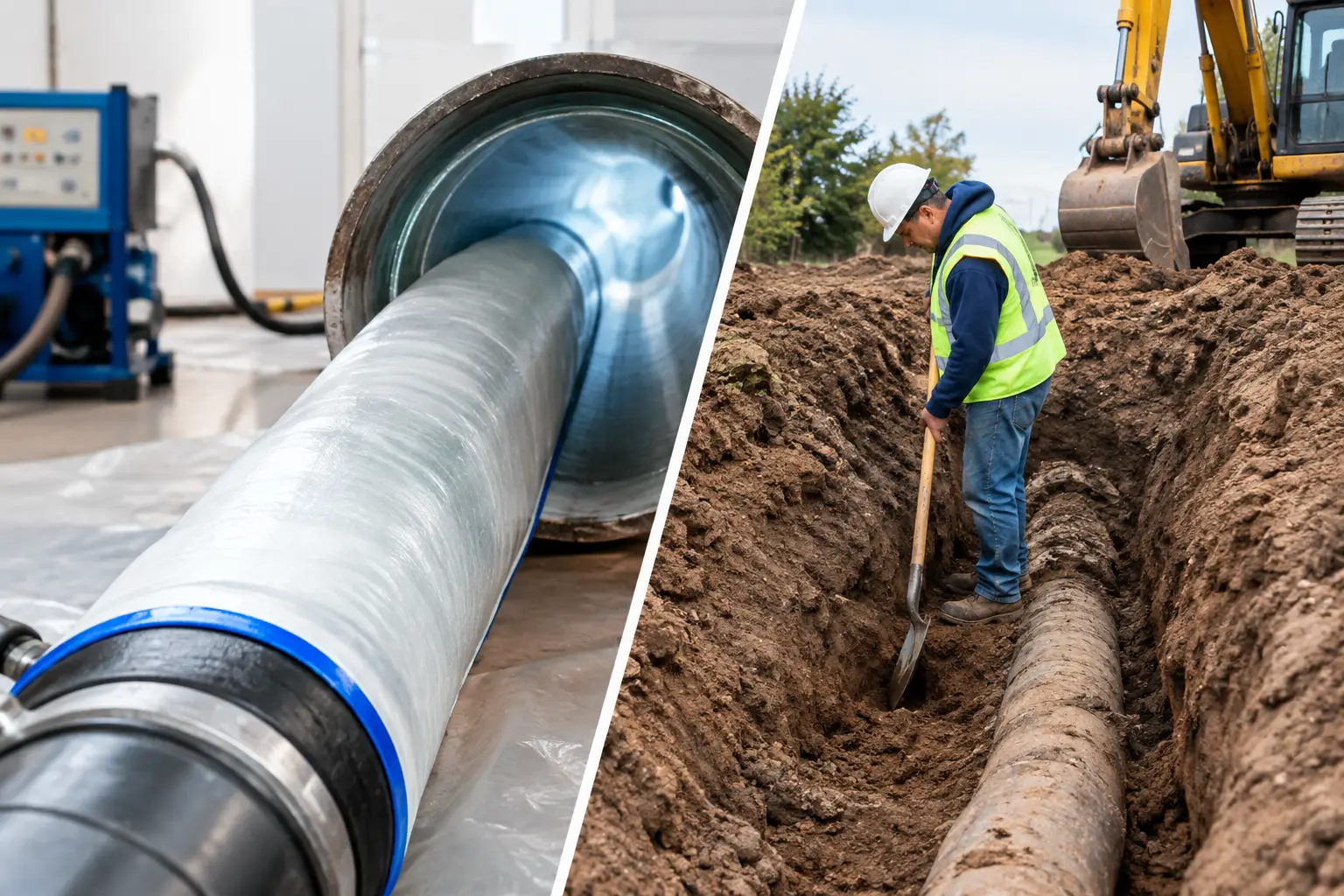
Pipe Lining Versus Digging for Sewer Repair
Pipe lining versus digging can both fix a failing sewer. See how condition, access, cost, and code requirements determine the right repair for your home.
A sewer backup is not the time for guesswork. When homeowners ask about pipe lining versus digging, they usually want one clear answer: can the sewer be repaired without tearing up the yard, driveway, or basement floor? Sometimes, yes. But the right repair depends on what a camera inspection finds inside the pipe, not on whichever option sounds less disruptive.
Pipe lining can be an excellent solution for the right damaged sewer. Digging and replacement remain the safer, more durable choice for others. A professional diagnosis should explain the condition of the line, the repair options, the expected scope, and what each choice means for your property before work begins.
What Pipe Lining Actually Repairs
Pipe lining, often called cured-in-place pipe lining, repairs an existing sewer pipe from the inside. After the line is cleaned and inspected, a flexible liner saturated with resin is placed inside the damaged pipe. The liner is inflated or held in position while it cures, creating a new pipe wall within the old one.
The appeal is straightforward: the repair can often be completed through existing access points with limited excavation. That can help preserve landscaping, patios, walkways, and finished areas where a sewer pipe is difficult to reach.
Lining is commonly considered when a pipe has cracks, leaking joints, root intrusion, or corrosion but still has enough structural integrity to serve as a host pipe. The old pipe does not need to look perfect. It does need to be open enough, aligned enough, and stable enough for the liner to be installed correctly.
A properly installed liner creates a continuous interior surface that can reduce root entry and seal many defects. It is not a coating that gets brushed onto the pipe, and it is not a shortcut for every sewer problem.
When Digging Is the Better Sewer Repair
Traditional excavation means exposing the damaged section of sewer, removing it, and installing new code-compliant pipe. It is more disruptive on the surface, but it gives the plumber direct access to correct major failures that lining cannot solve.
Digging is generally the better option when the pipe has collapsed, is badly crushed, has a severe belly, or has separated so far that it cannot support a liner. A belly is a low area in the pipe where wastewater and solids collect instead of flowing properly downhill. A liner may seal cracks, but it cannot restore proper slope to a line that has settled.
Excavation may also be necessary when the sewer route must be changed, when there is no workable access for lining equipment, or when a section needs to be brought up to current code requirements. If the problem is under a basement slab, a driveway, or a mature landscape, the scope should be planned carefully to minimize unnecessary removal and restore the affected area as cleanly as possible.
The word “digging” can sound like the last resort, but it is often the most direct permanent fix. Replacing a failed pipe with new material removes uncertainty about hidden structural damage.
Pipe Lining Versus Digging: The Real Differences
The best choice is not simply the option with the lower initial price. Homeowners should compare the repair methods based on what the sewer line needs and what the work affects around it.
Pipe lining usually involves less disruption because the crew may not need to open the full path of the pipe. That matters when a sewer runs beneath landscaping, a concrete walk, a garage floor, or a finished basement. Depending on access and the location of the damage, lining may reduce restoration work after the plumbing repair.
Digging creates a larger visible work area, but it allows full replacement and correction of pipe grade. It can be the better value when a line is extensively damaged or improperly pitched. Paying for a lining attempt on a pipe that is too far gone can lead to another repair decision later.
Pipe diameter matters as well. Because a liner is installed inside the existing pipe, it slightly reduces the inside diameter. In a properly sized residential sewer, that reduction is often acceptable. In a line that is already undersized, heavily scaled, or has recurring flow problems, the inspection results need close review before lining is recommended.
Cost varies widely with access, pipe length, depth, material, damage location, cleanup needs, and restoration. A small excavation is not always more expensive than lining. Likewise, a long sewer repair under a driveway may make lining financially attractive even if the liner itself costs more per foot. Clear scope matters more than a quick price comparison.
Start With a Camera Inspection, Not an Assumption
A sewer camera inspection is the decision-making step. It shows the location and type of damage, identifies roots and buildup, and helps determine whether the pipe has enough usable structure for lining. It can also reveal problems that homeowners cannot see from a drain opening, such as offset joints, fractures, standing water, and collapsed sections.
Before a repair is quoted, the line may need professional drain cleaning to remove roots, grease, scale, or debris. Cleaning is not the same as repairing. It restores flow and allows the camera to show the actual pipe condition. If roots return because joints are open or the pipe is cracked, clearing the line alone may only buy time.
A practical diagnosis should answer four questions:
- Where is the failed section, and how far does it extend?
- Is the pipe structurally sound enough to line?
- Does the line have the correct slope for reliable drainage?
- What restoration will be required if excavation is needed?
That information gives homeowners a repair recommendation based on facts, not pressure. It also prevents a crew from opening a yard or floor before the scope is properly defined.
Common Albany-Area Sewer Conditions
Homes in Albany, Colonie, Troy, Delmar, and East Greenbush can have sewer lines made from different materials depending on the age of the home and prior repairs. Older clay, cast iron, and Orangeburg lines can each fail in different ways. Clay pipe joints often allow root intrusion. Cast iron can corrode and develop rough interior surfaces. Orangeburg, a fiber-based pipe used in some older installations, can deform or deteriorate over time.
Seasonal conditions also matter. Freeze-thaw cycles, shifting soil, heavy rain, and mature tree roots can expose weaknesses in older sewer systems. A sewer that only backs up during periods of heavy use or wet weather should not be ignored. The cause may be inside the private sewer lateral, at a connection point, or related to drainage conditions that require further investigation.
Local permit and inspection requirements may apply when a sewer line is replaced or altered. A professional plumbing contractor should explain the expected process, coordinate work that requires permits, and install materials according to applicable code. This is especially important when a repair reaches the connection near the street or affects other underground utilities.
How to Choose Without Getting the Runaround
If your drains are slow, toilets gurgle, or sewage has backed up into a tub, floor drain, or basement, limit water use until the line is evaluated. Running more water can turn a manageable blockage or crack into a larger cleanup problem.
Ask for the camera findings to be explained in plain language. You do not need a technical lecture, but you should understand whether the pipe is cracked, root-filled, offset, collapsed, or holding standing water. If lining is offered, ask whether the line has enough structural support and whether the repair addresses the full damaged area. If excavation is recommended, ask where access will be needed and how the work area will be restored.
Be cautious about one-size-fits-all answers. “No digging ever” is not a reliable promise, and neither is treating every damaged sewer as a full replacement. The right approach is the one that fixes the actual failure with a clear scope and a realistic expectation for the condition of the rest of the line.
A sewer problem is stressful, but the next step should be simple: get the line inspected, review the evidence, and choose the repair that protects your home for the long term. Trinity Plumbing & Drains can help homeowners make that decision with a straightforward diagnosis and code-compliant repair plan.