
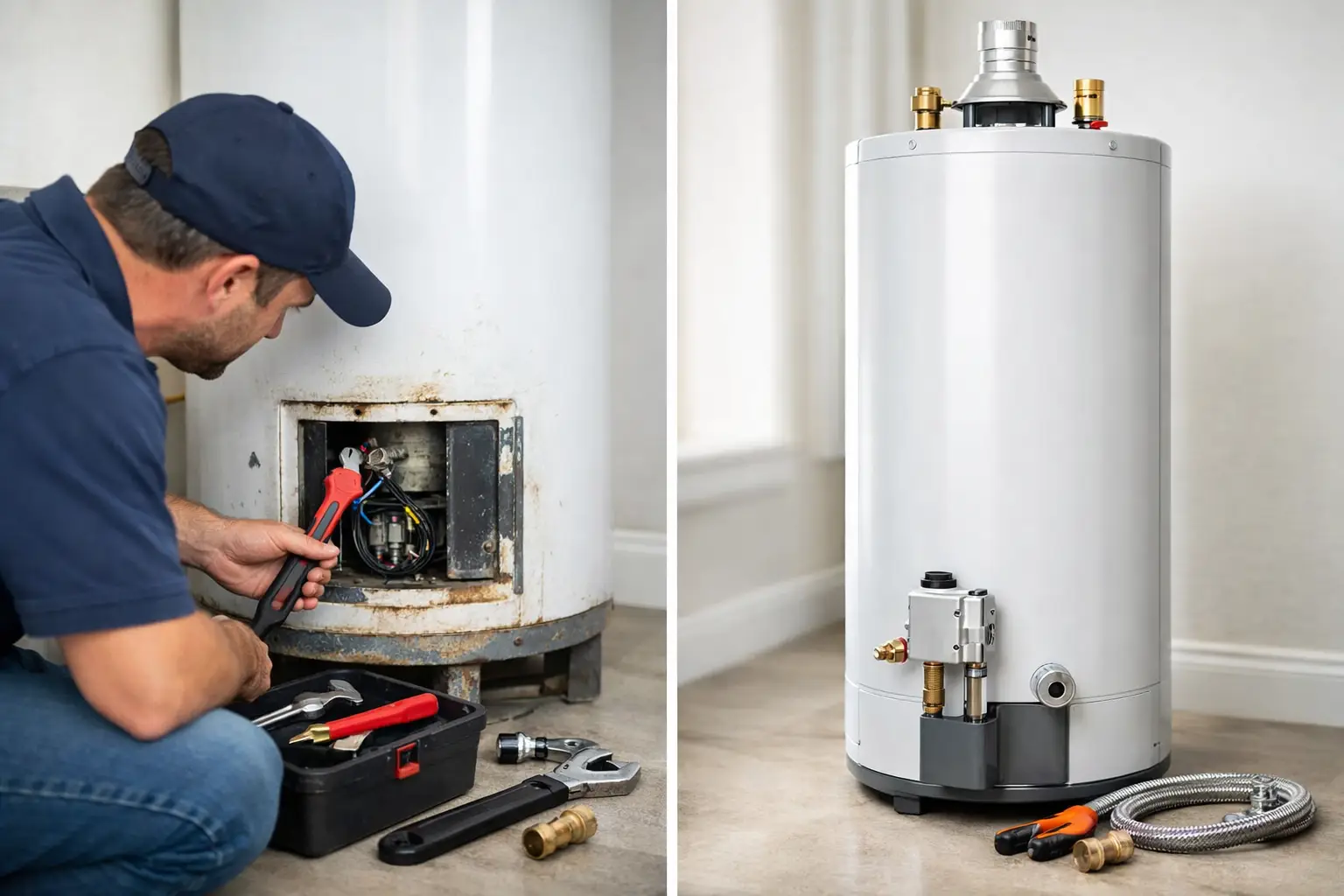
Repair or Replace Water Heater?
Not sure whether to repair or replace water heater issues? Learn the signs, costs, age limits, and when fast plumbing service makes sense.
No hot water at 6 a.m. usually turns this into a simple question fast: should you repair or replace water heater equipment, or are you about to spend money twice? The right answer depends on the unit’s age, the type of failure, the condition of the tank, and whether a safe, code-compliant repair still makes financial sense.
For homeowners in Albany, Colonie, Troy, Delmar, and East Greenbush, this decision often comes up under pressure. You may have a leaking tank, rusty water, a tripped burner, or a unit that still works but takes too long to recover. Some problems are worth fixing. Others are a warning that replacement is the smarter call before you end up with water damage, higher utility bills, or another no-hot-water day next week.
When to repair or replace water heater problems
The first thing to look at is the kind of failure you have. Not every hot water issue means the whole unit is done. A failed heating element, thermostat, igniter, thermocouple, gas control issue, or pressure relief valve can often be repaired if the tank itself is still in good shape.
That changes if the tank is leaking from the body, heavily rusted, or showing signs of internal deterioration. Once the tank has failed, there is no real repair that restores long-term reliability. At that point, replacement is the correct move.
Age matters too. A conventional tank water heater typically lasts around 8 to 12 years, depending on water quality, maintenance, installation quality, and how hard the unit has worked. If your water heater is already in that range and now needs a major repair, replacement is often the better investment. If the unit is only a few years old, repair usually deserves a serious look first.
Signs repair makes sense
A repair is usually worth considering when the problem is isolated and the heater still has useful life left. That often includes no hot water caused by a failed component, inconsistent temperatures, burner issues, pilot problems, or minor valve leaks coming from serviceable parts rather than the tank itself.
You may also be a good candidate for repair if the heater has been reliable up to this point, the repair cost is reasonable, and there are no signs of corrosion or unsafe venting. In these cases, a proper diagnosis can save you from replacing a unit that still has years left.
Electric water heaters are often especially repairable because their common failure points are accessible components. Gas units can also be repaired, but combustion, venting, and gas control issues need to be handled correctly. Safety and code compliance matter here. A quick guess is not enough.
Signs it is time to replace
If water is leaking from the tank seam or body, replacement is usually non-negotiable. That kind of failure means the tank has deteriorated from the inside out. It will not improve, and delaying action can turn a plumbing problem into a flooring, drywall, or finished basement problem.
Replacement is also the better choice when the water heater is near the end of its expected life and now has repeated issues. One repair can be reasonable. Two or three repairs in a short period usually mean the unit is telling you it is done.
Watch for rust-colored hot water, rumbling or popping from heavy sediment buildup, poor recovery that affects daily use, and visible corrosion around fittings or the flue. These are not always automatic replacement triggers, but they push the decision in that direction, especially on older units.
Another reason to replace is capacity mismatch. If your household has grown and you are constantly running out of hot water, fixing an old undersized unit may not solve the real problem. In that case, replacement gives you the chance to install equipment sized for your actual demand.
Cost is important, but not by itself
Homeowners naturally compare repair cost to replacement cost. That makes sense, but the cheapest immediate option is not always the least expensive overall.
A smaller repair on a newer water heater can be the right call. A larger repair on a 10-year-old unit is different. If you spend heavily on a repair and then need replacement a few months later, you have paid for both.
A practical rule is to weigh the repair cost against the unit’s age and condition. If the repair is substantial and the water heater is already old, replacement usually offers better value. If the repair is modest and the unit is still mid-life, repair often makes more sense.
Energy efficiency also belongs in the conversation. Older water heaters can cost more to operate, especially if sediment has reduced efficiency or the burner is not performing well. A new unit may lower operating costs, but those savings should be viewed realistically. Energy savings alone do not justify replacement in every case. Reliability, safety, and total repair exposure usually matter more.
Why diagnosis comes first
This is where many homeowners get bad advice. Some companies push replacement before confirming the actual failure. Others offer a quick repair without addressing venting problems, installation defects, or code issues that can create bigger trouble later.
The right process starts with diagnosis. What failed? Is the tank sound? Are there signs of combustion problems, backdrafting, improper expansion control, or water pressure issues affecting the heater? Is the current installation up to code, or are there existing problems that change the scope of work?
That matters because a water heater is not a standalone appliance in the way people sometimes think. It connects to gas, electric, water supply, drainage, venting, and safety components. A proper service call should identify not only what stopped working, but whether a safe and lasting repair is actually possible.
Repair or replace water heater: tank vs. tankless
If you are replacing the unit, you may also wonder whether to stay with a standard tank heater or move to tankless. The answer depends on your home, usage, fuel source, venting path, and budget.
A standard tank replacement is usually the most straightforward option. It is often less expensive upfront, easier to install in like-for-like situations, and a strong fit for many households. If your current setup worked well when it was functioning properly, a quality tank replacement may be the most practical move.
Tankless systems offer longer service life and on-demand hot water, but installation is not always simple. Gas line sizing, venting changes, combustion air, electrical requirements, and maintenance needs all have to be evaluated. In some homes, tankless is a smart upgrade. In others, it creates a larger project than the homeowner expected.
That is why replacement decisions should not be based on marketing alone. The best option is the one that matches the home and can be installed correctly without shortcuts.
What to do when the problem feels urgent
If your water heater is leaking, shut off power or gas to the unit if you know how to do so safely, then shut off the water supply. If there is active leaking near finished areas, move items out of the way and protect the space as best you can. If you smell gas, leave the area and treat it as an immediate safety issue.
If you still have some hot water but the unit is making unusual noise, taking too long to recover, or producing rusty water, do not ignore it. These are often warning signs that buy you a small amount of time, not a lot.
In urgent situations, speed matters, but so does getting the decision right. Trinity Plumbing & Drains focuses on diagnosis-first service so homeowners get a clear answer on whether repair is reasonable or replacement is the safer long-term choice, without the runaround.
The decision most homeowners can trust
If the tank is sound, the failure is isolated, and the unit still has useful life left, repair is often the right move. If the tank is leaking, rusted, repeatedly failing, undersized, or already near the end of its life, replacement is usually the smarter call.
The key is not guessing. A water heater can fail in ways that look minor from the outside and serious on the inside, or the opposite. A clear diagnosis, a realistic cost comparison, and code-compliant workmanship will tell you whether you are buying time or solving the problem.
When hot water goes out, most homeowners do not need a sales pitch. They need a straight answer, fast.