
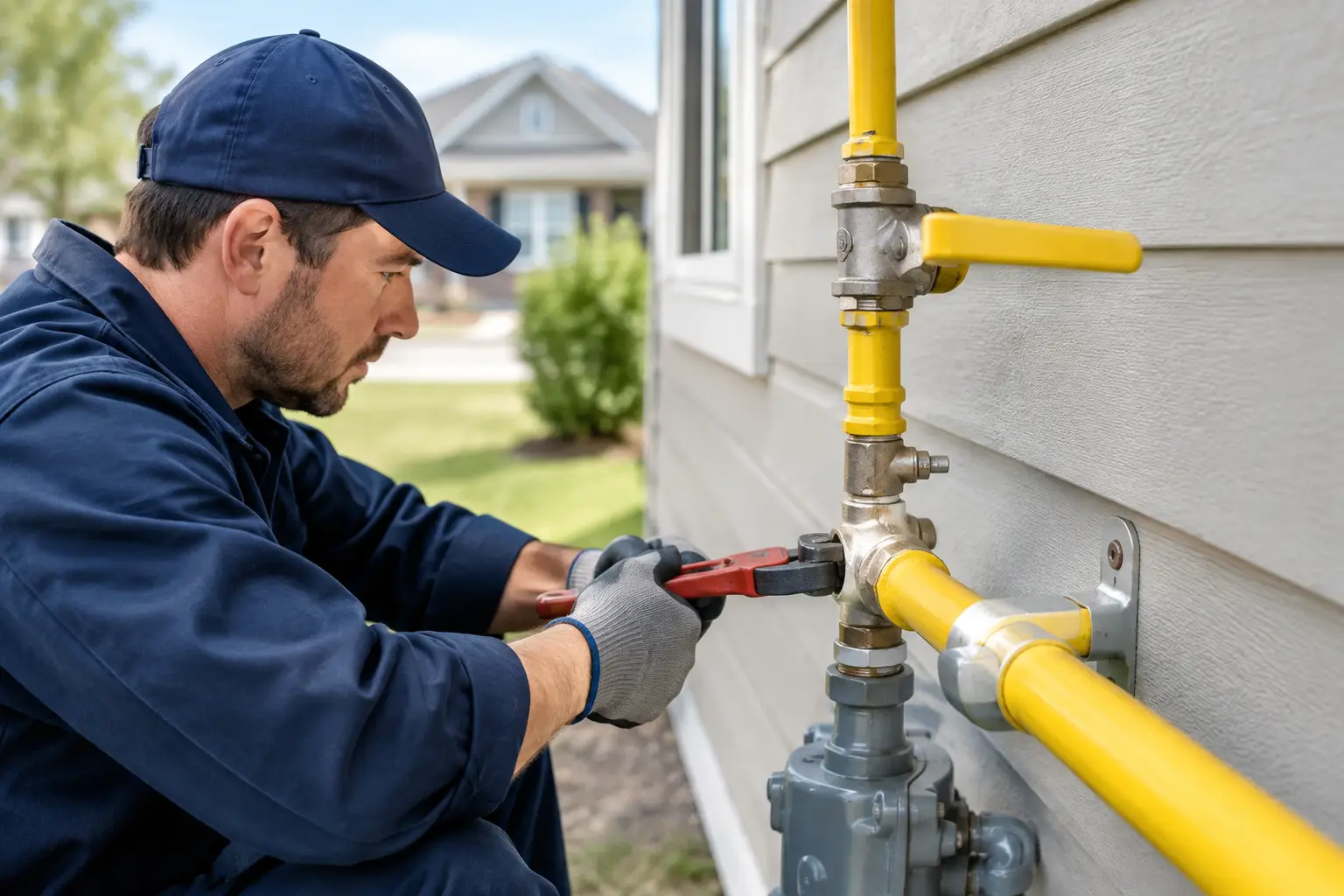
Residential Gas Piping Guide for Albany Homes
Our residential gas piping guide explains warning signs, permits, sizing, and safe repair decisions for homeowners in Albany, New York with confidence.
A gas line is easy to ignore until an appliance will not light, a new range needs to be connected, or you catch an odor that does not belong in the house. This residential gas piping guide gives Albany-area homeowners a practical way to understand what is happening, what requires immediate action, and why gas work should be handled by a licensed professional.
Natural gas is a dependable fuel for furnaces, boilers, water heaters, dryers, fireplaces, and cooking equipment. It is also a pressurized fuel system. A poor connection, undersized pipe, damaged flexible connector, or unpermitted appliance installation can create a safety problem that is not worth guessing about.
If You Smell Gas, Treat It as an Emergency
Natural gas is odorized so leaks are easier to detect. Many homeowners describe the smell as sulfur-like or similar to rotten eggs. You may also hear a hissing sound near a pipe, meter, appliance, or connection. Other possible signs include a dying patch of vegetation near an outdoor gas line, unexplained soot around an appliance, or a pilot light that repeatedly goes out.
If you smell gas inside your home, do not look for the leak. Do not operate light switches, thermostats, garage door openers, appliances, or anything that could create a spark. Do not smoke, use a lighter, or start a vehicle in an attached garage.
Leave the building with everyone inside, including pets if it can be done safely. Once you are away from the home, call 911 and your gas utility's emergency number. If you know where the gas shutoff is and can reach it without entering a hazardous area, follow the utility's emergency instructions. Do not attempt a repair yourself. A plumber can address the piping problem after the area has been made safe and the gas supply has been properly evaluated.
What a Residential Gas Piping System Includes
Your home's gas system starts at the utility meter and runs through a main supply line to the appliances that use fuel. Along the way, it may include shutoff valves, branch lines, regulators, sediment traps, appliance connectors, and protective sleeves where piping passes through walls or floors.
The pipe material depends on the home, the location of the run, local requirements, and the appliance load. Older homes in Albany, Colonie, Troy, Delmar, and East Greenbush often have black steel pipe. Newer work may use approved corrugated stainless steel tubing, commonly called CSST, or other materials allowed by local code and the gas utility.
Material choice is not just a matter of convenience. CSST requires installation methods specific to the manufacturer, including proper bonding in many applications. Outdoor and underground gas piping needs corrosion protection and safe burial depth. Piping that passes through framing needs protection from screws and nails. These details are why a line that appears simple can still require careful planning.
Pipe Size Is Based on Demand, Not Guesswork
A gas pipe must carry enough fuel to every connected appliance at the same time. The furnace or boiler, water heater, range, dryer, fireplace, pool heater, and standby generator all have input ratings measured in BTUs. The total load, the length of the pipe run, the available gas pressure, and the number of fittings affect the pipe size required.
This matters when homeowners add a gas range, replace an electric dryer with a gas model, install a fireplace insert, or plan for a generator. Connecting a new appliance to an existing branch line without verifying capacity can leave the new appliance starved for fuel or affect the performance of other equipment during peak use.
A proper installation starts with load calculations and a review of the meter and existing piping. Bigger pipe is not automatically better in every situation, but undersized piping is a common source of avoidable problems. The right answer depends on the system already in the home and the equipment being added.
When Gas Piping Needs Repair or Replacement
Gas lines can last a long time, especially when installed correctly and kept protected. Still, age, corrosion, movement, remodeling damage, and poor past work can create failures. A professional evaluation is a good idea if you notice recurring appliance ignition issues, corrosion on exposed pipe, loose valves, damaged connectors, or signs that a line was altered during a renovation.
Do not confuse appliance repair with gas piping repair. A no-heat call may involve a faulty igniter, flame sensor, control board, venting issue, or fuel supply issue. A diagnosis-first approach separates those possibilities before anyone recommends replacing piping that may not be the problem.
The same applies to low flame on a range or a water heater that shuts down. Those symptoms can point to gas pressure, appliance components, combustion air, venting, or a restriction. The goal is to identify the actual cause, explain the scope clearly, and complete only the repair the system needs.
Flexible Connectors Have Limits
The flexible connector behind a range or dryer is not the same as permanent building piping. It is intended to connect a movable appliance to a shutoff valve and must be properly sized, accessible, and installed without kinks or strain. It should not pass through a wall, floor, ceiling, or cabinet partition.
Old connectors, connectors with visible damage, and makeshift extensions deserve attention. Appliance moves and kitchen renovations are frequent times for these problems to surface. A licensed plumber can inspect the connection, replace approved components when needed, and test the work before the appliance is returned to service.
Permits, Testing, and Code Compliance Matter
For new gas piping, line extensions, and many appliance installations, permits and inspections may be required. Requirements vary by municipality and the scope of work. In the Albany area, homeowners should not assume that a small-looking gas project is exempt just because the appliance connection is nearby.
Permit requirements exist because gas work affects more than the pipe itself. Installations must account for shutoff locations, appliance clearances, combustion air, venting, electrical bonding where applicable, and pressure testing. A line may look neat but still fail inspection or create a safety issue if one of those requirements is missed.
After a repair or installation, the piping should be tested according to the applicable code and utility requirements. Leak testing is not the same as spraying soapy water on one visible fitting. Professionals isolate and test the system appropriately, confirm accessible joints, and make sure appliances are operating safely once gas service is restored.
What to Expect From a Professional Gas Line Visit
A clear service process makes a stressful issue easier to manage. The visit should begin with a discussion of the problem: what you smelled, heard, or observed; when it started; which appliances are affected; and whether any recent renovation or appliance change took place.
The plumber then inspects the accessible system, evaluates the appliance connection or piping concern, and determines whether the issue is an active leak, failed component, capacity problem, or another appliance-related fault. If repair is appropriate, you should receive a straightforward explanation of the work, materials, testing, and any permit considerations before work moves forward.
For larger projects, such as running gas to a new generator or relocating a kitchen range, the plan may involve measuring pipe routes, calculating demand, coordinating permits, and scheduling inspection steps. That process protects the home and prevents last-minute surprises when the new equipment is ready to install.
Homeowner Steps That Help Without Creating Risk
You do not need to work on gas piping to be a prepared homeowner. Keep the area around your gas meter and appliances accessible. Avoid storing paint, gasoline, or clutter near fuel-burning equipment. Know where the main gas shutoff is located, but do not test or operate it casually.
When buying a new gas appliance, save the model number and BTU rating. Share that information before scheduling installation so the existing line can be reviewed for capacity. If you are remodeling, tell every contractor where gas lines may be located before walls, floors, or cabinets are opened.
A gas piping concern is not the time for a temporary fix or a vague estimate. If you need gas line repair, a new appliance connection, or an evaluation of existing piping, Trinity Plumbing & Drains can provide a clear diagnosis and code-compliant scope for your Albany-area home. The safest next step is simple: keep the area clear, do not attempt a repair, and have the system checked before a small concern turns into an emergency.