
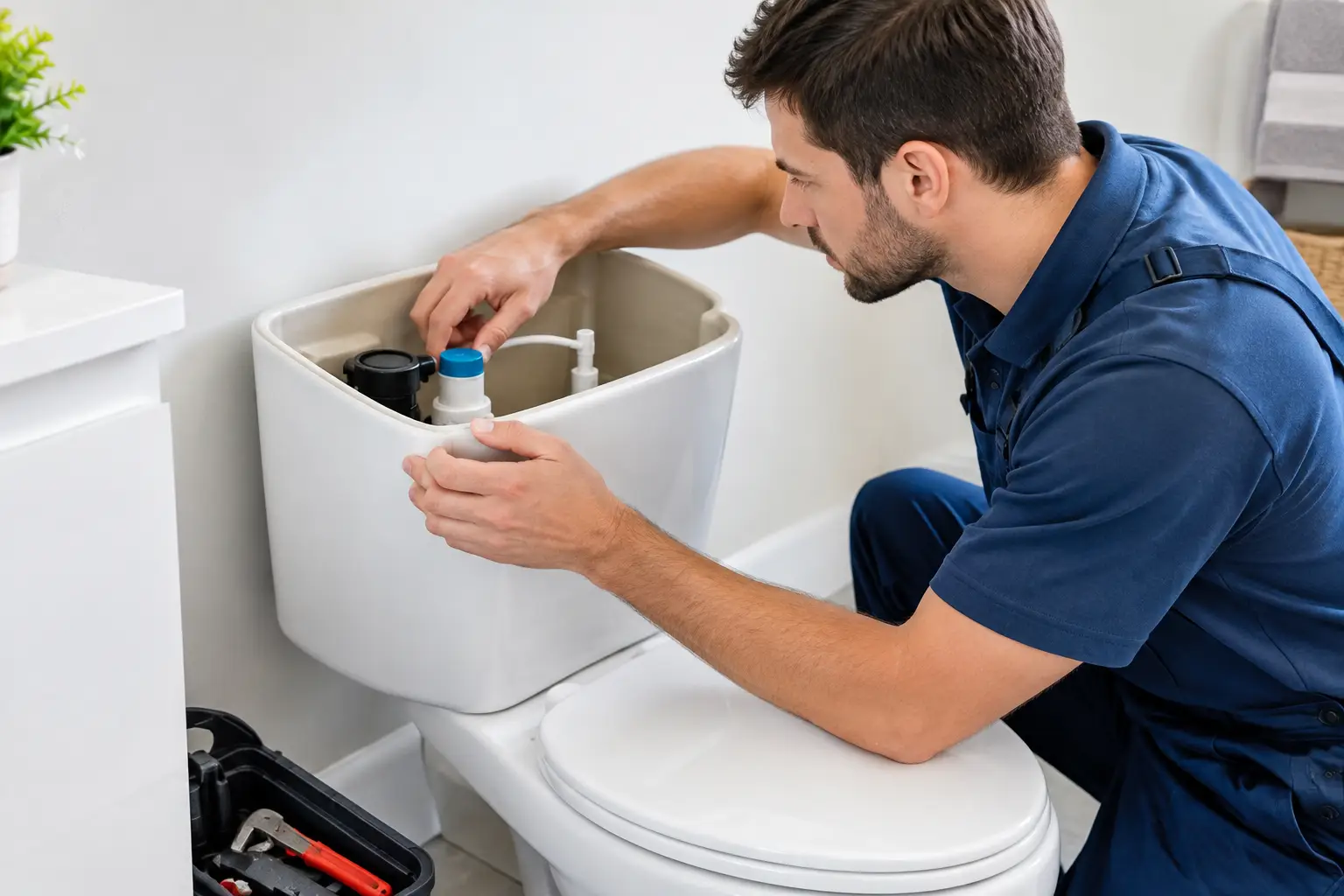
Running Toilet Repair: Stop Wasting Water Fast
Need running toilet repair in Albany? Learn the common causes, what you can safely check, and when a licensed plumber should make the repair promptly.
A toilet that refills every few minutes is not a minor background noise. It can waste hundreds of gallons of water a day, raise your utility bill, and eventually turn into an overflow or floor-damage problem. Running toilet repair usually comes down to a failed internal tank part, but the right repair starts with identifying exactly where water is escaping.
For homeowners in Albany, Colonie, Troy, Delmar, and East Greenbush, the good news is that many running toilets have a straightforward cause. The less-good news is that replacing the wrong part can leave the problem untouched. A quick diagnosis saves time, water, and repeat trips to the hardware store.
Running Toilet Repair Starts With Diagnosis
A toilet runs when water leaves the tank after a flush and the fill valve keeps replacing it. Sometimes you will hear a steady hiss. Other times, the toilet will be quiet for 10 or 20 minutes, then briefly refill on its own. Both point to water moving where it should not.
Remove the tank lid carefully and set it on a towel or stable surface. Porcelain lids crack easily. Look inside the tank while the toilet is running. The behavior you see will usually narrow the issue to the flapper, flush valve, fill valve, water level, or a less common tank defect.
The most common failure is a flapper that no longer seals against the flush valve opening. The flapper is the rubber or silicone piece at the bottom of the tank. After a flush, it should settle flat and hold water in the tank. Over time, mineral buildup, warped rubber, chlorine cleaners, or a chain that is too tight can prevent a complete seal. Water slowly leaks into the bowl, and the fill valve turns on to replace it.
A fill valve problem creates a different pattern. If water rises too high and spills into the vertical overflow tube, the valve may be failing to shut off or the float may be set too high. The water may look like it is constantly moving inside the bowl even when the toilet has not been flushed. This is not a flapper issue, and installing a new flapper will not correct it.
Simple Checks You Can Make Safely
Start with a dye test. Put a few drops of food coloring into the tank, then do not flush for about 15 minutes. If color appears in the bowl, water is leaking past the flapper or flush valve seal. This is a simple way to confirm a slow leak that you cannot hear.
Next, inspect the flapper chain. It needs a little slack when the flapper is closed. A chain pulled tight can hold the flapper open just enough for a slow leak. A chain with too much slack may get caught under the flapper or fail to lift it properly during a flush. Adjusting the chain is often an easy fix, but do not shorten it so far that the flapper cannot sit flat.
Check the water level in the tank. Most toilets have a fill line marked on the overflow tube or tank wall. The normal level is typically about an inch below the top of the overflow tube. If water is flowing into that tube, lower the float adjustment slightly. On many modern fill valves, this is done with an adjustment screw or clip. If the valve will not shut off after adjustment, it is likely worn out.
Also look at the refill tube, the small flexible tube that sends water into the overflow pipe after flushing. It should be clipped at the top of the overflow tube, not pushed down inside it. If it is inserted too far, it can create a siphon that continuously pulls water from the tank into the bowl.
Do not use drop-in bleach tablets to solve a running toilet. They may seem convenient, but concentrated chemicals can damage rubber seals, flappers, and other tank components. That can turn a small adjustment into a recurring repair.
When a Flapper Replacement Is Enough
If the dye test confirms a leak into the bowl and the flapper looks misshapen, stiff, cracked, or coated with buildup, replacement may solve the problem. Shut off the water valve below the toilet, flush the toilet, and sponge out enough remaining tank water to access the flapper. Take the old flapper with you if you are buying a replacement. Toilet parts are not one-size-fits-all, and an incorrect flapper can leak from day one.
Before installing a new flapper, wipe the rim of the flush valve clean. Sediment or rough buildup on that sealing surface can keep even a new flapper from closing correctly. Reconnect the chain with slight slack, turn the water back on, and test several flushes.
This is a reasonable homeowner repair when the shutoff valve works, the tank hardware is accessible, and there are no signs of cracks or corrosion. If the toilet still refills after a new flapper, stop replacing parts at random. The flush valve seat may be damaged, the fill valve may be malfunctioning, or the toilet may have more than one issue.
Problems That Need a Plumber
Call for professional running toilet repair when the shutoff valve will not close, the toilet is overflowing, the tank is cracked, or water is leaking onto the floor. A leak outside the bowl is different from a routine tank-to-bowl leak. It can damage flooring, subflooring, and ceilings below the bathroom.
A plumber should also evaluate toilets with corroded bolts, seized fittings, a failed flush valve assembly, or repeated fill valve failures. Replacing a flush valve often requires removing the tank from the bowl. That work involves old porcelain, gaskets, mounting bolts, and supply connections that can fail when disturbed. The repair may be simple for an experienced technician, but forcing a rusted fastener or overtightening a tank bolt can crack the fixture.
If your toilet runs along with weak flushing, gurgling, slow drains, or water rising in another fixture, the issue may not be limited to the tank. Those symptoms can point to a drain or sewer line problem. Treat that as a separate diagnosis. Tank components control flushing water, while drain piping controls where that water goes afterward.
What a Professional Repair Visit Should Include
A proper service call should not begin with a guess. The technician should inspect the fill valve, flapper, chain, overflow tube, water level, flush valve seat, shutoff valve, supply line, and signs of leakage around the toilet base. That inspection determines whether a targeted part replacement is appropriate or whether a larger repair is justified.
For older toilets, there is also a practical cost question. If internal parts are worn but the bowl and tank are sound, rebuilding the tank is usually sensible. If the toilet has recurring leaks, poor flushing performance, visible porcelain damage, or several failing components, replacement may be the better long-term decision. The right answer depends on the fixture condition, not on selling the most expensive option.
Trinity Plumbing & Drains approaches toilet problems diagnosis-first, with clear scope and code-compliant repairs. For a running toilet that will not stop, a floor leak, or an overflow risk, fast professional service can prevent a small water-waste issue from becoming a bathroom repair.
Preventing the Next Running Toilet
Most toilet tank parts wear gradually, so a quick check once or twice a year is worthwhile. Listen for unexplained refilling, look for water at the base of the toilet, and make sure the shutoff valve under the fixture can be turned without force. If you have hard water, mineral buildup may shorten the life of fill valves and seals, making earlier inspection especially useful.
A running toilet is worth fixing promptly, even when it is not creating a visible mess. Shut off the supply if the bowl is rising or water is reaching the floor, then get the cause identified before wasted water becomes damaged flooring or an urgent call.