
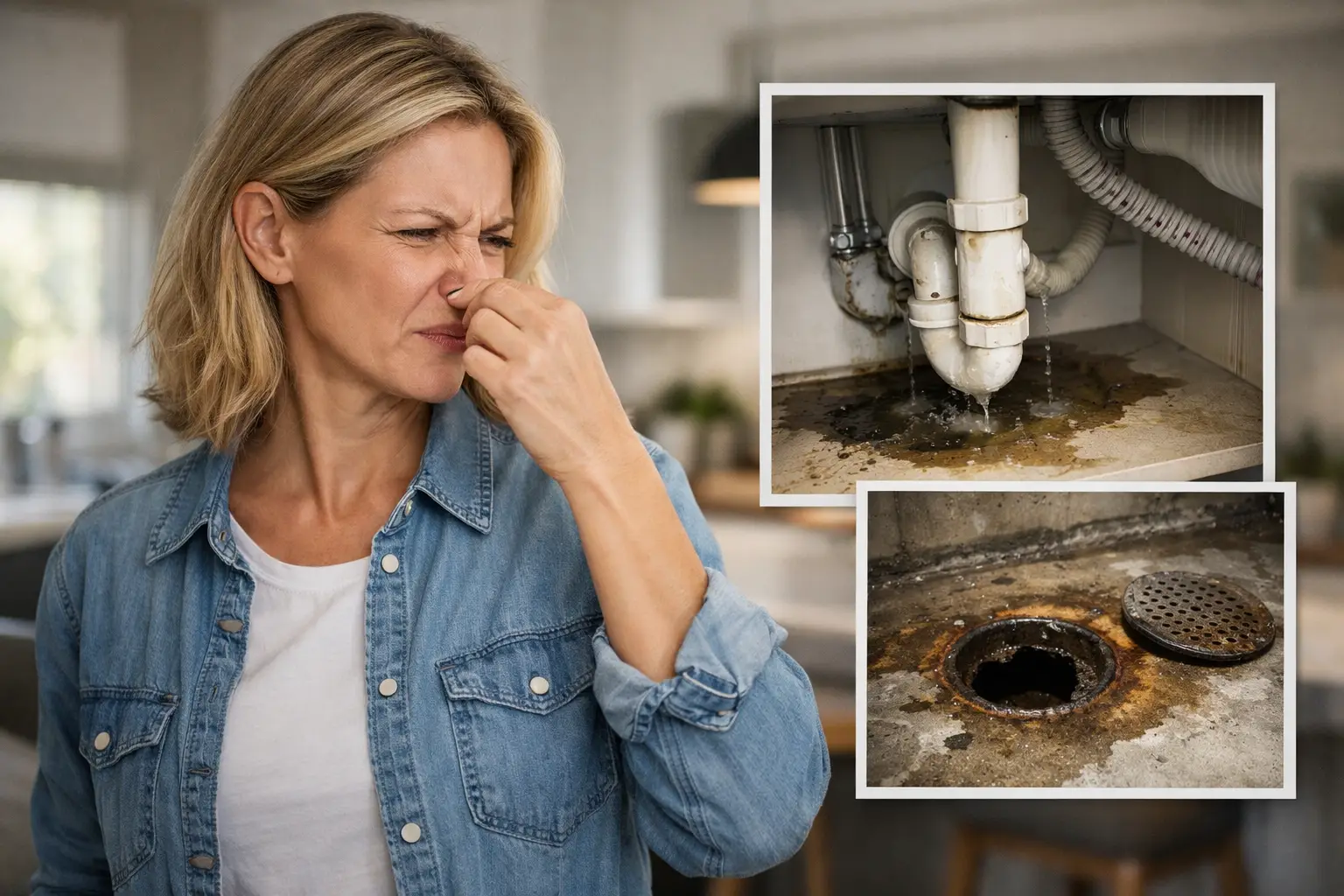
Sewage Smell in House? Find the Real Cause
Sewage smell in house? Learn the most common causes, what to check first, when it is urgent, and when to call a licensed plumber for help.
That sewer odor usually shows up at the worst time - after a shower, near the basement stairs, or when guests are about to walk in. If you have a sewage smell in house, do not ignore it or try to cover it with air fresheners. A sewer smell is a sign that something in the drain, vent, or sewer system is not working the way it should.
Sometimes the fix is simple. Other times, that smell is the early warning for a blocked sewer line, a dry trap, a damaged vent, or even a break in the piping. The key is finding the source before it turns into a backup, water damage, or a bigger repair bill.
What a sewage smell in house usually means
Your plumbing system is designed to move wastewater out and keep sewer gases sealed away from your living space. It does that with a combination of drain pipes, vent pipes, and traps. The curved section of pipe under sinks, tubs, and many floor drains holds water. That water creates a barrier that blocks sewer gas from coming back inside.
When you smell sewage indoors, one of two things is usually happening. Either sewer gas is escaping where it should not, or wastewater is not draining properly and is starting to foul the system. Both problems need attention, but the urgency depends on where the smell is coming from and whether other symptoms are happening at the same time.
If the odor is strong, getting worse, or showing up with slow drains, gurgling toilets, or water backing up, that points to a system problem rather than a one-off smell.
The most common causes
A dry drain trap is one of the simplest and most common reasons for a sewer smell. This happens a lot in basement floor drains, guest bathrooms, laundry rooms, or any fixture that does not get used often. If the water in the trap evaporates, sewer gas can come straight into the house.
A clogged or partially blocked drain can also create odor. Hair, soap buildup, grease, food waste, and sludge sitting inside a drain line start to smell over time. That odor is often strongest near sinks, tubs, or showers and may get worse when water is running.
A sewer line blockage is more serious. If the main line is obstructed by grease, wipes, roots, or heavy buildup, wastewater may not move out correctly. You might notice multiple drains acting up at once, toilets bubbling, or a smell that is strongest in the basement or lowest level of the home.
Vent pipe problems are another possibility. Plumbing vents let sewer gases move safely out through the roof and help drains flow properly. If a vent is blocked by debris, nests, frost, or damage, pressure in the system can get thrown off. That can pull water out of traps or force odors back into the home.
Loose seals and failed connections can also be the issue. A toilet with a bad wax ring may let sewer gas escape around the base. A cracked drain pipe behind a wall or under a floor can do the same thing. These cases are harder to spot because you may smell the problem before you see any leak.
Where the smell is coming from matters
If the odor is strongest under a kitchen or bathroom sink, start with the trap and the drain opening. Buildup in the drain body or a loose fitting may be the issue. If it is coming from a shower or tub, hair and soap scum are common contributors.
If the smell is near a toilet, do not assume the toilet itself is clogged. A failed wax ring, a loose toilet base, or a venting problem can all produce the same odor. If the floor around the toilet feels soft or you see staining, that moves it into repair territory quickly.
If the smell is strongest in the basement, pay close attention. Basement floor drains, ejector pits, and main sewer line issues are frequent causes. Because the basement is often closest to the building drain and sewer exit, odors from larger system problems tend to show up there first.
If the smell comes and goes depending on weather, heavy rain, or wind, that can point to a venting issue or a problem in the sewer system outside the house. It is not always obvious without a proper inspection.
What to check first
Start with fixtures that do not get used often. Pour water into basement floor drains, guest bathroom sinks, tubs, and showers. If the smell fades after that, a dry trap was likely the problem. In some cases, adding a small amount of mineral oil after the water can slow evaporation in rarely used drains.
Next, look for slow drainage. Run water at sinks, tubs, and showers and flush toilets. If more than one fixture is draining slowly, or if one fixture affects another, that is a warning sign of a bigger blockage.
Check around the base of toilets for odor, movement, or moisture. A toilet should feel solid. If it rocks or shifts, the seal may be compromised even if there is no obvious leak yet.
You can also look at visible plumbing connections under sinks for drips or loose slip nuts. Sometimes the issue is as simple as a poor seal under a sink cabinet. But if the smell seems to come from inside a wall, below the slab, or from several parts of the house, you are past the point of guesswork.
When it is more than a smell
A sewage smell on its own is reason enough to investigate, but some symptoms make it more urgent. If wastewater backs up into a tub or floor drain, if toilets gurgle when another fixture runs, or if multiple drains are slow at once, the main sewer line may be restricted.
That is not a wait-and-see problem. Main line blockages can turn into indoor backups fast, especially when the home keeps using water as usual. In the Albany area, older homes, mature trees, and seasonal ground movement can all contribute to sewer line trouble.
A strong odor with no visible source may also point to a hidden leak or broken pipe. Sewer gas is not something you want circulating inside your home for days while you experiment with drain cleaners and home remedies.
What not to do
Do not keep pouring chemical drain cleaners into the system hoping the smell will disappear. If the cause is a dry trap, damaged seal, vent issue, or main line problem, chemicals will not fix it. They can also make the job harder and less safe when a plumber has to open the line later.
Do not ignore a smell just because it comes and goes. Intermittent odors are common with vent issues, partial clogs, and traps that lose water slowly. A problem that seems small on Monday can become a backup by the weekend.
And do not assume every sewer smell means the whole line needs replacement. Sometimes it does. Often it does not. That is why diagnosis comes first.
How a plumber diagnoses the source
A proper plumbing diagnosis starts with the pattern of symptoms. Is the smell limited to one room or showing up across the house? Is there slow drainage, gurgling, or backup? Did the odor begin after heavy rain, recent work, or a period of vacancy?
From there, the inspection may include checking traps and seals, testing fixture drainage, evaluating venting, and inspecting the sewer line if the symptoms point that way. In some cases, a camera inspection is the fastest way to confirm whether the issue is buildup, roots, a sag in the line, or pipe damage.
That matters because the repair depends on the cause. A simple drain cleaning, toilet reset, or trap correction is very different from a main sewer repair. Good service is not guessing. It is identifying the exact failure point and explaining the right fix clearly.
When to call for service
If the odor is isolated to one little-used drain and disappears after adding water, you may have solved it. But if the smell returns, affects multiple fixtures, or comes with slow drains or toilet issues, it is time to call.
The same goes for any odor in the basement, any signs of backup, or any suspicion of a failed toilet seal or broken drain pipe. These are not problems that improve on their own. Fast diagnosis can prevent contamination, flooring damage, and a much larger repair.
For homeowners in Albany, Colonie, Troy, Delmar, and East Greenbush, a sewage odor is usually not random. It is your plumbing system telling you something is wrong. Trinity Plumbing & Drains handles this kind of problem the right way - diagnose first, define the issue clearly, and make the repair cleanly and up to code.
If your house smells like sewage, trust the smell. The sooner you track down the source, the easier it usually is to fix.