
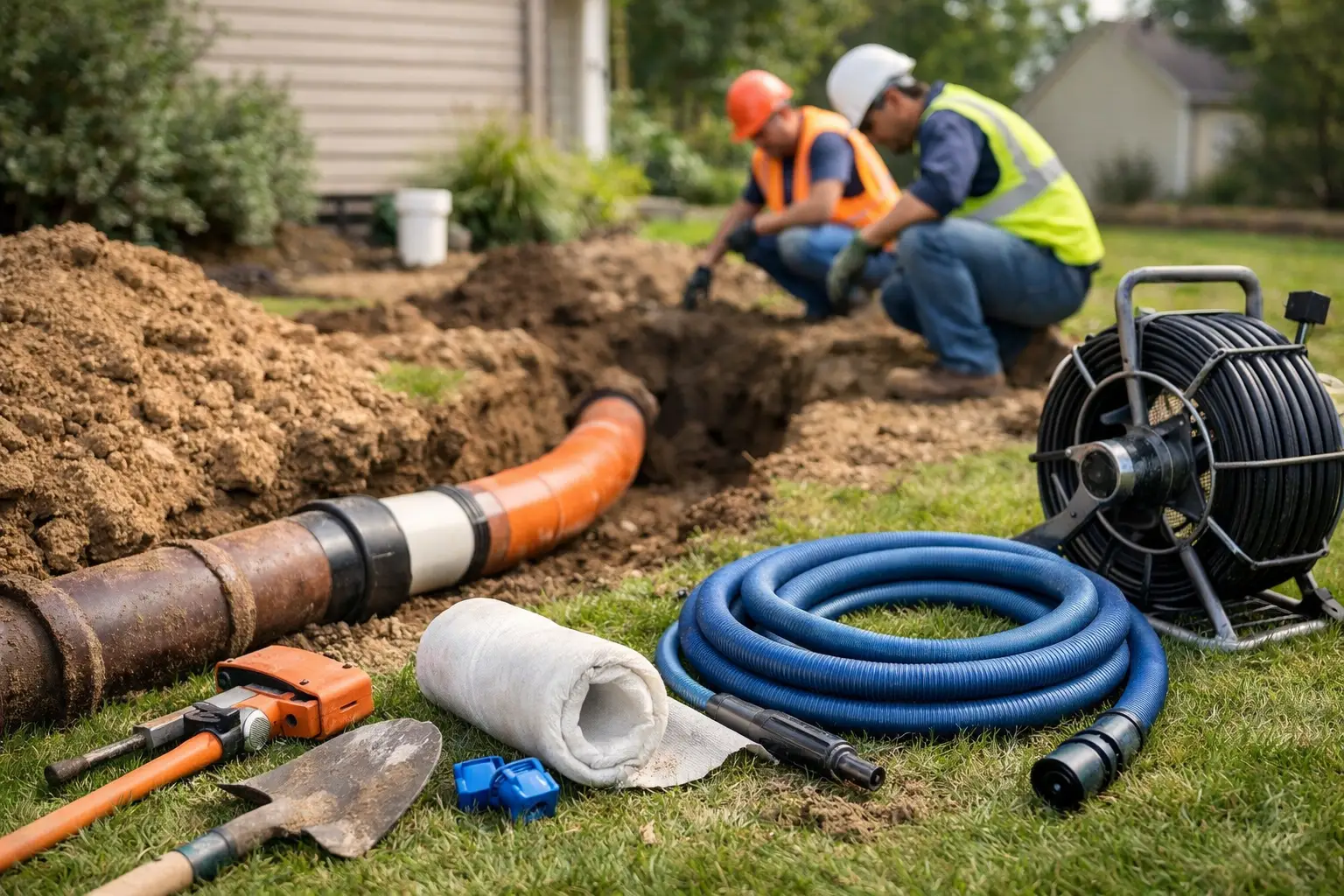
Sewer Line Repair Options for Homeowners
Learn sewer line repair options, what each method fixes, cost factors, and when homeowners should repair, reline, or replace a damaged sewer line.
A sewer problem usually starts small - a tub draining slower than usual, a toilet that gurgles, a smell in the basement you cannot quite place. Then it turns into a backup, a wet yard, or a drain system that stops working when you need it most. If you are comparing sewer line repair options, the right choice depends on what failed, where the pipe is damaged, and whether a targeted repair will hold up or just delay a larger problem.
For homeowners in Albany-area neighborhoods with older homes, mixed piping materials, and tree-lined lots, sewer line issues are rarely one-size-fits-all. That is why a proper diagnosis comes first. A camera inspection and a clear assessment of the pipe condition matter more than guesses, because the best repair is the one that actually matches the problem.
How sewer line problems usually show up
Most homeowners do not see the sewer line itself. They notice the symptoms inside the house or out in the yard. Repeated drain backups, sewage odors, soft or soggy areas outside, and multiple fixtures acting up at once often point to the main sewer line rather than a single sink or toilet.
The cause can vary. Some lines are blocked by grease, wipes, or settled debris. Others are cracked by age, offset by soil movement, or broken by root intrusion. In older homes, you may also find clay, cast iron, or Orangeburg pipe that has simply reached the end of its usable life. Those details affect which repair makes sense and whether repair is even the right word, or whether replacement is the safer call.
Sewer line repair options: what they really mean
When homeowners hear different recommendations, the terms can sound interchangeable. They are not. Sewer line repair options range from clearing a blockage to replacing an entire run of pipe, and the best path depends on severity, access, and long-term value.
Drain cleaning for a removable blockage
If the pipe itself is still in good condition, the issue may be a stoppage rather than structural damage. Professional drain cleaning or sewer augering can remove roots, sludge, or buildup and restore flow.
This is the least invasive option, but it only works when the pipe walls are still sound. If a camera inspection shows cracks, separated joints, or recurring root entry, clearing the line may solve today’s backup without solving the reason it happened. That is why diagnosis matters. A cheap clearing can become expensive if it leads to another emergency a month later.
Spot repair for isolated damage
A spot repair is used when one section of the sewer line is damaged but the rest of the line is still serviceable. This often involves excavating a limited area to remove and replace the failed section.
This can be a practical choice when there is a clear break, a localized belly, or a root-damaged section in an otherwise decent line. The upside is that you avoid replacing more pipe than necessary. The trade-off is that spot repair is only as good as the condition of the remaining pipe. If the rest of the line is aging badly, fixing one section may not prevent the next failure.
Trenchless pipe lining
Pipe lining, often called cured-in-place lining, creates a new interior lining inside the existing sewer pipe. This method can work well when the pipe is structurally compromised by cracks, minor root intrusion, or joint issues, but still has enough shape and stability to accept a liner.
Homeowners often like lining because it can reduce excavation. That means less disruption to landscaping, walkways, and driveways. It can also provide a durable finished interior that improves flow.
Still, lining is not right for every job. If the pipe has fully collapsed, has severe offsets, or has major sections missing, a liner may not be possible. Access points, pipe diameter, and the extent of damage all need to be confirmed first.
Trenchless pipe bursting
Pipe bursting replaces the old sewer line by pulling a new pipe through the path of the old one while breaking apart the existing pipe. This can be a strong option when the line needs full replacement but conditions allow for a trenchless method.
The appeal is obvious: less open trenching across the property than a traditional dig-up. For some homes, that means saving hardscaping and reducing cleanup. But it still requires planning, equipment access, and enough room to perform the work safely. It is also not ideal in every site condition, especially where utility conflicts, tight setbacks, or unusual pipe layouts are involved.
Traditional full sewer line replacement
Sometimes the right answer is full excavation and replacement. If the sewer line has collapsed, has multiple failures, has poor slope, or is made of deteriorated material throughout, replacement is often the most reliable long-term fix.
Homeowners do not always want to hear that, but there are times when it is the most honest recommendation. A full replacement allows the line to be rebuilt to current standards, with proper pitch, proper materials, and a cleaner starting point than repeated patchwork repairs.
The downside is disruption. Excavation can affect the yard, landscaping, and in some cases sidewalks or driveways. But when the line is failing in more than one place, replacement can be the option that ends the cycle of backups instead of managing it.
What decides which option is best
The main factors are pipe condition, location of damage, accessibility, and how long you plan to stay in the home. A line with one clean break is a different problem than a line with root intrusion at every joint. A sewer pipe under open lawn presents different repair choices than one running under a garage slab or mature landscaping.
Material matters too. Older clay and cast iron lines may be repairable in places, but if inspection shows widespread deterioration, a one-time replacement may be more cost-effective than repeated service calls. On the other hand, if the problem is isolated and the rest of the pipe is in workable shape, a targeted repair may be the smarter use of your money.
This is where clear scope matters. Homeowners need to know whether a proposal addresses the cause of the failure or just the symptom. They also need to understand whether permits, code requirements, and restoration work are included, because those details affect both cost and timeline.
Cost is important, but so is repeat failure
Everyone asks about price first, and that makes sense. Sewer work is rarely planned. But comparing sewer line repair options based on upfront price alone can lead to the wrong decision.
A drain cleaning costs less than a repair. A spot repair may cost less than a trenchless replacement. But if the cheaper option leaves behind a line that keeps backing up, the lower invoice today may turn into more service calls, water damage, and a rushed replacement later.
The better question is not only, What is the cheapest fix? It is, What repair is appropriate for the actual condition of the line? Good sewer work is not about selling the biggest job. It is about matching the repair to the failure and being clear about the expected life of that solution.
Why proper diagnosis comes first
Sewer problems create urgency, but urgency should not mean guesswork. A professional assessment should identify where the issue is, what caused it, how extensive it is, and whether the pipe is a candidate for repair, lining, or replacement.
That process protects homeowners from vague recommendations and from paying for the wrong fix. It also helps set expectations about access, cleanup, permits, and scheduling. At Trinity Plumbing & Drains, that diagnosis-first approach is how sewer problems get handled without the runaround.
When to act fast
If sewage is backing up into the home, multiple drains are affected, or you smell sewer gas indoors, do not wait and hope it clears on its own. Main line problems can escalate quickly, especially in older homes or during heavy groundwater conditions.
Early action gives you more repair choices. Once a line fully collapses or a backup causes interior damage, the job often becomes larger, dirtier, and more expensive. Fast response matters, but so does doing the work correctly and to code.
The practical next step is simple: get the line inspected, find out exactly what failed, and choose the repair based on evidence rather than assumptions. That is how you protect the house, the yard, and your budget from a problem that rarely gets better by waiting.