
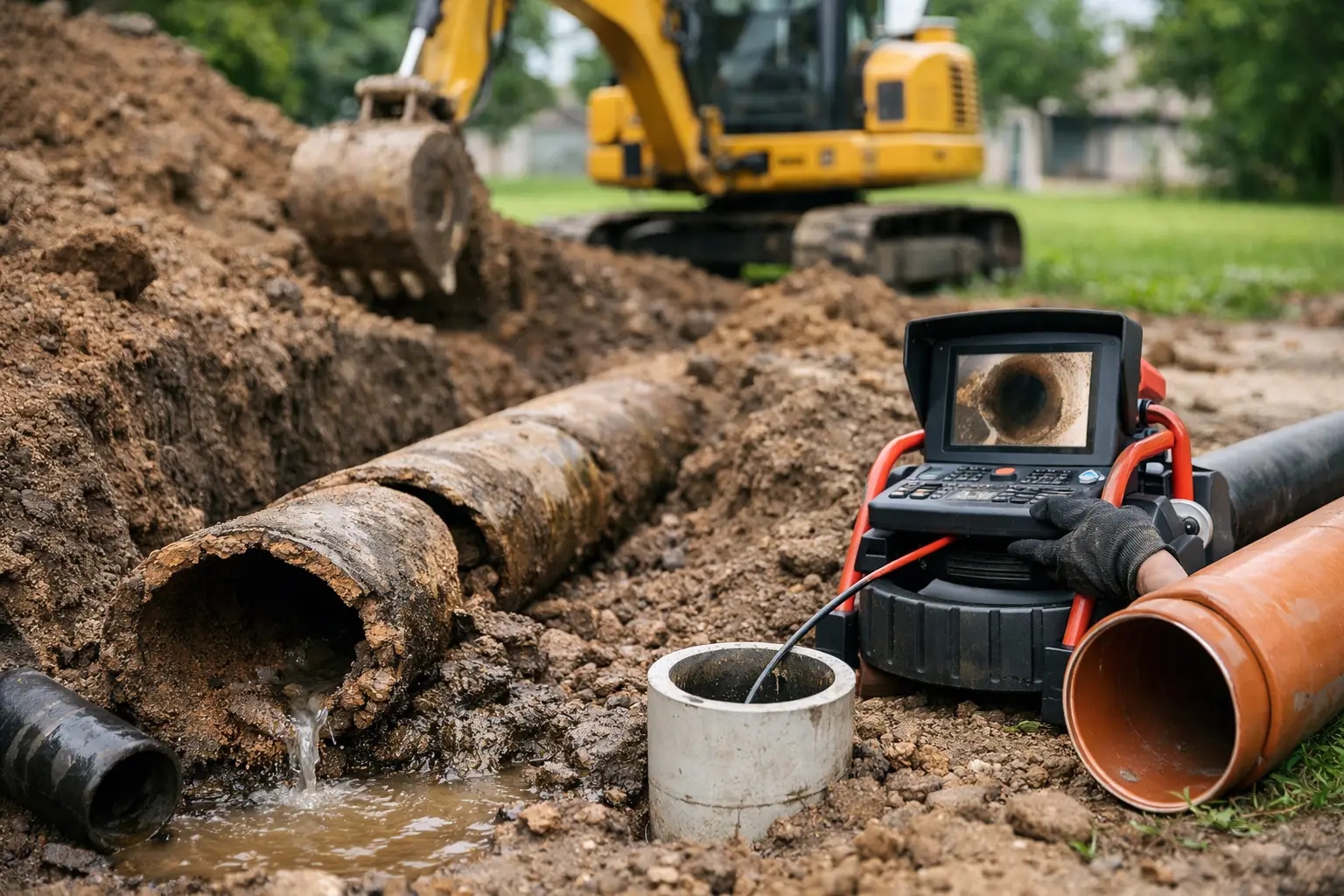
Sewer Line Repair: Signs, Options, Costs
Need sewer line repair? Learn the warning signs, repair options, cost factors, and when to call a licensed plumber for fast diagnosis.
A sewer problem usually does not start with a dramatic collapse in the yard. More often, it starts with a slow drain that keeps coming back, a toilet that gurgles after a shower, or a bad smell near the basement floor drain. When those signs show up together, sewer line repair moves from a maintenance issue to a time-sensitive home repair.
For homeowners in the Albany area, the biggest mistake is waiting too long and hoping a recurring backup is just a simple clog. Main sewer line problems can damage flooring, create sanitation issues, and turn a manageable repair into a larger excavation job. The right next step is not guesswork. It is a clear diagnosis, followed by the repair method that actually fits the condition of the pipe.
When sewer line repair is the right fix
Not every drain problem means the sewer line itself is broken. A localized kitchen clog, for example, may stay limited to one fixture or one branch line. But when multiple fixtures are affected at once, the main line becomes the likely suspect.
Common warning signs include frequent backups in the lowest drains of the house, toilets that bubble or drain slowly, sewage odors indoors or outside, soggy areas in the yard, and unexplained patches of extra-green grass over the pipe path. In older neighborhoods, root intrusion is also common. Tree roots do not need a large opening. A small crack or loose joint is enough to let roots in and wastewater out.
Sometimes the issue is a blockage that can be cleared. Sometimes the pipe is cracked, offset, collapsed, or deteriorated enough that clearing it only buys a little time. That is why camera inspection matters. Before recommending sewer line repair, a professional should verify where the problem is, what caused it, and how much of the line is involved.
What causes sewer line damage
Age is a major factor. Many homes have older sewer materials that wear out, shift, or corrode over time. Clay pipe can crack and attract roots. Cast iron can scale, corrode, and narrow on the inside. Orangeburg, found in some older systems, is especially prone to deformation and failure.
Ground movement also plays a role. Freeze-thaw cycles, settling soil, nearby construction vibration, and heavy surface loads can all stress underground piping. In some cases, the line was installed with poor slope or has developed a belly, which allows waste and paper to collect instead of flowing freely.
Then there is simple misuse. Flushing wipes, grease buildup, paper towels, and other non-flushable items can turn a vulnerable line into a blocked one fast. That does not always mean the pipe needs replacement, but repeated backups often expose an underlying structural problem that cleaning alone will not solve.
How a proper sewer line diagnosis works
A good sewer service call should start with locating the issue, not jumping straight to excavation. That usually means discussing the symptoms, checking which fixtures are affected, and performing a camera inspection of the main line. If the line is blocked, it may need to be opened first so the camera can travel the pipe and give a usable view.
The camera inspection helps answer the questions that matter. Is the pipe cracked or just clogged? Is root intrusion minor or severe? Is there one damaged section or a long run in poor condition? Is the problem inside the foundation, under the yard, or near the city connection?
From there, the repair scope can be defined clearly. That matters for cost, timeline, and disruption. Homeowners should know whether the recommendation is a spot repair, a larger section replacement, or a full line replacement, and why.
Sewer line repair options homeowners should know
There is no single repair method that fits every house. The right option depends on pipe material, access, depth, location of the damage, and overall pipe condition.
Spot repair
If the problem is isolated to one section of pipe, a spot repair may be enough. This usually involves exposing the damaged area, removing the failed section, and installing new pipe with proper connections and grade. It is often the most practical choice when the rest of the line is in good shape.
This approach can keep costs lower than full replacement, but only if the damage really is limited. If the camera shows multiple weak sections, repeating spot repairs can cost more over time than addressing the line more comprehensively.
Full or partial sewer line replacement
When a pipe has widespread cracking, severe root intrusion, corrosion, or collapse, replacement is often the more reliable answer. That may mean replacing the entire line from the house to the municipal connection, or only the affected portion if the rest of the pipe is still sound.
This is a bigger job, but it gives the best long-term reset when the existing line is simply worn out. The key is correct installation, proper slope, code-compliant materials, and clear coordination around permits and inspection requirements where applicable.
Trenchless repair or replacement
In some situations, trenchless methods can reduce yard disruption. These methods are not always possible, and they are not automatically better. The pipe has to meet certain conditions, and access points still matter.
For some homes, trenchless repair is a smart way to avoid extensive digging through landscaping, driveways, or walkways. For others, traditional excavation is the cleaner and more dependable option. It depends on the layout, the exact failure, and whether the line can support that repair method.
What affects sewer line repair cost
Homeowners usually want a number right away, but sewer pricing is driven by conditions underground. Until the line is inspected, any estimate is only a rough guess.
The biggest cost factors are the location and depth of the pipe, the length of damaged section, the repair method, access challenges, the type of pipe being installed, and whether permits or restoration work are required. A repair in an open yard is very different from one under a concrete driveway, a finished basement slab, or a landscaped area with limited equipment access.
Emergency timing can also affect cost. If sewage is backing up into the home, speed matters. A same-day response may be necessary to limit damage and restore safe use of the plumbing system.
The best service experience is one where the problem is diagnosed first, the scope is explained plainly, and the homeowner understands what is included before work begins. That avoids the vague pricing and shifting expectations that frustrate people during urgent repairs.
Why waiting can make the repair bigger
A compromised sewer line rarely fixes itself. Small cracks grow. Root intrusion thickens. Repeated backups increase the chance of interior damage and contamination. If the pipe is partially broken, continued use can wash out surrounding soil and create larger voids underground.
That is especially risky when symptoms are already affecting more than one fixture. If the basement shower, first-floor toilet, and laundry drain are all acting up together, the home is telling you the main line is under stress.
Fast action does not mean rushing into the wrong repair. It means getting the right diagnosis before the next backup hits.
Choosing the right plumber for sewer line repair
Sewer work is not the place for vague answers. You want a licensed professional who can inspect the line, explain the findings clearly, and perform code-compliant repairs with proper oversight. Clean jobsite practices, insurance coverage, and a defined process matter here because this is invasive work tied directly to your home’s sanitation system.
It also helps to work with a company that handles urgent residential service regularly. Sewer problems are stressful, and homeowners need direct communication, realistic timelines, and repair recommendations based on evidence, not pressure. Trinity Plumbing & Drains approaches these calls the right way - diagnose first, define the scope, and fix the actual problem without the runaround.
If your drains keep backing up, your toilets are gurgling, or you are noticing sewer odors in or around the house, treat it like an active system problem, not a nuisance. A prompt inspection can turn a messy surprise into a controlled repair, and that is usually the difference between a rough week and a solvable job.