
Sewer Repair Versus Sewer Replacement Explained
Sewer repair versus sewer replacement depends on pipe damage, age, and access. See how a professional diagnosis guides the right fix for your home today.
A sewer backup is not the time for guesswork. When wastewater is coming up through a floor drain, toilets are bubbling, or multiple drains are slow, the question of sewer repair versus sewer replacement becomes urgent. The right answer depends on what is happening inside the line, where the damage is located, and whether the pipe still has enough sound material to serve your home reliably.
A proper sewer decision starts with diagnosis, not a sales pitch. A qualified plumber should identify the source of the restriction or failure before recommending a repair or replacement. That usually means reviewing the symptoms, locating the line, and using a sewer camera when conditions allow.
Start With the Actual Sewer Line Problem
A clogged sewer line and a failed sewer line can look similar from inside the house. Both can cause slow drains, recurring backups, foul odors, and water around a basement floor drain. The difference is whether cleaning the line will restore dependable flow or simply provide short-term relief.
Tree roots are a common issue around older Albany-area homes. Roots can enter through joints, cracks, or deteriorated pipe sections and create a blockage. In some cases, professional drain cleaning and root removal can get the system working again. If roots have entered because the pipe is separated, crushed, or badly deteriorated, cleaning alone will not correct the underlying problem.
Other common causes include bellied pipe sections that hold waste and water, shifted joints, cracked cast iron or clay pipe, grease buildup, foreign objects, and damage from soil movement. A camera inspection helps show whether the issue is isolated or spread throughout the line.
When Sewer Repair Is the Practical Choice
Sewer repair makes sense when the problem is limited to a defined section of otherwise serviceable pipe. If the camera shows one damaged joint, a short crack, a small root intrusion point, or a localized collapse, repairing that area may be the most cost-effective option.
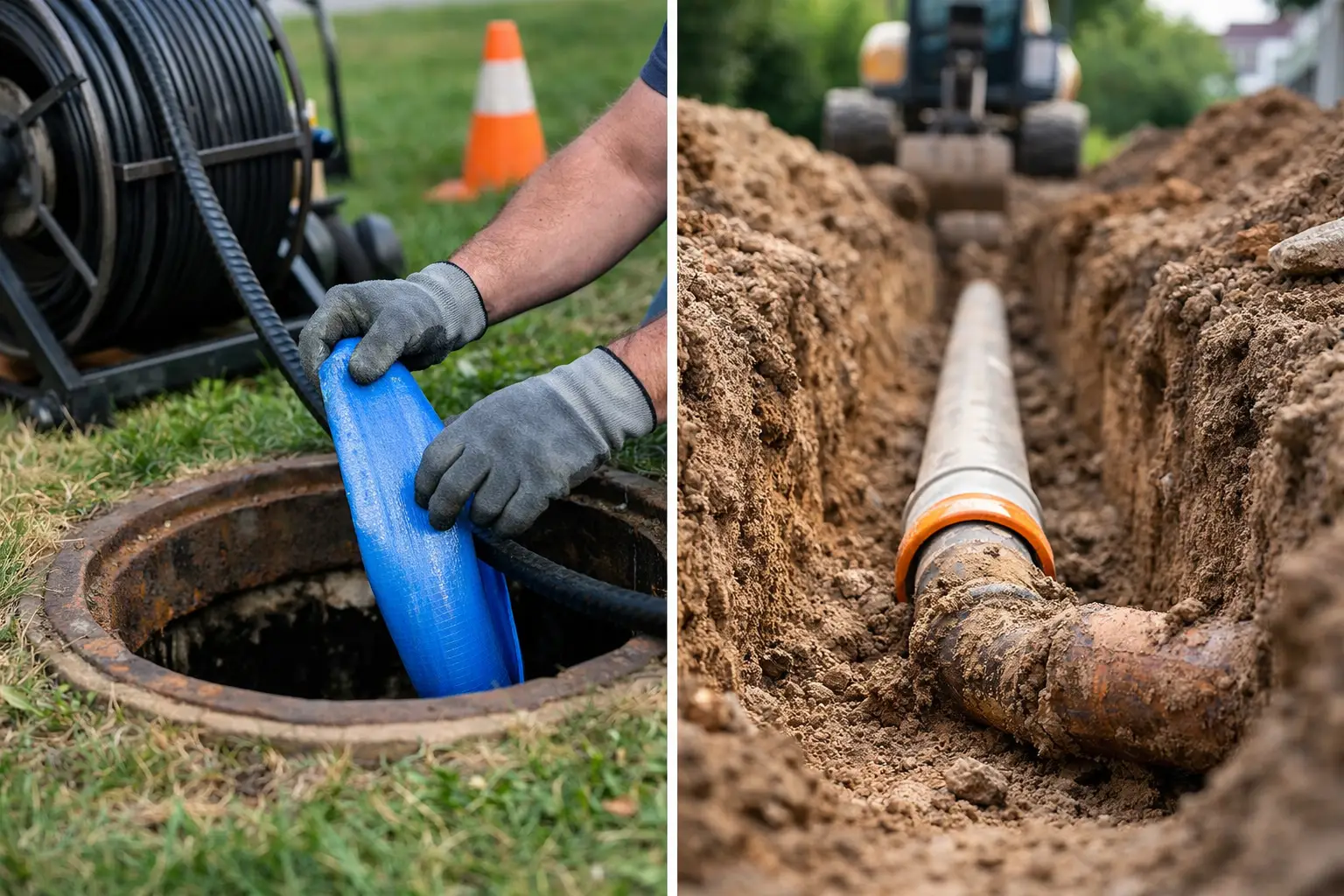
A spot repair can involve accessing the damaged section, removing failed pipe, and installing properly connected replacement material. The exact method depends on pipe depth, location, soil conditions, local code requirements, and whether the line runs under landscaping, a driveway, a basement slab, or another structure.
Repair is often a reasonable choice when:
- The rest of the sewer line is in good condition.
- The damaged area is clearly identified and accessible.
- The line has proper slope and no widespread deterioration.
- Backups are not recurring in several different locations.
- The repair will provide a realistic service life without creating another weak point nearby.
The least expensive option is not always the best value. A small repair can be a smart decision, but only if it addresses the actual cause of the backup. Repairing one section of a pipe that is failing in multiple places can lead to another excavation and another emergency call sooner than expected.
Cleaning Is Not Always a Repair
Drain cleaning is valuable when the sewer line is blocked by buildup, roots, or debris and the pipe itself remains intact. It restores flow and can prevent immediate damage inside the home. But it does not reconnect separated pipe, correct poor slope, or rebuild a collapsed section.
After cleaning, a camera inspection can show what remains. This is particularly useful if the home has a history of repeat backups. Clear water flow right after cleaning is good news, but the inside condition of the pipe is what determines whether the result will last.
When Sewer Replacement Is the Better Long-Term Fix
Sewer replacement is generally recommended when the pipe has extensive damage, repeated failures, or age-related deterioration across much of its length. This is common with older clay, cast iron, Orangeburg, or improperly installed lines, although any material can fail under the right conditions.
Replacement may be the better path when the camera reveals multiple cracks, widespread root intrusion, offset joints, severe corrosion, a major belly, or several collapsed sections. It can also make sense when repairs have already been attempted and backups keep returning.
Replacing the line allows the plumber to install new pipe with properly supported connections and the required slope. It gives the system a clean start rather than asking an old, compromised line to keep carrying daily household waste.
This work can involve excavation, restoration of affected surfaces, permits, and inspections depending on the location and scope. A professional estimate should explain what area will be accessed, what pipe will be replaced, whether restoration is included, and what conditions could affect the final scope once digging begins.
Replacement Does Not Automatically Mean Replacing Everything
A full sewer replacement does not always mean every foot of pipe from the house to the municipal connection. The necessary replacement area depends on where the damage starts and stops, as well as the condition of the remaining line.
For example, a homeowner may need a new building sewer from the house to the property line while the connection beyond that point remains serviceable. Another property may have a short damaged section under a yard that can be repaired without replacing the entire run. The camera findings and line location should drive the recommendation.
Sewer Repair Versus Sewer Replacement: What Affects Cost?
No responsible plumber should quote a sewer repair or replacement price based only on a description over the phone. The final cost depends on the type of failure and the conditions around the pipe.
Depth is a major factor. A sewer line several feet below grade requires more excavation and safety planning than a shallow line. Access matters too. A line under open lawn is different from one beneath concrete, a deck, mature landscaping, or a finished basement.
The length of pipe, type of material, local permit requirements, restoration work, and connection method also affect the scope. Emergency conditions can add urgency, but they should not eliminate the need for a clear explanation of what is being repaired and why.
Be cautious with broad promises that a particular method is always cheaper or always noninvasive. Some situations are well suited to less disruptive repair methods. Others require direct access so damaged pipe can be removed and the line can be properly rebuilt. The condition of your sewer determines the method, not the other way around.
Warning Signs That Should Not Wait
A single slow sink may be a local drain issue. Multiple plumbing fixtures acting up at once is more likely to point to the main sewer line. Call for service promptly if you notice sewage coming from a basement drain, toilets that gurgle when water runs elsewhere, repeated plunging with no lasting improvement, or wastewater backing up into a tub or shower.
Do not keep running water to test the problem. Avoid flushing toilets, using the dishwasher, or doing laundry until the line has been evaluated. More water can turn a contained drain problem into a sewage cleanup issue.
If sewage has entered the home, keep people and pets away from the affected area. Wastewater can contain harmful bacteria. A plumbing repair restores the line, but contaminated surfaces may also require proper cleanup and disinfection.
What a Straightforward Sewer Service Process Looks Like
The goal is to give you enough information to make a sound decision without the runaround. A professional visit should begin with the symptoms: when the problem started, which fixtures are affected, whether backups happen after rain, and whether the line has been cleaned or repaired before.
From there, the plumber can determine whether immediate drain cleaning is needed to stop the backup, followed by camera inspection to assess the pipe. The findings should be explained in plain language. You should know whether the recommendation is a cleaning, a targeted repair, a replacement section, or a larger replacement project - and what problem that work is intended to solve.
For homeowners in Albany, Colonie, Troy, Delmar, and East Greenbush, Trinity Plumbing & Drains provides diagnosis-first sewer service with clear scope, clean jobsite practices, and licensed master plumber oversight. When sewer work is needed, code-compliant installation and honest communication matter as much as getting the water moving again.
A sewer line is out of sight until it disrupts the entire house. If you are dealing with recurring backups or signs of a main line failure, get the line inspected before a temporary fix becomes a larger mess.