
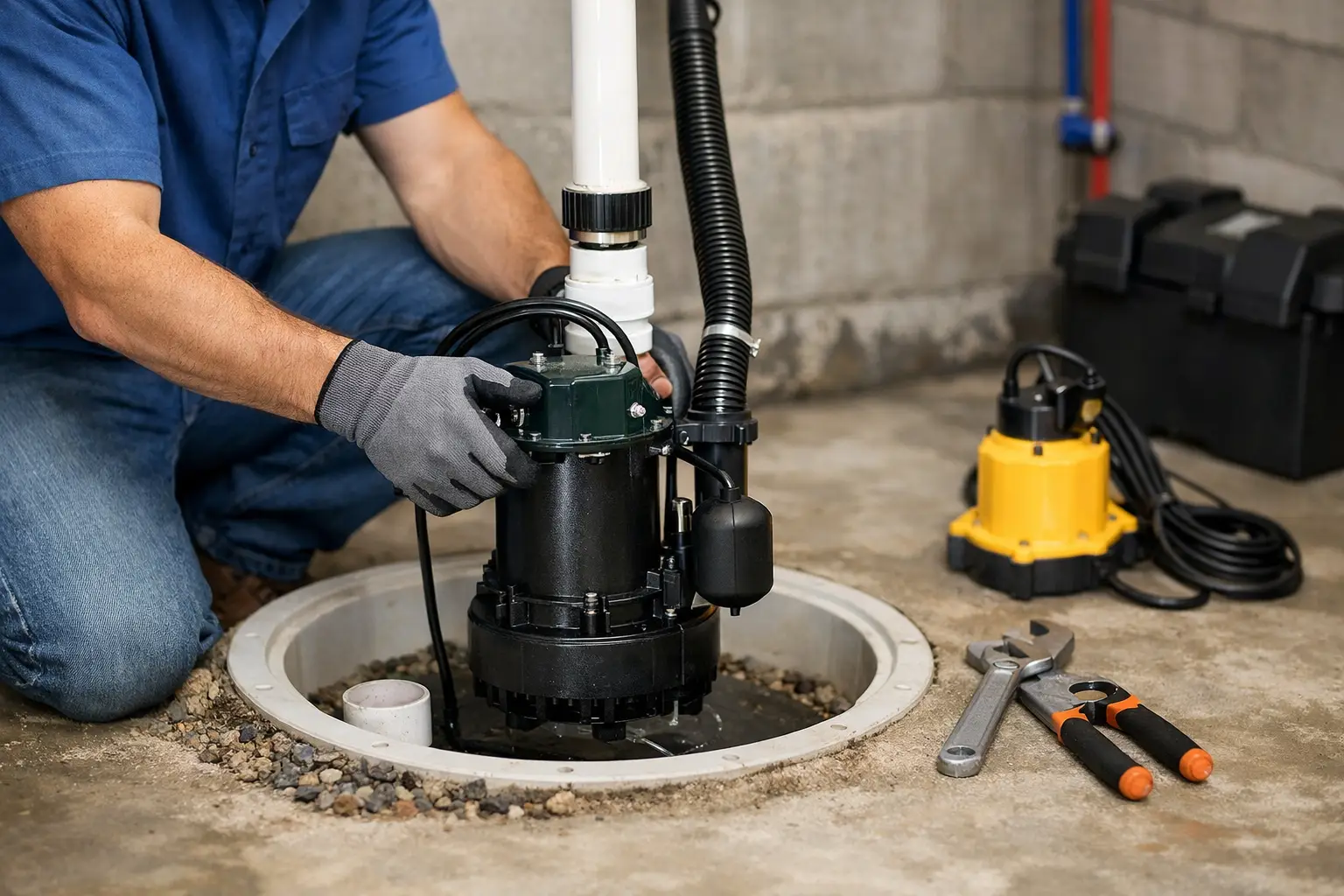
Sump Pump Installation for Basement Protection
Sump pump installation basement protection starts with the right pit, pump, discharge, and backup setup to keep Albany-area homes dry year-round.
A wet basement usually starts as a small problem. A little water at the wall joint, a damp corner after heavy rain, or a pump that runs too long and then quits. By the time you are searching for sump pump installation basement protection, you are not looking for theory. You want a system that keeps water out, protects the foundation, and works when the weather gets bad.
In the Albany area, basement water problems are rarely one-size-fits-all. Some homes take on groundwater during spring thaw. Others deal with heavy rain, poor grading, or an old pump that cannot keep up. The right sump pump setup depends on the basement, the drainage path, the electrical supply, and whether the home can tolerate any downtime if the power goes out.
Why sump pump installation matters for basement protection
A sump pump is not just a box you drop in a pit. It is part of a basement water control system. When water collects around the foundation or under the slab, the sump pit gives that water a place to go. The pump then moves it safely away from the home before it rises high enough to flood the basement floor.
When installation is done correctly, the system protects more than stored boxes and finished flooring. It helps reduce mold risk, limits moisture damage, protects mechanical equipment, and lowers the chances of repeated cleanup after storms. When installation is rushed or undersized, the pump may short cycle, clog, discharge too close to the house, or fail when you need it most.
That is why diagnosis comes first. Before any pump is installed, the real question is not just what model to use. It is where the water is coming from, how fast it enters, and what kind of discharge setup the property can support.
What a proper sump pump installation basement protection plan includes
A dependable installation starts with the pit itself. If the sump basin is too small, the pump may cycle too often and wear out early. If it is not set at the right depth, it may not collect water efficiently. A sealed lid is also worth attention, especially in basements where moisture control and safety matter.
The pump selection has to match the job. A pedestal pump may cost less and be easier to service, but a submersible pump is usually quieter and better suited for residential basement use. Horsepower matters, but bigger is not always better. An oversized pump can cycle too fast. An undersized pump can fall behind during peak groundwater events.
The discharge line is just as important as the pump. Water needs to leave the home and stay out. That means proper pipe sizing, a check valve to stop backflow, and a discharge point that sends water far enough away from the foundation. In cold climates like upstate New York, freeze protection also matters. A poorly routed discharge line can ice over in winter and make a working pump useless.
Power protection is another part homeowners often overlook until a storm hits. If the pump only works when the power is on, you still have a weak point. Battery backup systems add real protection, especially in homes where outages and heavy rain can happen at the same time.
Signs your current sump pump setup is not enough
Some failures are obvious. The basement floods and the pump is silent. Others are easier to miss. If your pump runs constantly, makes grinding noises, cycles on and off every few seconds, or leaves water standing in the pit, something is wrong. If the discharge line spits water right back near the foundation, the system may be working against itself.
Age matters too. Many sump pumps do not fail gradually. They work until they do not. If the unit is older, has no backup, or was installed without a clear look at drainage conditions, replacement may be smarter than another temporary repair.
A lot depends on the home. An unfinished basement with occasional seepage has different protection needs than a finished lower level with flooring, drywall, and stored belongings. If one pump failure could mean major damage, it makes sense to build in more redundancy.
How the installation process should work
A professional sump pump job should start with an on-site evaluation, not a guess over the phone. The contractor needs to inspect the existing pit, pump, discharge routing, power source, and any visible signs of water entry. If there is no current sump system, they need to determine the best location for the basin and whether drainage improvements are needed around it.
From there, the scope should be clear. Homeowners should know whether the job includes pit creation or replacement, pump installation, check valve replacement, discharge piping, lid sealing, alarm setup, and backup power. This is where clear communication matters. A vague estimate leads to surprises once the work begins.
Installation itself should be clean and code-conscious. The basin should be secure, the pump should sit level, and the discharge line should be properly supported and routed. Electrical connections should be safe and suitable for the equipment. If local code or permit requirements apply, those should be handled correctly instead of skipped.
After installation, the system should be tested under operating conditions. The float switch should move freely. The check valve should function correctly. Water should discharge where it is supposed to go. If a backup system is included, that should be tested too.
Choosing the right pump for your basement
There is no single best sump pump for every home. The best choice depends on water volume, pit size, runtime expectations, and how much risk the homeowner is trying to avoid.
For many residential basements, a quality submersible pump is the practical choice. It stays inside the pit, runs quieter, and is better protected from accidental damage. Cast iron construction often holds up better than lighter plastic units, especially in harder-use conditions. A vertical float can work well in tighter pits, while tethered floats need more room to move.
Backup protection deserves serious consideration. A battery backup pump can keep water moving during a power outage. A water-powered backup may be an option in some homes, but it depends on the property and water supply conditions. The right answer is not always the cheapest one. It is the one that fits the home’s actual flood risk.
If the basement has flooded before, that history matters. If neighbors on the same street deal with seasonal groundwater, that matters too. Local conditions should shape the recommendation.
Common installation mistakes that lead to basement water problems
A lot of basement protection problems come from details that were missed during installation. The pump may be decent, but the basin is wrong. The discharge may be installed, but it empties too close to the house. The float switch may be functional, but it catches on the side of the pit.
Another common issue is relying on one old pump with no alarm and no backup. That is a risky setup in any home where basement water would be a serious problem. Some systems also fail because the check valve is missing or installed backwards, which causes repeated cycling and extra wear.
Then there is the temptation to treat sump pump installation like a basic swap. Sometimes it is. Often it is not. If the old setup was wrong from the start, replacing the pump alone will not solve the bigger problem.
What Albany-area homeowners should expect from a professional installer
In this area, homeowners need more than a pump in a pit. They need a clear diagnosis, a code-compliant installation, and a realistic explanation of what the system can and cannot do. A good installer will explain whether the pump is addressing groundwater, slab seepage, perimeter drainage, or a broader exterior drainage issue.
They should also be direct about trade-offs. A standard primary pump may be enough for some homes. Others should have a battery backup, high-water alarm, or discharge improvements built into the job. The answer depends on the basement and the consequences of failure.
Just as important, the jobsite should be handled professionally. Clean workmanship, proper testing, and clear scope are not extras. They are part of doing the work right. That is the standard homeowners should expect from a company like Trinity Plumbing & Drains.
If your basement has shown signs of water, waiting usually does not make the repair smaller. The right sump pump installation protects the space before the next storm tests it. A dry basement starts with a system designed for the house you actually have, not a guess.