
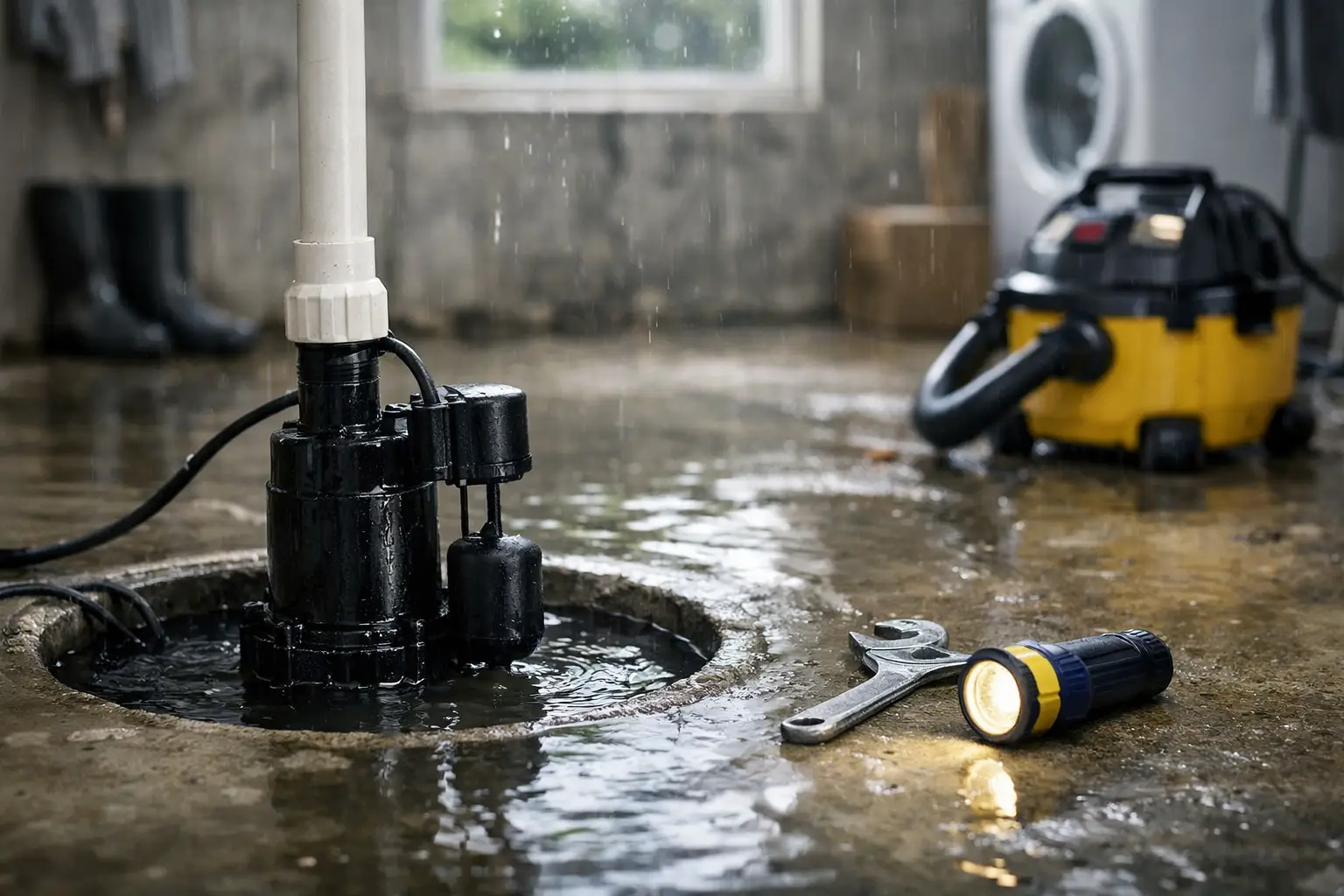
Sump Pump Not Working After Rain? Start Here
Sump pump not working after rain? Learn the common causes, what to check first, and when to call for fast sump pump repair in Albany homes.
A heavy rain hits overnight, and by morning the basement smells damp, the pit is full, or worse, water is already spreading across the floor. If your sump pump not working after rain is the problem you are dealing with, time matters. A failed pump can turn a manageable repair into flooring damage, mold growth, and a much bigger cleanup.
The good news is that sump pump failures usually come down to a short list of causes. Some are simple. Some point to a failing pump, a clogged discharge line, or an electrical issue that needs a proper diagnosis. The key is knowing what you can safely check right away and what should be handled by a licensed plumber.
Why a sump pump stops working after heavy rain
Rain is exactly when your sump pump is supposed to work hardest. That is also when weak parts start to show. A pump that seemed fine in dry weather can fail as soon as the pit fills quickly or the system has to cycle more often than usual.
In Albany-area homes, the most common reason is simple wear. Sump pumps do not last forever, and many homeowners do not realize there is a problem until the first major storm of the season. A switch can stick, the motor can overheat, or the pump can lose power just when groundwater rises.
Another common issue is a blocked or frozen discharge line. Even if the pump turns on, the water still has to go somewhere. If the line outside is clogged with debris, buried in ice, or installed with a poor slope, water may not discharge properly. In some cases, it cycles back into the pit. In others, the pump runs but cannot move enough water to keep up.
There is also the question of capacity. A smaller or older pump may technically run, but still not keep pace with heavy inflow during a hard rain. That is not the same as total failure, but for the homeowner staring at a wet basement, the result feels the same.
What to check first when your sump pump is not working after rain
Start with safety. If there is standing water near outlets, power cords, or your electrical panel, do not step into the area until it is safe. Water and electricity are not a guessing game.
If the area is safe to approach, look at the pump's power source first. A plug may have come loose, a GFCI outlet may have tripped, or a breaker may have shut off. This is more common than people think, especially if the sump shares power with another basement device.
Next, check the water level in the pit. If the pit is full and the pump is silent, that points toward a power problem, switch issue, or failed motor. If the pump is humming but not pumping, the impeller may be jammed or the discharge line may be blocked. If the pit is nearly empty but the basement is wet, the water may be coming from another source entirely, such as a foundation leak, a floor drain backup, or a broken pipe.
Take a look at the float switch. This is the part that tells the pump to turn on when water rises. If the float is pinned against the side of the pit, tangled with the power cord, or obstructed by debris, the pump may not activate. That is a frequent problem in older pits or systems with poor installation clearances.
You should also check the discharge point outside. If water is not coming out during pump operation, the line may be clogged. If it is coming out but pooling right next to the house, the drainage setup may be sending water back toward the foundation.
Signs the problem is the switch, not the pump
A bad switch is one of the most common sump pump failures after rain. The pump itself may still be capable of moving water, but if the switch does not trigger properly, it will not turn on when needed.
You may notice the pump works only if the float is lifted manually, or it may run inconsistently from one storm to the next. Sometimes the switch sticks in the off position. Other times it sticks on and causes constant cycling, which burns the motor out faster.
This is one of those repairs where parts replacement sounds simple but needs to be done correctly. Switch compatibility, pit size, pump age, and cord setup all matter. Replacing the wrong component can leave you with the same problem at the next rainfall.
When the discharge line is the real issue
Homeowners often assume the pump has failed when the actual problem is the line carrying water away from the house. If that line is clogged with mud, roots, small stones, or winter ice damage, the pump may run without clearing the pit effectively.
You might hear the motor operating, but the water level barely drops. In some cases, a check valve issue can also cause discharged water to flow back into the basin. That creates short cycling, extra wear, and poor storm performance.
This is why diagnosis matters. Replacing the pump without checking the line can waste time and money. A professional service call should confirm whether the problem is power, switch activation, pump failure, discharge blockage, or system design.
Can you reset or fix it yourself?
Sometimes, yes. If the issue is a tripped GFCI, a loose plug, or a float caught on the basin wall, you may be able to correct it quickly. Clearing visible debris from around the float can also help, as long as you can do it safely.
Beyond that, caution is the right approach. Opening up pump components, forcing a jammed impeller, or cutting into discharge piping without a clear diagnosis can make the situation worse. If the basement already has active water intrusion, every delay increases the risk of damage.
There is also the backup question. Many homes either do not have a battery backup sump pump or have one with a dead battery that has not been tested in years. If your primary pump failed during rain and there was no backup response, that is worth addressing before the next storm.
When to call for professional sump pump repair
If the pit is full, the pump is not turning on, the motor is humming without pumping, or water is already entering the basement, it is time to call. The same goes for repeated cycling, visible rust or age on the pump, or discharge line problems you cannot safely clear.
A proper sump pump service visit should start with diagnosis, not guesswork. That means checking power supply, switch operation, pump performance, discharge line condition, check valve function, and overall system sizing. In some homes, the right fix is a targeted repair. In others, replacement is the smarter option because the pump is undersized, outdated, or unreliable.
For homeowners in Albany, Colonie, Troy, Delmar, and East Greenbush, storm-related basement water problems are not something to put off until next weekend. Trinity Plumbing & Drains handles sump pump repair with a diagnosis-first approach, clear scope, and code-compliant workmanship so you know what failed and what it will take to fix it correctly.
How to reduce the chance of the same problem next time
A sump pump system should be checked before it is under pressure. Waiting for the next hard rain is how small problems turn into emergency calls.
Test the pump periodically by adding water to the pit and making sure it activates, drains, and shuts off normally. Listen for anything unusual. Make sure the float moves freely. Confirm the discharge point outside is clear and directing water away from the house. If you have a battery backup, test that too.
It also helps to think beyond the pump itself. Poor grading, clogged gutters, downspouts dumping too close to the foundation, and foundation seepage can all increase the amount of water your sump system has to manage. The pump may be part of the problem, but not always all of it.
If your sump pump is not working after rain, the right move is not to hope it dries out on its own. Find out whether the issue is power, switch failure, blockage, or a system that is simply no longer keeping up. A wet basement gets more expensive by the hour, but the right diagnosis gets you back under control fast.
The best time to fix a sump pump problem is the first time it shows up, not during the next storm.