
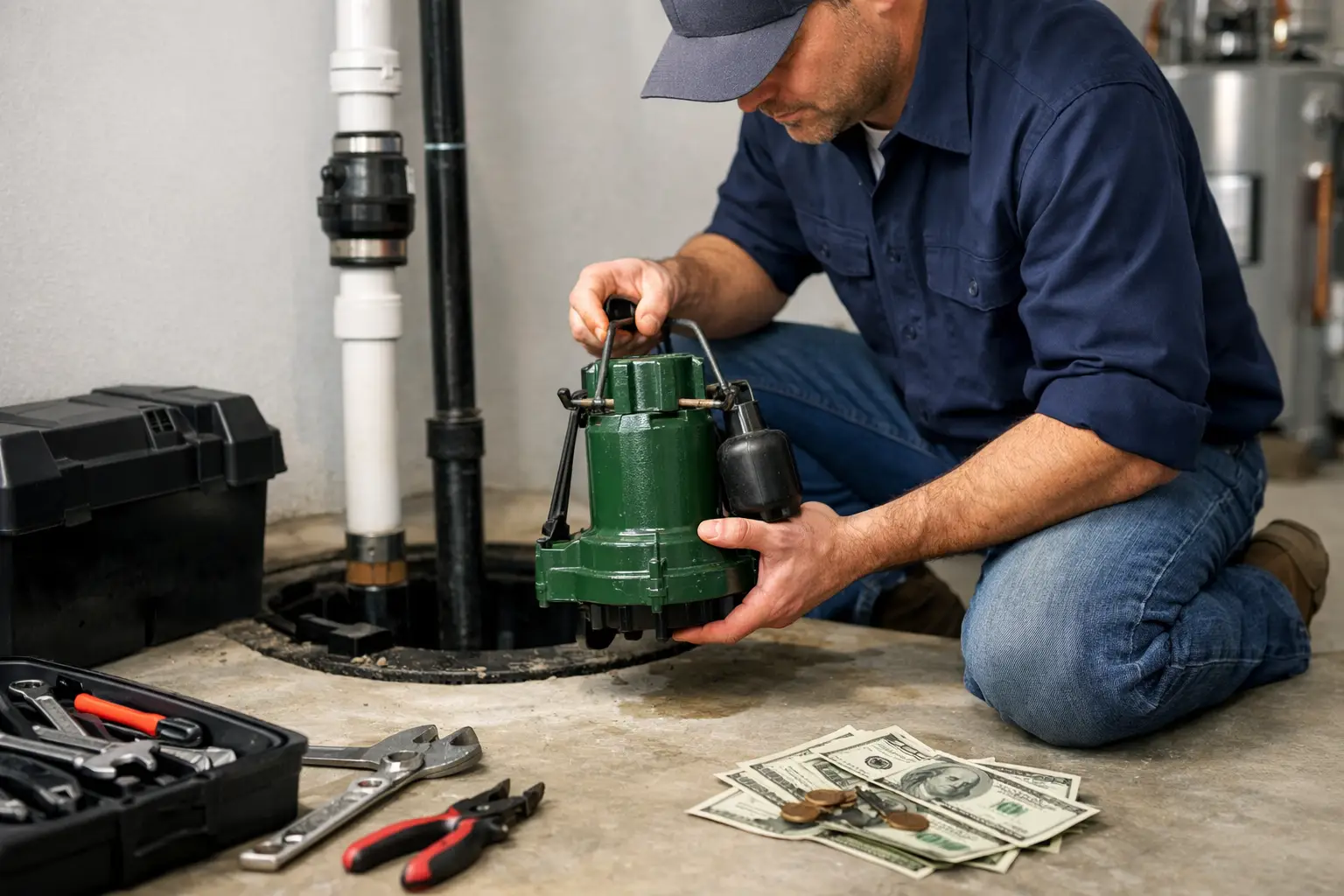
Sump Pump Repair Cost: What to Expect
Learn what affects sump pump repair cost, typical price ranges, and when repair makes sense versus replacement for a wet basement.
A sump pump usually gets ignored until the basement floor is wet, the pit is full, and you need answers fast. At that point, sump pump repair cost matters for one reason - you want the problem diagnosed correctly and fixed before water damage gets worse.
The hard part is that there is no single flat price that fits every repair. A stuck float switch is a very different job than replacing a failed motor, correcting discharge line issues, or repairing wiring after the pump has been cycling improperly for weeks. If you are in Albany, Colonie, Troy, Delmar, or East Greenbush, labor rates, emergency timing, and the age of the system all affect what you will pay.
What affects sump pump repair cost
Most sump pump repairs start with diagnosis. That matters because the pump itself is only one part of the system. The pit, float, check valve, discharge pipe, electrical connection, and backup setup can all create similar symptoms.
If the pump will not turn on, the issue might be a bad switch, a seized motor, a tripped breaker, a failed outlet, or water not rising high enough to trigger the float. If the pump runs but does not move water, the problem could be a clogged intake, frozen or blocked discharge line, bad check valve, or an impeller issue. Those problems do not carry the same repair cost, even though to a homeowner they can all look like "the sump pump stopped working."
Age also matters. A newer pump with one failed component is often worth repairing. An older unit that has been running heavily for years may not justify multiple repairs, especially if the motor is weak and the basin setup is outdated. In that case, putting money into a short-term fix can cost more in the long run.
Timing changes the price too. Emergency service during a storm or active basement flooding usually costs more than a scheduled visit on a dry day. That does not mean emergency service is overpriced. It means the situation is more urgent, scheduling is tighter, and the risk to the home is higher.
Typical sump pump repair cost ranges
For straightforward repairs, many homeowners can expect sump pump repair cost to fall somewhere in the low hundreds. Minor issues such as a float adjustment, switch replacement, check valve replacement, or clearing a simple blockage are usually less expensive than motor or electrical repairs.
A moderate repair often lands in the mid-hundreds. That may include replacing a float assembly, addressing a damaged discharge connection, correcting wiring problems, or resolving repeated short cycling caused by worn parts or improper setup.
Once you get into major component failure, the numbers climb. A bad motor, serious internal wear, or multiple failing parts can push the cost close to replacement territory. At that point, a reputable plumber should tell you plainly when repair still makes sense and when it does not.
As a general rule, homeowners often see ranges like these:
- Minor repair: roughly $150 to $350
- Moderate repair: roughly $350 to $650
- Major repair: roughly $650 to $900 or more
- Full replacement: often $900 to $2,500 depending on pump type, basin setup, discharge changes, and backup options
These are broad working ranges, not firm quotes. The actual price depends on the pump type, access, condition of the system, and whether code-related corrections are needed.
Common repairs and what they usually involve
Float switch problems
The float switch is one of the most common failure points. If it gets stuck, tangled, or worn out, the pump may not turn on when water rises. In some cases, the fix is quick. In others, the switch needs replacement because the internal contacts have failed.
This is often one of the less expensive repairs, but it still needs to be diagnosed properly. A pump that is not activating may look like a switch problem when the real issue is electrical or mechanical.
Check valve replacement
The check valve helps stop discharged water from flowing back into the pit. When it fails, the pump can work harder than it should, cycle too often, or make unusual noises. Replacing it is usually a manageable repair, but it should be done with the correct orientation and connection method.
A bad check valve is not the most dramatic problem, but over time it can shorten the life of the pump.
Clogged or frozen discharge line
If water cannot leave the system, the pump may run continuously or appear to fail even though the motor still works. A blockage in the line or an outdoor freeze-up can create backup conditions fast.
The repair cost depends on where the blockage is, how accessible the line is, and whether the line was installed correctly in the first place. If the discharge setup needs to be reworked, that adds labor and material.
Motor or impeller failure
When the motor burns out or the impeller is damaged, repair costs rise quickly. These jobs involve more labor and may not be practical on an older pump.
This is where diagnosis-first service matters. Some companies will push replacement immediately. Sometimes that is the right call. Sometimes a more limited repair is still reasonable if the rest of the system is in good shape.
Electrical issues
A sump pump relies on a safe, working power source. Faulty outlets, loose connections, tripped GFCI protection, or damaged cords can interrupt operation. Because water and electricity are a bad combination, this part of the system should never be guessed at.
If the issue is confined to the pump cord or plug, the repair may be limited. If the circuit or receptacle needs attention, the scope can expand.
When repair makes sense and when it does not
Not every failed sump pump should be repaired. If the pump is relatively new, the failure is isolated, and the basin and discharge setup are sound, repair is often the practical choice.
If the pump is older, has a history of cycling issues, or has already needed repeated service, replacement is usually the better investment. The same goes for systems that were never installed correctly. You can keep repairing symptoms, but if the pit is undersized, the discharge line is wrong, or there is no dependable backup plan, the basement stays at risk.
A good rule of thumb is simple. If the repair cost is approaching a large percentage of replacement cost, and the pump is already near the end of its service life, replacement deserves serious consideration.
Why some estimates vary so much
Homeowners are often frustrated when one company gives a low number over the phone and another says they need to inspect the system first. The honest reason is that sump pump issues are not always visible from the outside.
Two homes can report the same symptom and need completely different work. One may need a switch. Another may need a pump, valve, discharge correction, and code-compliant electrical updates. The cheaper phone estimate can sound good until the technician arrives and the real scope changes.
That is why clear diagnosis matters more than a vague low price. It reduces guesswork, shows you what actually failed, and helps you decide whether to repair or replace without pressure.
How to keep repair costs from getting worse
If your sump pump is making unusual noise, running nonstop, cycling on and off too often, or failing during heavy rain, do not wait for standing water. Small pump problems often become expensive basement problems.
Routine testing helps. So does keeping the pit clear, checking that the float moves freely, and making sure the discharge line is not blocked. If your home depends heavily on the sump system, a battery backup is worth discussing. It does not reduce the base repair cost of the main pump, but it can prevent far more expensive water damage during a failure or power outage.
For homeowners in the Capital Region, the best move is simple: address the issue before the next storm puts the system under pressure. Trinity Plumbing & Drains handles sump pump diagnostics and repair with a clear scope, upfront communication, and code-compliant workmanship.
When your basement stays dry, nobody thinks about the sump pump. When it does not, speed and accuracy matter more than guesswork. The right repair is the one that solves the actual problem and leaves you confident the system will work when you need it most.