
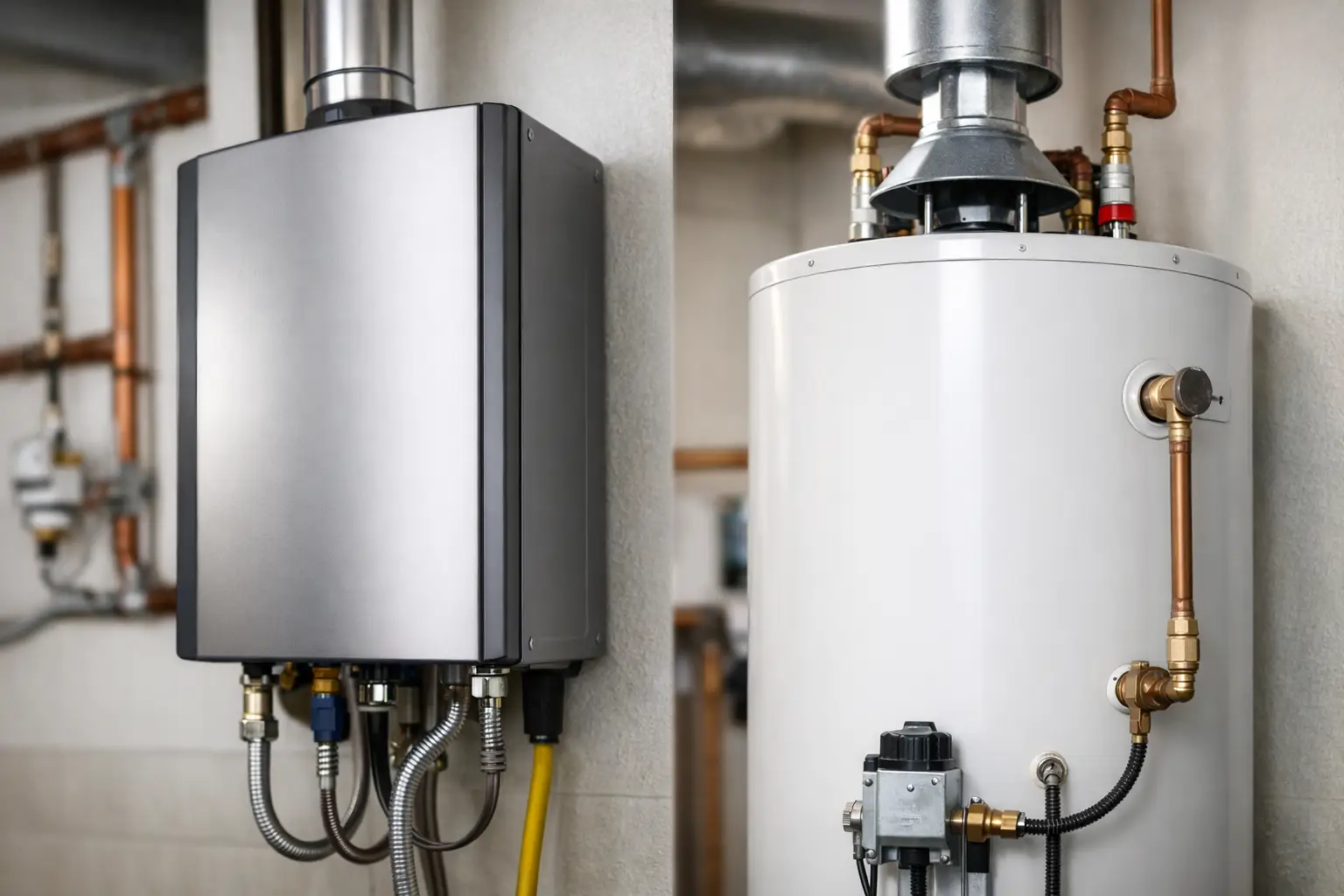
Tankless Versus Tank Water Heater
Tankless versus tank water heater: compare cost, lifespan, performance, and install needs so Albany homeowners can choose the right fit.
Running out of hot water halfway through a shower usually starts the same conversation: tankless versus tank water heater. For most Albany-area homeowners, the right choice comes down to how your house uses hot water, what your gas or electrical setup can support, and how much you want to spend upfront versus over time. There is no one-size-fits-all answer, and that is exactly why this decision should be made based on real conditions in your home, not sales hype.
Tankless versus tank water heater: the real difference
A traditional tank water heater stores a set amount of hot water, usually 40 to 75 gallons, and keeps it heated so it is ready when you need it. A tankless unit heats water on demand as it passes through the system. That means a tank system gives you a reserve of hot water, while a tankless system focuses on continuous production.
On paper, tankless sounds like the obvious upgrade. In real homes, it depends. A properly sized tankless unit can be a great fit for some households, especially if saving space and reducing standby energy use matter. But if the unit is undersized, the gas line is inadequate, or multiple fixtures run at once in winter, performance can fall short of expectations.
Upfront cost is where the gap shows first
If budget is the main driver, a standard tank water heater usually wins. Equipment cost is lower, labor is typically more straightforward, and replacement often fits the existing venting, water connections, and fuel setup with fewer changes.
Tankless installation is often more involved. In many homes, the unit itself costs more, and the supporting work can add significantly to the job. That may include gas line upgrades, venting changes, combustion air adjustments, condensate management, electrical work, or reworking water lines. If you are replacing a tank with a tankless unit, the final installed price can be much higher than homeowners expect.
That does not make tankless a bad investment. It just means the decision should be based on actual installation conditions, not the sticker price of the unit alone.
Performance depends on your household habits
The biggest practical question is how your home uses hot water during busy periods. A tank water heater can serve high-demand bursts well because it stores heated water in advance. If two showers, a dishwasher, and a washing machine overlap, a larger tank may handle that surge better than a small tankless unit.
Tankless systems are rated by flow rate, not stored volume. That means they can provide hot water continuously, but only up to a certain number of gallons per minute at a given temperature rise. In Upstate New York, incoming water temperatures are colder for much of the year. Colder groundwater means the unit has to work harder to raise water to a comfortable shower temperature. That can reduce how many fixtures it can support at once.
This is where sizing matters. If a tankless unit is selected based on marketing claims instead of winter performance, homeowners can end up disappointed. A professional diagnosis-first approach matters here because fixture count, family size, and seasonal water temperature all affect the recommendation.
Energy efficiency matters, but savings vary
Tankless water heaters are generally more energy efficient because they do not keep a full tank hot around the clock. That standby heat loss is one reason tank systems use more energy over time. For households with moderate, spread-out hot water use, tankless can reduce utility costs.
But the savings are not always dramatic enough to justify the higher installation cost in every home. If your current water heater is older and inefficient, either a new high-efficiency tank or a properly installed tankless system may improve performance and lower operating costs. The difference is how long it takes for those savings to offset the upfront price.
If you plan to stay in the home for years, tankless can make more financial sense. If you need a fast, practical replacement right now, a tank model may be the more realistic move.
Lifespan and maintenance are part of the equation
A tankless unit often lasts longer than a conventional tank water heater, especially when it is maintained properly. That longer service life is one of the strongest arguments in its favor. However, longer life does not mean maintenance-free.
Tankless systems should be flushed regularly to control mineral buildup, especially in areas where water quality contributes to scale. Ignoring that maintenance can reduce efficiency and shorten the life of the heat exchanger. A tank heater also needs maintenance, including checking components and flushing sediment, but many homeowners are more familiar with these systems and their service needs.
When comparing tankless versus tank water heater options, think beyond replacement day. Ask what routine maintenance is required, how often it should be done, and what repair costs typically look like over the life of the system.
Space savings can be a real benefit
One clear advantage of tankless systems is size. A wall-mounted tankless unit takes up much less room than a standard storage tank. In smaller utility spaces, finished basements, or homes where every square foot matters, that can be a meaningful benefit.
For some homeowners, that extra room is a nice bonus. For others, especially in homes with tight mechanical areas, it can help solve a layout problem. Still, space savings alone usually should not drive the full decision unless the current setup is creating access or safety concerns.
Installation is not just plug-and-play
This is where many online comparisons fall short. Replacing a water heater is not just about choosing a style. It is about whether your home can support that equipment safely and up to code.
Tank water heaters are often simpler replacements because the infrastructure is already there. Tankless installations can require substantial modifications, especially in older Albany-area homes. Gas-fired units may need a larger gas supply line. Venting must meet manufacturer specifications and code requirements. Condensing units need proper condensate disposal. Electric tankless systems may require major electrical upgrades that are not practical in every house.
That is why the best answer usually comes after an on-site evaluation. A licensed plumbing professional should confirm what your home can support before promising performance or quoting a final scope.
Which homeowners usually do better with a tank heater?
A traditional tank water heater is often the better fit if you want a lower upfront cost, need a straightforward replacement, or have a household with predictable high-demand periods. It is also a practical option when the existing setup is already configured for a tank unit and there is no strong reason to rework the system.
If your current water heater failed unexpectedly and you need reliable hot water restored quickly, a tank replacement may also be the fastest path. For many families, that matters more than theoretical long-term efficiency.
Who should seriously consider tankless?
Tankless makes sense when you want longer equipment life, lower standby energy loss, and endless hot water within the unit's flow capacity. It is often a strong fit for households with staggered hot water use, homeowners planning to stay put for the long term, and homes where freeing up floor space adds value.
It can also be the right choice when a remodel, mechanical upgrade, or planned repiping project makes the installation work easier to absorb. If the house already has the right gas capacity and venting path, the conversion can be much more practical.
Tankless versus tank water heater in older Albany homes
Older homes around Albany, Troy, Delmar, and East Greenbush can be excellent candidates for either option, but they need careful evaluation. Older gas piping, tight utility rooms, legacy venting, and mixed plumbing updates can all affect what is feasible. That is one reason blanket recommendations are risky.
A good installer should look at the age of the home, current fuel source, fixture count, water demand, and code requirements before steering you one way or the other. Trinity Plumbing & Drains approaches water heater replacement that way because the right answer should match the house, not just the sales pitch.
The best choice is the one that fits the house
If you want the shortest path to dependable hot water, a tank water heater is often the practical winner. If you want efficiency, longer lifespan, and are prepared for a more involved installation, tankless may be worth the investment. Both can be excellent systems when they are sized correctly and installed to code.
If you are deciding under pressure because your current unit is leaking, producing rusty water, or failing to keep up, slow down long enough to get the sizing and installation requirements right. The best water heater is not the one with the best ad. It is the one that gives your home reliable hot water without surprises after the job is done.