
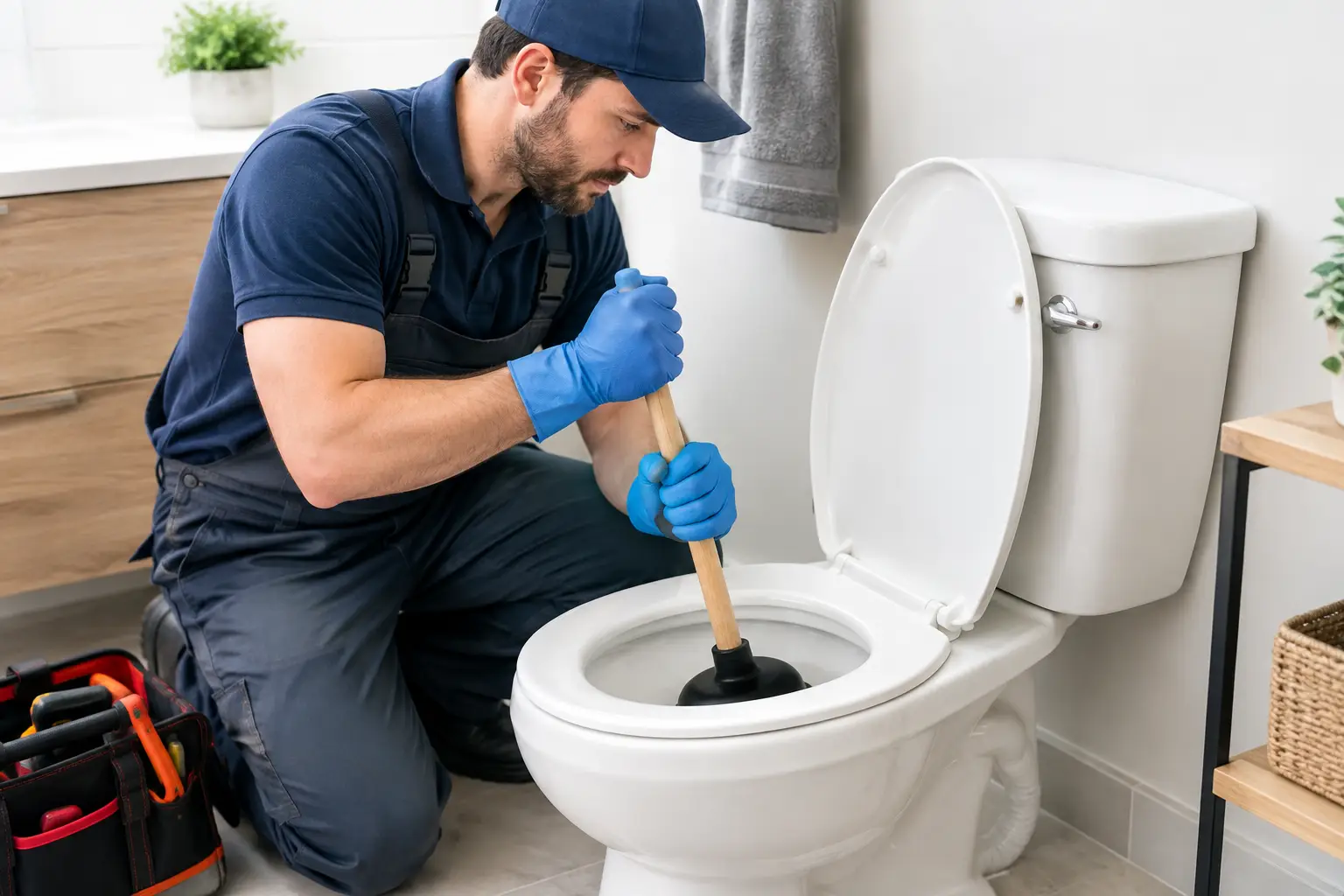
Toilet Clog Solutions That Protect Your Home
Get practical toilet clog solutions, know when to stop plunging, and learn when Albany-area homeowners should call a licensed plumber for fast help today.
A toilet that will not flush is stressful. A toilet that keeps rising toward the rim can damage flooring, seep into subfloors, and turn a small bathroom problem into a cleanup job. The right toilet clog solutions start with controlling the water, identifying whether the blockage is isolated or part of a larger drain issue, and knowing when it is time to call a plumber.
Start With the Water, Not the Plunger
If the bowl water is rising after a flush, do not flush again. Remove the tank lid and push the rubber flapper closed if water is still entering the bowl. Then turn the shutoff valve behind or beside the toilet clockwise to stop the water supply. This does not remove the clog, but it prevents an overflow while you assess the problem.
If the water level is already close to the rim, wait several minutes. Water may slowly drain through a partial blockage. Put towels around the toilet base before attempting any repair. Do not use the toilet until the clog is cleared.
A single failed flush after too much toilet paper is often manageable. Repeated backups, gurgling, or water appearing in a tub or shower drain point to a more serious issue farther down the line.
Toilet Clog Solutions You Can Try Safely
For a simple toilet-paper blockage, use a flange plunger made for toilets. A flat sink plunger does not create the seal needed around the toilet drain opening. Make sure there is enough water in the bowl to cover the plunger cup, position the flange over the opening, and use controlled, steady strokes for 15 to 20 seconds. The goal is to move water through the trap, not to splash it across the bathroom.
After plunging, wait a moment and test with a small flush. If the bowl drains normally, run one more flush before returning the toilet to regular use. If water begins to rise again, stop. Continuing to flush is how many minor clogs become overflows.
A toilet auger is the next reasonable option when a firm object or compact clog is likely trapped in the toilet trapway. Feed the protected cable gently through the bowl opening, crank slowly, and pull it back out carefully. The protective sleeve matters because bare metal cable can scratch porcelain. An auger can retrieve some objects or break up a blockage close to the toilet, but it cannot solve a clog in the branch drain or main sewer line.
Avoid improvised methods. Boiling water can crack porcelain, especially in a cold bathroom. Chemical drain cleaners can damage seals, create hazardous splashes, and make professional service more dangerous if they remain in the bowl. Do not force wire hangers, sticks, or tools into the toilet. They can scratch the fixture, push an object deeper, or damage the wax seal at the base.
When a Clog Is More Than a Toilet Problem
The location and timing of the backup tell you a great deal. If one toilet clogs occasionally while all other fixtures drain normally, the issue may be in the toilet trapway or the drain serving that bathroom. If multiple fixtures are slow or backing up, the concern is usually farther downstream.
Watch for these warning signs:
- The toilet gurgles when the shower, washing machine, or bathroom sink drains.
- Water rises in the shower or tub when the toilet is flushed.
- More than one toilet is slow, clogged, or overflowing.
- Sewage odor, dirty water, or dampness appears around a floor drain or basement fixture.
- The same toilet clogs again shortly after plunging.
These symptoms can indicate a blocked branch drain, a problem with the main sewer line, tree-root intrusion, a shifted or damaged pipe, or buildup that requires professional drain cleaning. A plunger cannot reach these problems. Repeated DIY attempts may only delay the repair and increase the chance of wastewater entering the home.
Homes in the Albany area can also face seasonal drainage challenges. Older sewer piping, root growth, freeze-thaw movement, and heavy use during holiday gatherings can all expose a weak drain line. The answer is not to guess at the cause. A proper diagnosis identifies where the restriction is and what method will clear it without causing avoidable damage.
What to Do If the Toilet Overflows
An overflow needs fast action, but not panic. Shut off the supply valve, close the flapper in the tank, and keep people and pets out of the affected area. Wear gloves before touching contaminated water. Do not use the bathroom sink, shower, washing machine, or dishwasher if you suspect the backup is connected to a larger drain or sewer issue.
Clean only a small, contained overflow using appropriate disinfectant after the plumbing problem is corrected. If wastewater has spread beyond the immediate area, reached carpet, entered a lower level, or backed up from a drain, professional plumbing assessment is the right next step. Sewage exposure is not a standard household cleanup task.
If the toilet rocks, leaks from the base, or shows water around the flooring after a clog, do not assume the toilet itself is the only issue. The wax seal may have failed, the mounting hardware may be loose, or water may have reached areas that should be inspected before the toilet is used again.
How a Plumber Finds the Actual Cause
Professional toilet clog service should begin with diagnosis, not a random fix. A plumber checks whether the clog is confined to the fixture, the bathroom drain, or the main sewer line. That process may involve testing nearby fixtures, using the appropriate drain machine, and inspecting accessible cleanouts.
For recurring or widespread backups, a sewer camera inspection can show what is happening inside the pipe. It can reveal roots, grease and scale buildup, collapsed sections, offsets, or foreign material. This matters because the correct repair depends on the cause. Clearing roots from a sewer line is different from removing an object from a toilet, and both are different from repairing a damaged pipe.
The right equipment protects the plumbing system as well as the home. A cable machine, hydro jetting equipment, or targeted repair may be appropriate depending on the pipe material, blockage location, and condition of the line. A licensed plumber should explain the findings, recommend the necessary work, and give clear expectations before moving forward.
Prevent the Next Toilet Clog
Most preventable toilet clogs come down to what enters the drain. Toilets are designed for human waste and a reasonable amount of toilet paper. Products labeled flushable can still catch on pipe joints, combine with grease or buildup, and create dense blockages. Wipes, paper towels, feminine products, cotton swabs, dental floss, facial tissues, and small toys belong in the trash, not the toilet.
If a household regularly needs excessive paper, consider keeping a covered waste bin within reach and using less paper per flush. Parents of young children should keep the lid closed when the bathroom is not in use. Small objects can disappear quickly into a toilet, and a toy lodged in the trap may cause repeated clogs that no amount of plunging will fix.
Older homes deserve extra attention. A toilet may appear to be the problem when the real issue is a partially restricted drain line. If clogs are becoming more frequent, schedule a drain evaluation before the next backup becomes an emergency.
Call for Help Before a Small Backup Spreads
Call a plumber promptly when plunging does not restore normal flushing, an auger does not clear the obstruction, multiple drains are affected, or sewage is coming back into the home. Those are not situations to keep testing with repeated flushes.
Trinity Plumbing & Drains provides fast, diagnosis-first drain and sewer service for homeowners in Albany, Colonie, Troy, Delmar, and East Greenbush. You should get a clear explanation of what is blocked, what needs to be done, and what to expect next. When the bowl starts rising, protecting your home starts with stopping the water and getting the right help before the damage spreads.