
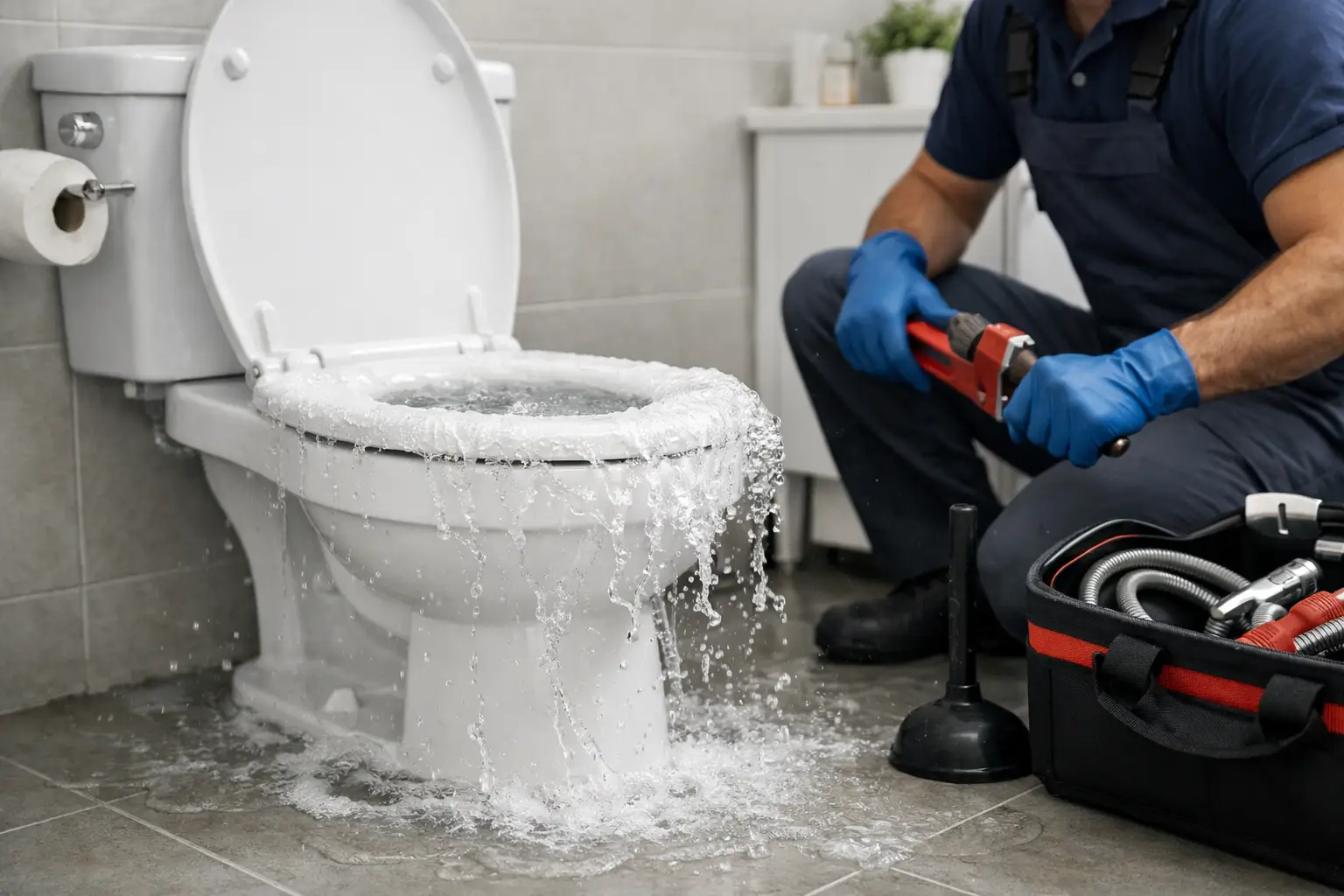
Toilet Overflowing Emergency Plumber Guide
Need a toilet overflowing emergency plumber? Learn what to do first, what causes overflow, and when to call for fast, code-compliant help.
A toilet can go from minor nuisance to floor-damaging emergency in seconds. If you are searching for a toilet overflowing emergency plumber, the first priority is stopping the water, protecting the bathroom, and figuring out whether this is a simple fixture clog or a larger drain or sewer problem.
When a toilet starts rising instead of flushing down, time matters. Water can spread under flooring, soak baseboards, and carry contamination into other parts of the home. The right response in the first few minutes can limit damage and make the repair process faster and cleaner.
What to do before the plumber arrives
Start by removing the tank lid and pushing the flapper closed if water is still running from the tank into the bowl. Then shut off the toilet supply valve, which is usually located on the wall behind or beside the toilet near the floor. Turn it clockwise until it stops.
If the bowl is close to spilling, do not flush again to test it. That is one of the most common ways homeowners turn a manageable clog into a full overflow. Use towels to block the spread of water onto nearby flooring, and keep children and pets out of the area.
If sewage is involved, wear gloves and avoid direct contact. An overflowing toilet is not always just clean tank water. In many cases, especially when the bowl was already full before flushing, the overflow may contain wastewater that needs proper cleanup.
If there is standing water in multiple fixtures, or if a tub or shower backs up when the toilet overflows, that usually points to a drain line issue rather than a toilet-only blockage. At that point, calling for emergency service is the right move.
When a toilet overflowing emergency plumber is the right call
Some toilet problems can wait a few hours. Others should not. If the overflow will not stop, if the shutoff valve fails, if wastewater is coming up from the base of the toilet, or if other drains are involved, this is no longer a basic clog situation.
A toilet overflowing emergency plumber is also the right call when the same toilet has backed up more than once in a short period, when plunging does not improve the problem, or when you suspect the blockage is deeper in the branch line or main sewer line. The same goes for homes with older piping, recurring drain issues, or recent heavy rain that may be affecting sewer flow.
The trade-off is simple. Calling early may feel like a bigger step than trying one more flush or one more plunge, but waiting often makes the cleanup and repair more expensive. Water damage, contaminated flooring, and hidden moisture around the toilet base can turn a drain call into a much larger problem.
What usually causes a toilet to overflow
The most common cause is a blockage in the toilet trap or just beyond it. Too much toilet paper, wipes, hygiene products, and small objects can all stop the flow and force water back up into the bowl.
But not every overflow starts in the toilet itself. A partial clog in the drain line can slow waste removal enough to make the toilet rise and spill. If the problem is farther downstream in the home drain system, the toilet may be the first fixture to show it because it sits low and handles a large volume of water quickly.
There is also the possibility of a sewer line issue. In that case, the toilet overflow is a symptom, not the root problem. Tree root intrusion, pipe offset, collapsed sections, grease buildup, or a heavy paper blockage in the main line can all create backup pressure. In Albany-area homes, especially older properties, this is not rare.
Less often, the issue is inside the tank. A stuck fill valve or improperly adjusted float can cause the tank to overfill, though that usually leads to clean water spilling from the tank or running continuously rather than a true waste backup from the bowl. It matters because the repair approach is different.
Why plunging sometimes works and sometimes makes it worse
A proper flange plunger can clear a basic toilet obstruction near the fixture. If the clog is soft and local, this may solve the problem without much drama. But plunging is not a cure-all.
If the blockage is deep in the line, repeated plunging may just force water up and over the rim. If the bowl is already high, aggressive plunging can also splash contaminated water around the room. And if the problem is a main drain or sewer backup, the toilet is only one part of a larger restriction.
That is why diagnosis matters. A professional should not guess whether it is the toilet, the branch line, or the main. The right repair depends on where the blockage is, how severe it is, and whether the line condition points to a recurring issue instead of a one-time clog.
What an emergency plumber should check first
A good service call starts with identifying the source of the overflow, not just forcing the toilet to drain and leaving. In many homes, the plumber will first determine whether the stoppage is isolated to one fixture or affecting multiple drains.
If the issue appears limited to the toilet, augering the fixture may be the next step. If that clears the blockage and normal flow returns, the repair may stay simple. But if the toilet continues to drain poorly, or if nearby drains show signs of backup, the inspection needs to move beyond the bowl.
That can include testing the branch line, evaluating venting symptoms, and checking whether the main sewer line is restricted. In some cases, a camera inspection is the smartest next step, especially if the home has a history of repeat clogs or if the first clearing only provides temporary relief.
This is where homeowners benefit from a diagnosis-first plumber. Quick fixes are fine when the problem is truly simple. They are not enough when the overflow is warning you about a bigger drain system failure.
Repair options depend on where the blockage is
If the clog is in the toilet trap, a professional toilet auger is often enough. If the blockage is farther down the branch drain, cable equipment may be needed to open the line. For a main sewer restriction, the repair may involve drain cleaning, camera inspection, and in some cases further sewer line work if the pipe is damaged.
It depends on the age of the plumbing and the pattern of symptoms. A single accidental clog from too much paper is one thing. Repeated overflows, gurgling fixtures, or backups in the lowest drains of the house usually point to something more serious.
Homeowners sometimes ask if removing the toilet is necessary. Sometimes it is, sometimes it is not. If the fixture itself is blocked or if access is needed for proper line clearing, pulling and resetting the toilet may be the correct approach. That work should be done cleanly and reset properly to avoid leaks at the wax seal or flange connection.
How to reduce damage while waiting for service
Keep the bathroom isolated and dry as much as possible. If the overflow reached grout lines, trim, or flooring seams, wipe it up quickly and remove wet bath mats or rugs. Open a window or run ventilation if you can do so safely.
Do not use nearby sinks, tubs, or showers if you suspect a larger drain backup. Adding more water to a restricted system can force more wastewater back into the toilet or another low fixture. This is one of the biggest mistakes homeowners make while waiting for help.
If the toilet shutoff valve does not fully stop the flow, the home may need the main water shut off until the plumber arrives. That is especially true if tank components are running continuously or if there is leakage around the fixture connection.
Choosing the right local plumber for an overflow
This is not a situation where vague arrival windows and guesswork help anyone. You want a licensed, insured plumbing company that handles emergency calls, communicates clearly, and can address both fixture clogs and larger drain or sewer issues.
Ask whether they diagnose first, whether they can identify if the problem is isolated or system-wide, and whether they explain the repair before starting work. Clean jobsite practices matter too. An overflowing toilet is already messy enough without adding avoidable damage or confusion.
For homeowners in Albany, Colonie, Troy, Delmar, and East Greenbush, a local company with emergency plumbing and drain experience is usually the safest call. Trinity Plumbing & Drains approaches these calls with a clear process - stop the immediate problem, identify the source, and recommend the repair that actually fits the condition of the system.
Preventing the next overflow
Some toilet overflows are one-time accidents. Many are warning signs. If the repair reveals a line issue, ignoring it usually leads to another backup at the worst possible time.
The practical steps are simple. Do not flush wipes, paper towels, or hygiene products. Pay attention to slow flushing, gurgling sounds, or water movement in nearby fixtures. If your home has older drains or repeat stoppages, proactive inspection is often cheaper than emergency cleanup.
When a toilet overflows, most homeowners just want it to stop. That is reasonable. But the better outcome is stopping it now and making sure it does not happen again next weekend, next holiday, or in the middle of the night.