
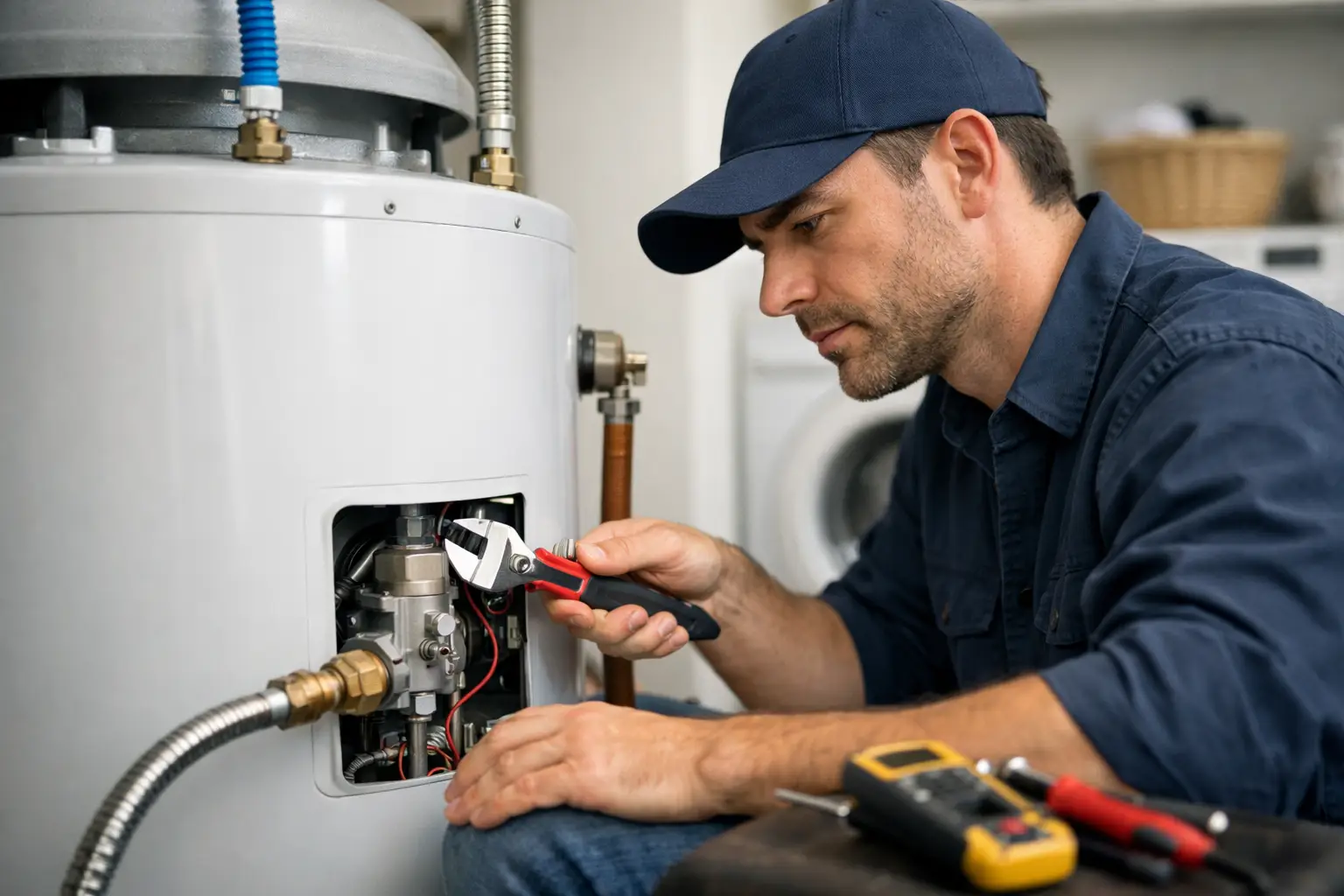
Water Heater Repair: What Homeowners Should Know
Water heater repair starts with the right diagnosis. Learn common causes, warning signs, and when to call for fast, code-compliant service.
No hot water at 6 a.m. is not a small inconvenience. It usually means your day is already off track, and if the tank is leaking, the problem can get expensive fast. That is why water heater repair needs to start with a clear diagnosis, not guesswork.
Some problems are simple. Others look simple but point to a failing tank, a gas control issue, a bad heating element, or a venting problem that should not be ignored. For homeowners in the Albany area, the goal is straightforward - restore hot water safely, protect the home from damage, and make sure the repair actually solves the problem.
When water heater repair makes sense
A water heater does not need to be replaced every time it acts up. In many cases, a targeted repair is the right call, especially if the unit is still within a reasonable service life and the tank itself is in good condition.
Electric water heaters often fail at components that can be replaced. Heating elements, thermostats, wiring connections, and reset controls are common repair points. Gas models can also be repaired when the issue is tied to the pilot assembly, thermocouple, gas control valve, burner, or ignition system. If the tank is structurally sound, a repair may restore normal operation without the cost of full replacement.
That said, it depends on the age of the unit, the type of failure, and whether there are signs of internal tank deterioration. A good service call should tell you what failed, why it failed, and whether fixing it is a smart use of your money.
Common signs you need water heater repair
Most water heaters give some warning before they stop working completely. The problem is that those warnings are easy to ignore until the system fails at the worst possible time.
If your hot water runs out too quickly, the unit may have a failed element, sediment buildup, a burner problem, or a thermostat issue. If the water is only lukewarm, the heater may still be operating, but not at full capacity. That is often repairable.
Strange noises are another common sign. Rumbling, popping, or banging inside the tank usually points to sediment buildup. In some cases, flushing the tank helps. In others, the buildup has already reduced efficiency or stressed the unit enough that more work is needed.
Discolored hot water can signal corrosion inside the tank or trouble with the anode rod. A sulfur smell may come from bacteria in the tank or a water quality issue interacting with the heater. If you see water around the base of the unit, do not assume it is condensation. A leaking valve, fitting, or supply line may be repairable. A leaking tank usually is not.
What causes water heaters to fail
Water heaters work hard every day, and most homeowners do not think about them until there is no hot water. In this region, hard water conditions, older plumbing systems, and winter demand can all add stress.
Sediment is one of the biggest issues. Minerals settle at the bottom of the tank, where they interfere with heat transfer and make the unit work harder than it should. Over time, that buildup can damage heating elements, overheat the tank bottom, and shorten the life of the system.
Age is another factor. Many standard tank water heaters start showing more frequent problems as they move past the 8 to 12 year range. That does not mean every older unit needs replacement, but it does mean repair decisions should be made carefully.
Installation quality matters too. Incorrect venting, poor gas connections, undersized expansion control, improper temperature settings, or unprotected shutoff components can all create performance and safety problems. This is one reason a diagnosis-first approach matters. You do not want a temporary fix on a unit that was set up wrong from the start.
Repair or replace? It depends on the failure
This is the question most homeowners ask first, and the honest answer is that it depends.
If the issue is isolated to a serviceable part and the tank is in decent shape, repair is usually the practical option. A failed thermostat, pilot issue, heating element, pressure relief valve, or shutoff component does not automatically justify replacement.
If the tank is leaking through the body, heavily rusted, or near the end of its life with multiple recent issues, replacement is often the better long-term decision. Paying to repair one part on a deteriorating system can leave you facing another breakdown soon after.
Cost matters, but so does risk. A low-cost repair on an unstable unit is not really a savings if you end up with water damage a month later. A professional inspection should give you a clear picture of remaining service life, immediate safety concerns, and whether repair is likely to hold.
What to expect during a water heater repair visit
A proper service call should be organized and specific. First, the problem is diagnosed. That means testing the heater, checking the visible plumbing and shutoffs, reviewing venting on gas units, confirming power or gas supply, and identifying the actual point of failure.
From there, the repair scope should be explained clearly. Homeowners should know whether the issue is a failed component, a maintenance-related problem, or a sign the unit is nearing the end. If permits, code corrections, or replacement options are relevant, that should be explained upfront.
Then the repair is completed cleanly and safely. That includes using the right parts, checking for proper operation after the repair, and making sure the unit is functioning as intended before the job wraps up. Good plumbing work is not just about getting hot water back on. It is about making sure the system is operating safely in a real home, not just for five minutes during a test.
Problems that should not wait
Some water heater issues can wait a day. Some should be addressed right away.
If the tank is actively leaking, the burner compartment smells unusual, the venting appears damaged, the pressure relief valve is discharging, or the unit will not shut down properly, that moves beyond convenience. Those conditions can lead to property damage or safety concerns.
The same is true if you see signs of scorching, melted wiring, water near electrical components, or a gas odor around the heater. In those situations, fast-response service matters. The priority is not just restoring hot water. It is preventing a bad situation from getting worse.
Why diagnosis matters more than a quick guess
Water heater symptoms overlap. No hot water can be caused by a tripped breaker, failed element, thermostat issue, gas valve problem, ignition failure, sediment buildup, or even a plumbing crossover issue elsewhere in the home. Replacing the wrong part wastes time and money.
That is why experienced plumbers start with testing, not assumptions. A diagnosis-first process helps homeowners avoid the common cycle of partial fixes, repeat service calls, and vague answers. It also catches code and safety issues that a rushed repair might miss.
For a system tied to gas, electricity, pressure, combustion, and domestic water lines, that level of care is not extra. It is the standard the job requires.
Choosing the right plumber for water heater repair
When you are dealing with no hot water, it is easy to call the first number you find. But this is one of those repairs where professionalism matters.
You want a company that handles residential service work every day, explains the problem plainly, and works under proper licensing and insurance. You also want someone who respects the home, keeps the work area clean, and does not leave you guessing about price, parts, or next steps.
In the Albany area, Trinity Plumbing & Drains focuses on exactly that kind of structured service - diagnosis first, clear communication, and code-compliant repair work without the runaround. That matters when the issue is urgent and you need a real answer, not trial and error.
How homeowners can reduce future problems
Not every breakdown is preventable, but a few simple habits can help. Paying attention to early warning signs is a big one. If the hot water changes, the tank starts making noise, or you notice moisture near the unit, acting early usually gives you more options.
Routine maintenance can also help extend service life, especially in areas where sediment buildup is common. Flushing, anode rod checks, and general inspection can catch issues before they turn into emergency calls. Still, maintenance is not a guarantee. Older tanks will eventually wear out, and some failures happen without much notice.
The useful mindset is this: treat the first sign of trouble as a service issue, not something to put off. Water heaters rarely fix themselves, and the longer a real problem sits, the more likely it is to become a larger repair or a replacement.
If your water heater is acting up, the best next step is a clear diagnosis from a qualified plumber who can tell you what failed, what it will take to fix it, and whether the unit is still worth repairing.