
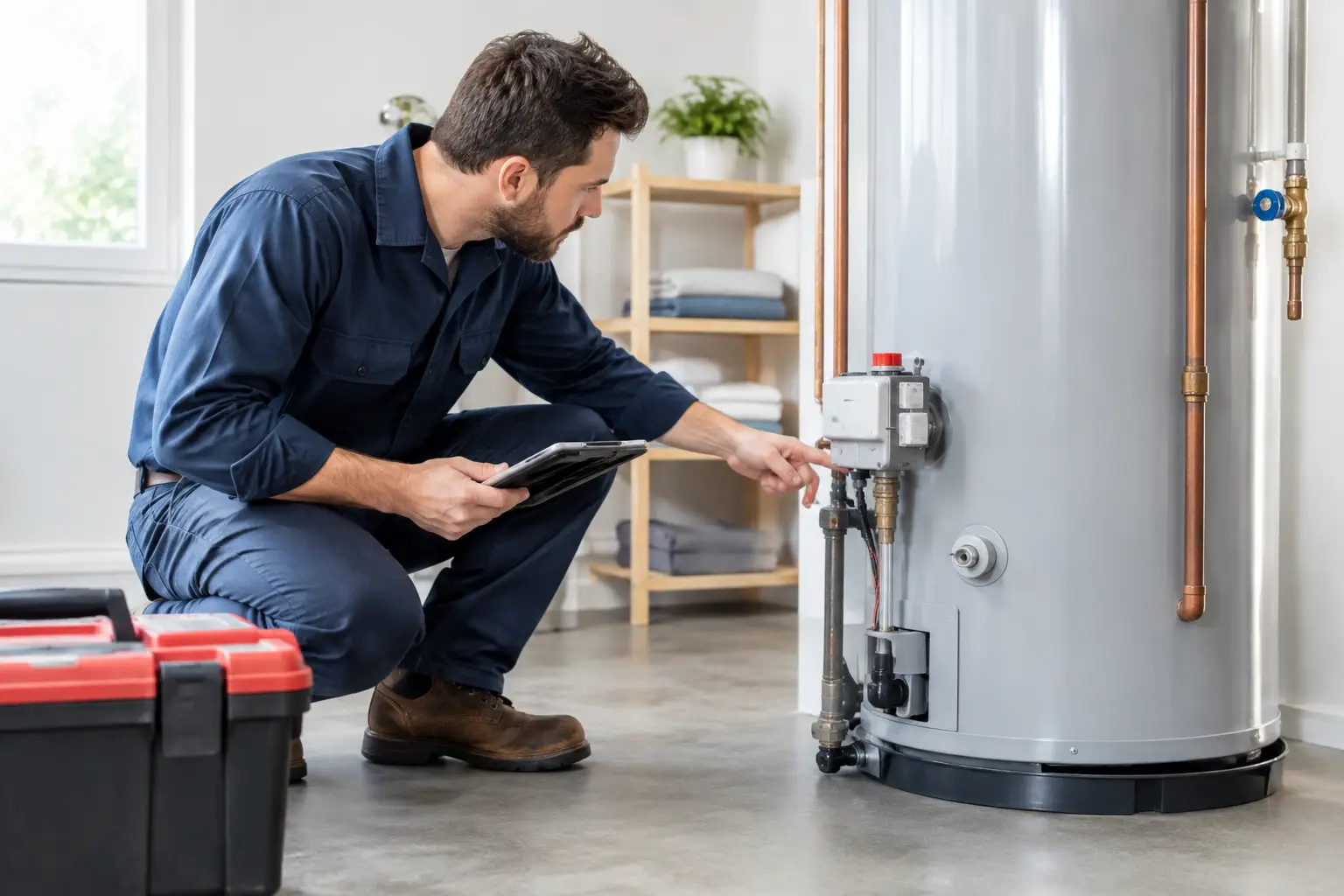
Water Heaters: Repair or Replace?
Water heaters fail without much warning. Learn the signs, repair and replacement options, and when Albany homeowners should call a licensed plumber today.
No hot water changes the whole day fast. A cold shower is inconvenient, but water heaters can also leak, waste energy, create pressure problems, or present a safety concern when they are failing. For homeowners in Albany, Colonie, Troy, Delmar, and East Greenbush, the right move is not always replacing the unit. It starts with finding the actual cause.
A professional diagnosis separates a straightforward repair from a water heater that is near the end of its service life. That matters because the wrong decision can mean paying for a repair that does not last, or replacing equipment that still had useful years left.
Common Water Heater Problems That Need Attention
Most water heater problems start with a change in performance. You may notice that the water is not getting as hot as it used to, hot water runs out sooner, or temperatures swing from hot to lukewarm without warning. Those symptoms can come from several different issues, including a failing heating element, a thermostat problem, sediment buildup, a burner issue, or an incorrectly sized unit.
A leak deserves faster action. Water around the base of the tank can come from a loose connection, a failed temperature and pressure relief valve, condensation, or a leak in the tank itself. The source matters. A fitting or valve may be repairable. A corroded tank generally is not.
Listen for popping, rumbling, or crackling noises as well. In the Capital Region, mineral sediment can collect at the bottom of a conventional tank over time. The burner or heating element then has to work through that buildup, reducing efficiency and putting added stress on the unit. Flushing can help in some situations, but it will not reverse corrosion or repair a failing tank.
If you smell gas near a gas-fired water heater, leave the area and treat it as an urgent safety issue. Do not try to relight the unit, adjust gas connections, or look for the source with a flame. Gas line and combustion concerns require prompt, code-compliant service.
When Water Heater Repair Makes Sense
Repair is often the sensible choice when the tank is in good condition and the issue is isolated. A failed electric heating element, faulty thermostat, worn anode rod, leaking supply connection, or defective pressure relief valve can frequently be repaired without replacing the whole unit.
Age is an important part of the decision. Many conventional tank water heaters last roughly eight to 12 years, though maintenance, water conditions, installation quality, and usage all affect that range. A six-year-old unit with a bad element is a very different situation than an 11-year-old unit with rust-colored water and a slow tank leak.
A proper service call should begin with diagnosis, not a quick recommendation to replace equipment. A plumber should check the unit's age and condition, inspect visible connections, confirm whether the issue is electrical, gas-related, or mechanical, and look for signs of corrosion or unsafe operation. From there, you should get a clear explanation of the repair scope and what to expect.
Repair may not be the right investment if the same unit has needed repeated service, produces rusty water, leaks from the tank body, or cannot keep up with normal household demand. In those cases, a repair can become a short-term expense that delays a necessary replacement.
Signs It Is Time to Replace Your Water Heater
A tank leak is the clearest replacement signal. Once the steel tank itself has corroded through, there is no reliable repair that restores its integrity. Water can spread quickly across a utility room, damage finished areas, and create bigger problems if the leak goes unnoticed.
Replacement also deserves serious consideration when your water heater is older and becoming unreliable. If the unit has lost capacity, makes persistent rumbling noises, needs frequent repairs, or costs more to operate than it should, installing a properly sized new unit may be the better long-term choice.
Watch for these warning signs:
- Water pooling beneath the tank or rust streaks on the tank body
- Rusty, discolored, or metallic-smelling hot water
- Hot water that runs out much sooner than it used to
- Repeated pilot light, burner, thermostat, or heating-element failures
- A unit approaching or past its expected service life
Replacement is also a chance to correct problems with the original installation. That might include improper venting, undersized gas piping, missing safety components, poor drainage planning, or a water heater that was never sized for the household. A new unit should not simply be dropped into place. It needs to be installed safely, connected correctly, and brought into compliance with applicable code requirements.
Choosing the Right Type and Size of Water Heater
The best water heater is not automatically the largest one or the model with the highest advertised efficiency. It needs to match your home's fuel source, hot-water demand, available space, venting arrangement, and budget.
A conventional storage-tank water heater is a practical choice for many homes. It stores a set amount of hot water and is generally familiar to service and replace. The trade-off is standby heat loss and a limited supply during periods of heavy use. If several people shower back-to-back, run a dishwasher, or do laundry at the same time, the tank size and recovery rate matter.
Tankless water heaters heat water on demand and can provide a continuous supply when they are sized correctly. They can be efficient and save space, but installation is more involved. Some homes need upgrades to gas piping, venting, electrical service, or water lines. They are not a one-size-fits-all answer, particularly where a lower upfront cost or simpler replacement is the priority.
Heat pump water heaters can offer strong efficiency in the right location, but they need adequate surrounding space and work best in areas that can handle their cooling and dehumidifying effect. A cramped closet or a very cold location may not be the best fit.
Sizing should be based on how your household actually uses hot water. Consider the number of bathrooms, occupants, appliances, and peak-use periods. A home with two adults taking showers at different times has very different needs from a household where four people get ready in the same morning window. Oversizing can add unnecessary cost; undersizing creates daily frustration.
What to Do When You Have No Hot Water
First, check for an obvious active leak. If water is spreading on the floor, shut off the cold-water supply valve above the unit if it is safe to access. For an electric water heater, turn off power at the breaker before touching anything around the unit. For a gas water heater, do not attempt repairs if you smell gas or suspect a combustion issue.
If there is no leak, avoid repeatedly resetting breakers, relighting a pilot, or changing thermostat settings without knowing why the unit stopped working. Those actions can mask the problem or create a safety issue. Take note of what happened: whether the water went cold suddenly or gradually, whether the unit makes noise, and whether you see an error code or water around the tank. That information helps speed up diagnosis.
For urgent no-hot-water calls, Trinity Plumbing & Drains focuses on identifying the source of the failure, explaining the available options clearly, and completing the work with clean, code-compliant workmanship. You should know whether the problem is repairable before being pushed toward replacement.
Protecting a New Water Heater
Basic maintenance can extend the useful life of many tank-style units. Periodic inspection can catch small leaks and failing valves before they become a flooded utility-room problem. Depending on water conditions and manufacturer recommendations, flushing sediment and checking the anode rod can also help protect the tank.
Do not ignore a temperature and pressure relief valve that drips, a vent connection that looks loose, or a change in water quality. These are not details to put off until the unit quits. Small warning signs give you time to make a clear decision instead of dealing with a cold shower or leak at the worst possible time.
If your water heater is showing its age, schedule service before it becomes an emergency. A straightforward inspection now can help you plan the right repair or replacement without the runaround.