
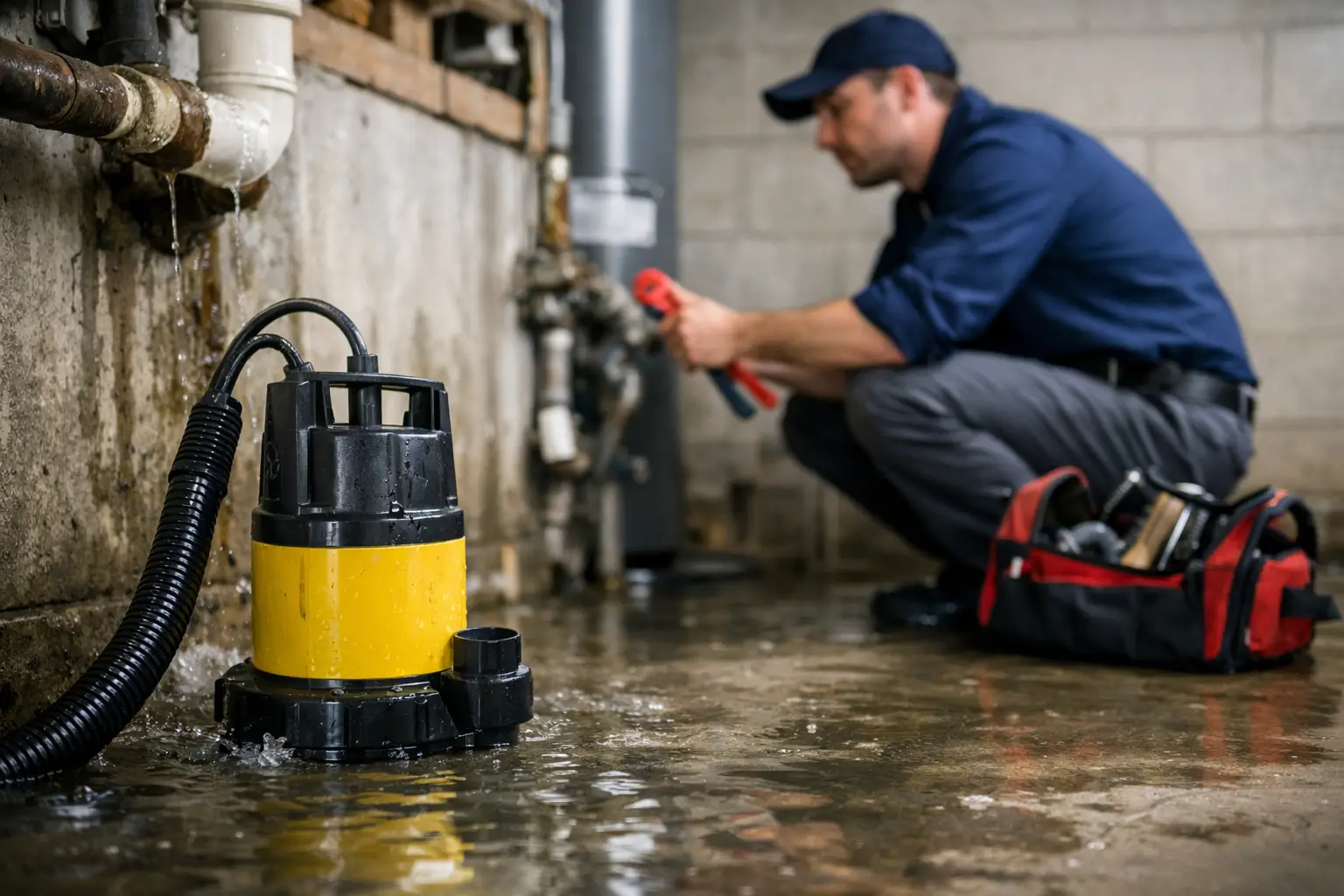
When You Need a Water in Basement Plumber
Water in basement plumber: fast diagnosis, cleanup steps, and repairs for sump pumps, drains, and sewer backups in Albany-area homes
A wet basement is not a problem to watch overnight. If you are searching for a water in basement plumber, the first priority is stopping additional damage while identifying where the water is coming from. A failed sump pump, broken pipe, clogged drain, sewer backup, or water heater leak can look similar at first. The repair is not similar, which is why diagnosis comes before a quick fix.
For homeowners in Albany, Colonie, Troy, Delmar, and East Greenbush, basement water can become more urgent during heavy rain, snowmelt, or a hard freeze. Move carefully, protect your electrical safety, and get a qualified plumber involved when the source may be inside your plumbing or drainage system.
What to Do When You Find Water in the Basement
Start by keeping people and pets out of standing water, especially if the water is near outlets, appliances, the electrical panel, or a furnace. Do not step into water if you suspect an electrical hazard. Shut off power to the affected area only if you can do so safely without entering the water. If you are unsure, call for help.
Next, look for obvious signs without touching contaminated water. Is water running from a pipe, pooling around the water heater, coming up through a floor drain, or collecting near the sump pit? If a supply pipe is leaking or has burst, shut off the main water valve to the home. This limits the volume of clean water entering the basement while a plumber is on the way.
If water is coming from a toilet, floor drain, cleanout, or laundry drain, treat it as a possible sewer backup. Keep children and pets away, avoid using sinks, toilets, showers, dishwashers, and washing machines, and do not attempt to clear the line with chemical drain cleaner. Sewer water can carry contaminants, and forcing more water into a blocked line makes the cleanup worse.
Take a few photos from a safe, dry location. They can help document the damage and give the plumber useful information before arrival. Then call for service. Fast action can protect finished walls, flooring, stored belongings, and mechanical equipment.
When Water in the Basement Needs a Plumber
Not every wet basement starts with a plumbing failure. Rainwater can enter through foundation cracks, window wells, grading problems, or failed exterior drainage. Those conditions may require a waterproofing or drainage contractor. But a plumber should be your first call when there are signs that the home’s plumbing, drain, sewer, or sump system is involved.
A plumber can determine whether the water is from a pressurized supply line, a drain line, a sewer line, a water heater, or sump pump failure. That distinction matters. A small leak from a copper pipe may be repaired quickly. A main sewer obstruction may require drain cleaning, camera inspection, or repair of a damaged section of pipe.
Call promptly if you notice any of these conditions:
- Water rising from a basement floor drain, toilet, shower, or cleanout
- A sump pump running continuously, making unusual noise, or failing to run
- A leaking or burst water pipe, especially after freezing temperatures
- Water around a water heater, boiler connection, washing machine, or utility sink
- Sewage odor, dark water, toilet paper, or waste material in the basement
- Multiple fixtures draining slowly or backing up at the same time
These are not situations for guesswork. A professional diagnosis can prevent the wrong repair, such as replacing a sump pump when the actual problem is a blocked discharge line or a failed check valve.
Sump Pump Problems
The sump pump is often the first line of defense against groundwater entering a basement. When it stops working during a storm, water can rise fast. Common causes include a stuck float switch, failed pump motor, tripped circuit, clogged intake screen, blocked discharge pipe, or a discharge line frozen outside.
A plumber checks the pump, pit, discharge line, check valve, electrical connection, and float operation. If replacement is needed, the new system should be properly sized for the home and installed with a reliable discharge route. In many Albany-area homes, a battery backup pump is also worth discussing. It adds cost, but it can keep the system operating during a power outage when the primary pump cannot run.
Sewer and Drain Backups
Water at the basement floor drain may be a warning that the main sewer line is blocked. Tree roots, grease buildup, wipes, damaged pipe, and debris can restrict flow until wastewater finds the lowest available opening. In many homes, that opening is the basement.
Drain cleaning may clear a routine obstruction, but recurring backups need a closer look. Camera inspection can show whether the line has root intrusion, cracking, a belly in the pipe, or a more serious break. The right repair depends on the condition and location of the line. Clearing a blockage can restore drainage, but it will not correct a collapsed or badly damaged sewer pipe.
Burst Pipes and Appliance Leaks
A burst pipe can release a large amount of water in minutes. Cold snaps are a common cause, particularly when pipes run along exterior walls, in unheated crawlspaces, or near poorly insulated basement areas. Shut off the main water valve if you see active flow, then call for repair.
Water around a water heater or washing machine may be slower, but it still needs attention. A failed water heater tank, loose supply connection, leaking temperature relief valve, damaged washing machine hose, or cracked utility sink drain can all soak a basement over time. The visible puddle is only part of the issue. Moisture behind finished walls or under flooring can lead to mold and material damage if it is not addressed quickly.
What a Professional Basement Water Service Call Should Include
A proper service call starts with locating the source, not immediately selling a replacement. The plumber should assess where the water originated, whether it is clean water or contaminated wastewater, what components have failed, and whether any immediate safety concern exists.
For drain and sewer issues, the work may include testing fixtures, checking the cleanout, clearing the line with the appropriate equipment, and recommending camera inspection when the cause is unclear or the problem keeps returning. For sump systems, the plumber should test the pump operation and discharge path rather than assuming the pump itself is the problem.
You should also receive a clear explanation of the recommended work before repairs begin. Ask what caused the failure, what repair solves the immediate issue, and whether there are conditions that could cause another backup or leak. Code-compliant work matters, especially for sump discharge piping, water heater connections, and sewer repairs. It protects your home and avoids creating another problem later.
Cleanup Comes After the Source Is Controlled
Do not start major cleanup until the leak, backup, or pumping failure has been stopped. Once the source is controlled, remove wet items that can be safely moved and begin drying the space. Fans and dehumidifiers can help with clean-water incidents, but sewage-contaminated water requires more careful cleanup and disposal.
Carpet, drywall, insulation, cardboard boxes, and upholstered items can hold moisture and contamination. In a sewer backup, affected porous materials may need professional restoration or disposal. If water reached electrical equipment, the furnace, or other appliances, have those systems evaluated before putting them back into service.
For a straightforward plumbing leak, prompt drying can limit the damage. For contaminated water or a large flood, restoration professionals may be needed after the plumbing repair. The trade-off is simple: moving fast costs less than replacing more damaged materials later.
Preventing the Next Basement Water Emergency
You cannot prevent every plumbing failure, but regular checks reduce the chance of a surprise. Test the sump pump before storm season by slowly adding water to the pit and confirming that the pump starts, drains, and shuts off correctly. Check that the discharge line sends water away from the foundation and is not blocked or frozen.
Avoid flushing wipes, paper towels, hygiene products, or anything labeled “flushable.” Keep grease, coffee grounds, and food scraps out of kitchen drains. If your home has older sewer piping or a history of backups, a preventive camera inspection can identify developing trouble before wastewater reaches the basement.
When water shows up downstairs, do not wait for it to become a larger repair. Trinity Plumbing & Drains can diagnose plumbing, drain, sewer, and sump pump problems without the runaround, explain the repair clearly, and help get your basement dry and functional again.