
Wet Basement Plumbing Solutions That Work
Wet basement plumbing solutions start with the right diagnosis. Learn the common causes, repair options, and when to call a licensed plumber fast.
A wet basement usually does not start as a basement problem. It starts with a failed sump pump, a clogged floor drain, a broken sewer line, a leaking water line, or drainage that cannot keep up when the system is under stress. That is why effective wet basement plumbing solutions begin with diagnosis, not guesswork.
If you are dealing with water on the floor in Albany, Colonie, Troy, Delmar, or East Greenbush, the first question is simple: where is the water coming from? Clean water from a supply line calls for a different repair than groundwater around the foundation. A sewer backup is a different level of urgency altogether. The right fix depends on the source, the timing, and how your plumbing system is behaving under load.
Wet basement plumbing solutions start with the source
Homeowners often assume any basement water means the foundation is leaking. Sometimes that is true. Just as often, the plumbing system is the real cause, or at least part of it.
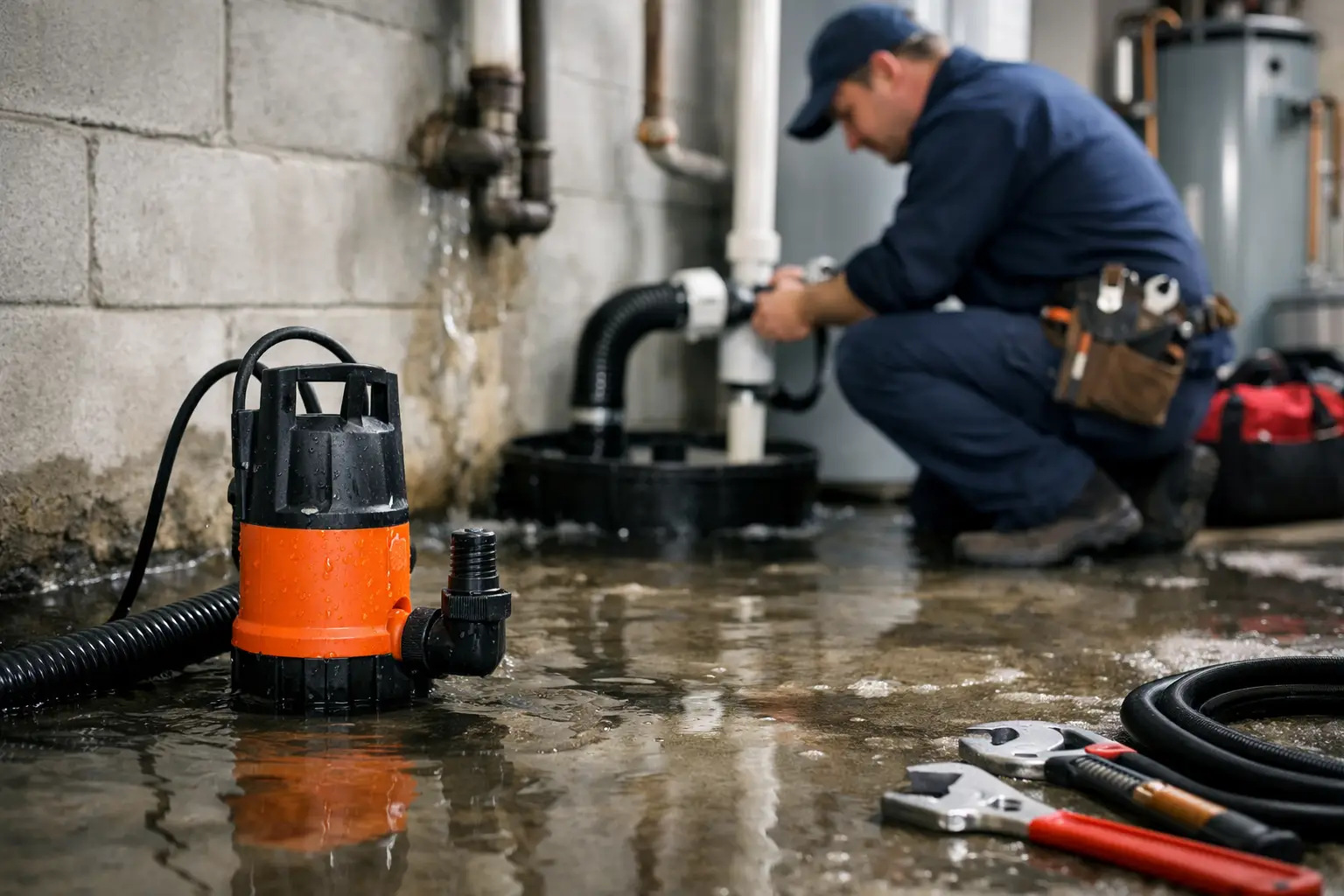
A failed sump pump is one of the most common examples. The pit fills, the pump does not turn on, and water rises onto the floor. In some homes, the pump runs but cannot discharge properly because the line is frozen, clogged, or installed incorrectly. In others, the basin is undersized for the amount of water entering during heavy rain.
Floor drains are another problem area. When a basement drain backs up, the issue may be a local clog, but it can also point to a larger main drain or sewer line blockage. If you see dark water, slow drainage at other fixtures, gurgling, or sewage odors, that is no longer a simple cleanup issue. It needs immediate diagnosis.
Basement plumbing leaks can be more subtle. A pinhole in a copper line, a failed shutoff valve, a leaking water heater, or a cracked washing machine hose can release enough water to soak flooring, damage framing, and create mold conditions before the leak becomes obvious.
The most common plumbing causes of basement water
Sump pump failure
Sump pumps are easy to ignore until they stop working. Then the whole basement pays for it. A pump can fail because of motor burnout, switch failure, loss of power, a jammed impeller, or old age. If there is no battery backup, a storm-related outage can leave the system useless at the exact moment you need it.
The repair may be as simple as replacing a failed float switch, but sometimes the better answer is a full sump pump replacement with a properly sized unit and backup protection. If the discharge piping is wrong, replacing the pump alone will not solve the problem.
Clogged or backing-up floor drains
A basement floor drain is supposed to move water away. If it becomes the point where water enters the basement, there is usually a drainage issue deeper in the line. Grease, sludge, debris, roots, and collapsed piping can all restrict flow.
This is where camera inspection matters. Drain cleaning can restore flow, but if the line has structural damage, the problem will return. A proper diagnosis tells you whether you need cleaning, spot repair, or sewer line work.
Sewer line problems
A wet basement caused by sewer backup is urgent for obvious reasons. It is not just water damage. It is a sanitation issue. In older homes around the Capital Region, aging sewer lines are a real factor. Tree root intrusion, separated joints, and partially collapsed clay or cast-iron lines can cause repeated backup events.
If the basement floods after multiple fixtures are used or during periods of heavy demand, the main sewer line should be high on the suspect list. Quick cleaning may restore temporary flow, but repeat backups usually mean there is more going on than a simple clog.
Water supply line leaks
Not all basement flooding arrives dramatically. Some of the worst damage starts with a slow leak behind stored boxes, at the water main, or around older branch lines. Over time, that moisture creates rot, rust, and mold, and by the time the puddle is noticed, the repair scope is larger.
Supply line leaks usually require prompt shutoff, isolation of the damaged section, and code-compliant repair or replacement. If the pipe material is deteriorating in one location, it is worth checking the rest of the exposed basement piping too.
Water heater and appliance leaks
Water heaters, washing machines, utility sinks, and softener systems are frequent basement leak sources. The challenge is that homeowners may focus on the water they can see and miss the failed valve, drain pan issue, or corroded fitting causing it.
In these cases, the plumbing repair is often straightforward. The bigger risk is delay. A leaking water heater does not usually fix itself, and once the tank body fails, replacement is the only option.
What a proper diagnosis should include
Good wet basement plumbing solutions are built around a clear service process. First, identify whether the water is coming from inside the plumbing system, from the drain system, or from outside groundwater infiltration. Those are not interchangeable problems, and treating them like they are leads to wasted money.
A professional diagnosis should look at active leaks, sump pump operation, discharge performance, drain flow, backup signs, fixture behavior, and visible pipe condition. If the issue points toward the drain or sewer line, a camera inspection may be the fastest way to confirm what is happening inside the pipe. If the problem is storm-related, the system should also be evaluated under realistic load conditions, not just when the floor has already dried.
This is where homeowners benefit from working with a licensed plumber who can separate plumbing failure from waterproofing issues. Sometimes both are involved. That matters because you do not want to pay for drainage work when the real issue is a failed pump, and you do not want to replace plumbing that is not causing the water.
Repair options depend on the failure point
When the sump pump is the problem
If the pump has failed, the immediate goal is water removal and pump restoration or replacement. The longer-term goal is preventing a repeat event. That may mean installing a higher-capacity pump, correcting the discharge line layout, adding a check valve, or including battery backup protection.
A lot depends on the home. A finished basement with past flood damage may justify a more resilient system than a basic unfinished storage area. The right setup is about risk, not just price.
When the drain line is blocked
If a clogged basement drain or main line is causing water to back up, professional drain cleaning is usually the first step. If the line clears and inspection shows no damage, that may be the end of it. If roots, breaks, or sagging pipe are found, then repair becomes the real solution.
This is one of those cases where cheaper is not always better. Repeated emergency cleanings can cost more over time than fixing the damaged section once and restoring proper flow.
When the sewer line is damaged
A damaged sewer line may need spot repair or full replacement depending on age, pipe material, and extent of failure. The best choice depends on how widespread the damage is. A single offset joint is different from a line with root intrusion in multiple locations.
What matters most is getting a clear explanation of the defect, the repair scope, and whether permits or inspections are required. Basement water tied to sewer issues is not something to handle halfway.
When an active leak is flooding the basement
If the basement is wet because of a leaking pipe, water heater, or plumbing fixture, repair starts with isolation and shutoff. After that, the failed component is repaired or replaced, and the surrounding plumbing is checked for related wear.
In some homes, one visible leak is a warning sign. Corrosion, poor prior workmanship, or outdated materials can mean another weak point is close behind. A focused inspection helps avoid the next emergency.
When to call right away
Some wet basement situations can wait a few hours. Others should not. If the water is rising, the sump pump is not running, sewage is backing up, the water heater is leaking from the tank, or you cannot identify the source, it is time to call for plumbing service immediately.
The same goes for any basement water issue that involves electrical risk, repeated flooding, or signs of contamination. Fast response matters, but so does showing up with a process. At Trinity Plumbing & Drains, that means identifying the cause first, explaining the repair path clearly, and doing the work cleanly and up to code.
Preventing the next basement water problem
Not every basement flood is preventable, but many repeat incidents are. A tested sump pump, a working backup system, clean drains, and a sewer line that has been properly evaluated will put you in a much better position before the next heavy rain or plumbing failure.
The key is not treating all basement water the same. Wet basement plumbing solutions work when they match the actual problem. If your basement is wet now, focus on getting the source identified quickly. The right repair is what stops this from becoming a recurring part of homeownership.