
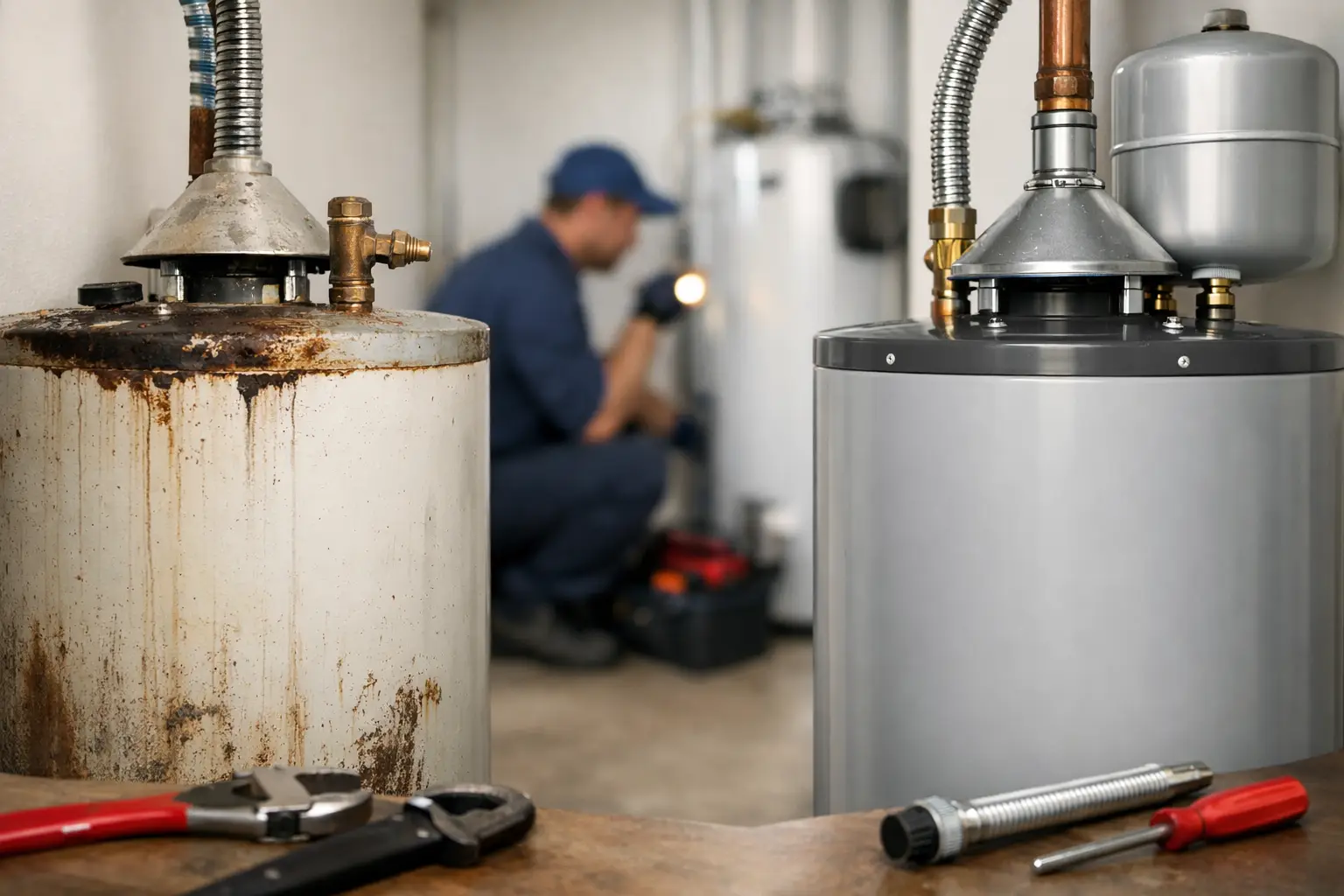
When to Replace a Water Heater
Learn when to replace a water heater, what warning signs matter most, and how to avoid leaks, no hot water, and emergency plumbing costs.
Hot water usually gets your attention only when it disappears. If your shower turns cold halfway through, the tank is leaking, or the unit is making loud popping sounds in the basement, the real question is not whether something is wrong. It is when to replace a water heater before a manageable repair turns into water damage, a full outage, or a rushed emergency call.
When to replace a water heater instead of repairing it
A water heater does not fail the same way every time. Some units give you a long warning period with rust-colored water, slow recovery, or higher energy bills. Others quit fast. The decision usually comes down to age, condition, repair history, and whether the problem is isolated or points to overall tank failure.
For most standard tank-style water heaters, replacement becomes a serious conversation around the 8 to 12 year mark. Some units last longer with good water quality and proper maintenance. Some do not make it that far, especially in homes where sediment buildup is heavy or the unit has been working hard for a large family. If your tank is already in that age range and a major part fails, putting money into another repair may not make much sense.
A newer unit with a bad thermostat, heating element, or igniter may still be worth fixing. An older tank with corrosion, visible leakage, or repeated breakdowns usually is not. That is where a proper diagnosis matters. You want to know whether the issue is one repairable component or a system that is at the end of its service life.
The clearest signs it is time for replacement
Age is one factor, but condition tells the real story. If you notice one of the following issues, replacement may be the safer and more cost-effective option.
The tank is leaking
If water is coming from the tank body itself, not just a loose fitting or valve, replacement is the answer. A leaking tank cannot be reliably repaired. Once the steel tank starts failing, it only gets worse. Waiting usually means more water on the floor and a higher risk of damage around the unit.
There is an important distinction here. Not every puddle means the tank has cracked. Sometimes the leak comes from a supply line, drain valve, temperature and pressure relief valve, or venting-related condensation issue. That is why a diagnosis-first approach matters. But if the actual tank shell is leaking, replacement should not be delayed.
Your water heater is 10 years old or older
A 10-year-old unit is not automatically done, but it is in the range where failure becomes more likely. If that older tank is also giving you inconsistent hot water, strange noises, rust, or repair issues, replacement is usually the better use of your money.
Homeowners often ask whether they should wait until it fully stops working. That can backfire. A planned replacement is far easier than dealing with no hot water and a leaking tank on a weekend or holiday.
Rust is showing up in the water or around the tank
Brown or reddish water from the hot side can point to internal corrosion in the tank. Rust around fittings, at the tank base, or near the burner compartment is also a bad sign. In some cases, corrosion is limited to a connection point and can be corrected. In other cases, it means the tank lining has broken down and the unit is nearing failure.
If the rust is coming from old galvanized piping, the solution may be different. That is another reason it pays to have the whole setup checked instead of guessing.
You are running out of hot water too fast
If your shower gets cold much sooner than it used to, sediment may be taking up space in the tank or insulating the burner or heating elements. On gas units, heavy sediment can cause overheating at the bottom of the tank and shorten its life. On electric units, failing elements may be part of the problem.
If the heater is relatively new, repair or flushing may help. If it is older and already struggling to keep up, replacement may be the smarter move.
The unit is making loud rumbling or popping noises
Tank water heaters are not silent, but loud cracking, rumbling, or popping usually means sediment has hardened at the bottom of the tank. That buildup forces the unit to work harder, reduces efficiency, and increases wear. Over time, it can lead to overheating and tank damage.
A noisy older unit is often a sign that the inside of the tank has taken a beating for years. At that point, even if it still works, it may be close to failure.
Repairs are starting to stack up
One repair on a water heater is normal. Multiple repairs over a short period are a pattern. If you have already paid to replace parts and the unit is still unreliable, continuing to patch it can cost more than installing a new one.
The practical question is simple: are you paying to extend the life of a solid unit, or are you spending money on a tank that is already on borrowed time?
Repair or replace? It depends on the failure
This is where homeowners can waste money if they get rushed into a decision without a clear diagnosis. Not every no-hot-water call means you need a new water heater.
Electric water heaters often fail because of thermostats or heating elements. Gas units may have issues with the pilot, thermocouple, gas control valve, or venting. Those problems can often be repaired if the tank itself is in good shape and the unit is not too old.
On the other hand, tank corrosion, active tank leakage, repeated performance issues, and major age-related wear usually point toward replacement. If the cost of repair is a large percentage of the cost of a new unit, replacement is often the better long-term decision.
There is also a safety and code side to this. Water heater work is not just swapping one box for another. Gas connections, venting, shutoffs, expansion control, drain pans, discharge piping, and local code requirements all matter. A replacement should be done cleanly and correctly, not as a shortcut job that creates another problem later.
When to replace a water heater before it fails completely
The best time to replace a water heater is often before the emergency. If your current unit is aging and showing clear warning signs, scheduling replacement proactively gives you more control over timing, equipment choice, and installation conditions.
That matters more than many homeowners realize. Once the old tank fails, the job becomes urgent. You may be dealing with water on the floor, no hot water in the house, and less flexibility on scheduling. A planned replacement usually means less stress and fewer surprises.
This is especially true in older Albany-area homes where basement layouts, venting, shutoff access, and drainage conditions can complicate the job. A proper onsite evaluation helps define the scope before work starts.
Should you switch to a different type of water heater?
Sometimes replacement is also a good time to decide whether the current setup still fits your household. If your family has grown, your hot water demand may have outpaced the existing tank size. If your utility costs are a concern, you may want to compare standard tank replacement with a higher-efficiency option.
That said, bigger or newer is not always better in every home. Tankless units, for example, can be a strong option in some houses, but they are not a universal fit. Gas line sizing, venting, maintenance needs, incoming water temperature, and peak demand all affect performance. The right recommendation depends on the house, not just the product.
What to do if you think your water heater is failing
If you see active leaking, shut off power or gas to the unit if it is safe to do so, and shut off the water supply to the heater. If you smell gas, leave the area and treat it as an immediate safety issue. If the problem is no hot water without leaking, strange noise, rust, or inconsistent performance, schedule a professional inspection before the situation gets worse.
A good service call should leave you with a clear answer. Is the problem repairable? Is the tank near the end? What needs to be brought up to code if replacement is the right move? You should not have to guess.
For homeowners in Albany, Colonie, Troy, Delmar, and East Greenbush, that kind of straightforward process matters. Trinity Plumbing & Drains focuses on diagnosing the actual problem first, then explaining the scope clearly so you can make the right decision without the runaround.
If your water heater is showing its age, making noise, leaking, or leaving you with cold water when you need it most, do not wait for a total failure to force the issue. A fast, correct diagnosis now can save you from a much messier problem later.