
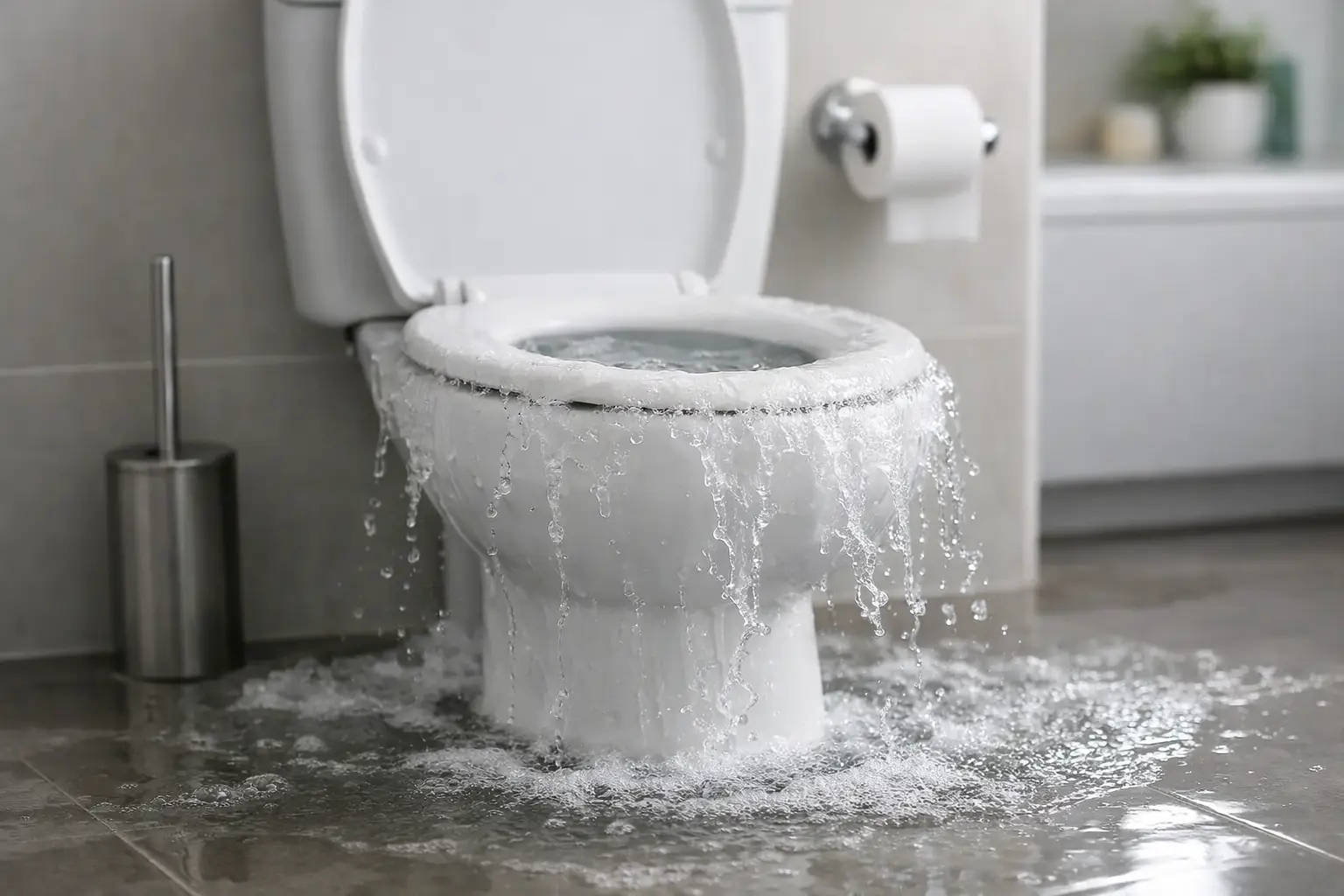
Why Is My Toilet Overflowing?
Why is my toilet overflowing? Learn the most common causes, what to do first, and when to call for fast plumbing help in Albany homes.
A toilet that starts rising instead of flushing will get your attention fast. If you're asking, "why is my toilet overflowing," the short answer is this: water is entering the bowl, but something is blocking it from draining the way it should. Sometimes that blockage is right in the toilet trap. Other times, it points to a bigger drain or sewer problem that needs professional diagnosis.
The first priority is stopping the water. Take the tank lid off and push the flapper down if it's still open, or turn off the water supply valve behind the toilet. If the bowl is close to spilling over, do not flush again to "see if it clears." That usually makes the mess worse and can push contaminated water onto the floor, into grout lines, and around the base of the fixture.
Why is my toilet overflowing in the first place?
Most overflows happen for one of three reasons: a local clog, a problem with the drain line, or a sewer line issue. The bowl itself is only the symptom. The real cause is usually farther down the path the waste and water are trying to travel.
A simple clog is the most common reason. Too much toilet paper, flushable wipes, paper towels, hygiene products, or a small object dropped into the bowl can block the trap built into the toilet. When that happens, the incoming flush water has nowhere to go quickly enough, so the bowl rises.
The second possibility is a branch drain blockage. In that case, the toilet may not be the only fixture acting up. You might notice a shower backing up, a sink draining slowly, or gurgling sounds when another fixture is used. That means the issue is likely beyond the toilet itself.
The third and more serious possibility is a main sewer line problem. If multiple drains are affected, or if you see water coming up in a tub or floor drain after flushing, that is a strong sign the home is not draining properly into the sewer system. In Albany-area homes, older piping, root intrusion, heavy paper use, grease buildup from other lines, or a sag in the sewer line can all contribute.
What to do right away when the toilet overflows
Start by shutting off the water supply at the wall. Turn the valve clockwise until it stops. If the toilet keeps trying to fill because the tank mechanism is stuck, lift the tank lid and make sure the flapper is seated properly.
Next, keep people and pets away from the area. Toilet overflow water is not something you want tracked through the house. Use towels only to contain spread, not to reuse later. If the water is dirty or came up after a drain backup, treat it as contaminated.
Then take a quick look at the rest of the house. Run no additional water until you know whether this is one clogged toilet or a larger drainage issue. If another toilet, tub, or sink is backing up too, stop there and call for service. That is not the time for trial and error.
The most common cause: a toilet trap clog
If only one toilet is affected and everything else seems normal, the clog may be in the toilet trap. This is the curved internal passage built into the fixture. It is designed to hold water and block sewer gas, but it also catches anything that should not be flushed.
A flange plunger is the right first tool. A standard sink plunger often does not seal well on a toilet. You want steady, controlled plunges, not violent pumping that splashes contaminated water. Sometimes a few proper plunges will move a paper clog enough to restore flow.
If plunging does not work, a toilet auger is the next step. This tool is made to reach through the trap without damaging the porcelain when used correctly. It can break up or retrieve material stuck deeper in the passage. If you suspect a toy, toothbrush, deodorizer cage, or other solid object went down, an auger may help, but it may not fully remove it.
There is a limit here. Repeated plunging and random chemical products can make the situation worse. Chemical drain cleaners are a poor choice for toilets. They often do little for a solid blockage, can damage components, and create a safety hazard for anyone who has to work on the fixture afterward.
When the problem is not the toilet
Homeowners often assume every overflow means the toilet itself is faulty. Sometimes that is true, but often the toilet is just the first fixture to show that a drain line is restricted.
If the toilet bubbles when the washing machine drains, if the tub fills when the toilet is flushed, or if more than one bathroom is affected, the issue is probably in the waste line serving that part of the house. A drain cleaning professional can determine whether the line needs cabling, jetting, or further inspection.
A main line issue is more urgent. Sewer backups do not fix themselves, and waiting can turn a manageable service call into floor damage, cleanup costs, and sanitation concerns. This is where diagnosis matters. You do not want guesswork. You want to know whether the line is blocked by roots, grease, scale, a belly in the pipe, or a damaged section that needs repair.
Why does it keep happening after I unclog it?
If the toilet overflows once and then seems fine, that does not always mean the problem is solved. Partial blockages are common. Water may drain slowly enough to look normal one time and then fail on the next heavy flush.
Recurring overflow is a sign to stop treating it like a one-time clog. Repeated backups can point to buildup in the line, a venting issue, or a toilet that is no longer flushing with enough force because of internal wear, mineral scale, or age. In older homes, especially where plumbing has seen years of repairs and modifications, the layout itself can complicate diagnosis.
This is also why fixture replacement is not always the answer. A new toilet will not fix a blocked branch line or a sewer problem. On the other hand, if the toilet is cracked, loose at the base, improperly installed, or has chronic internal flushing issues, replacement may be the better long-term fix. It depends on what the inspection shows.
Signs you need a plumber now
Some situations are clearly beyond DIY. If water is backing up into more than one fixture, if sewage odor is strong, if the toilet overflows immediately with little use, or if you cannot clear it with a proper plunger and auger, it is time to bring in a licensed plumber.
The same goes for homes with repeated drain issues, older sewer lines, or recent signs of root intrusion. Fast response matters, but so does the process. A good service call should start with finding the actual cause, not just forcing a temporary opening and calling it done.
For homeowners in Albany, Colonie, Troy, Delmar, and East Greenbush, that usually means looking at the full drainage picture. A professional may test nearby fixtures, inspect the toilet, cable the line, or recommend a camera inspection if the symptoms suggest a deeper sewer issue. That diagnosis-first approach saves time and helps avoid paying for the wrong repair.
Can an overflowing toilet damage my home?
Yes, and the damage is not always obvious right away. Overflow water can get under flooring, into subfloor seams, behind baseboards, and around the toilet flange. Even a small event can leave moisture trapped where it does not dry quickly.
There is also the contamination issue. Clean tank water is one thing, but most toilet overflows involve bowl water or backed-up wastewater. That changes how cleanup should be handled. If the overflow was significant or came from a drain or sewer backup, proper cleaning matters as much as fixing the blockage.
How to reduce the chance of another overflow
Most prevention comes down to being realistic about what your plumbing can handle. Toilets are built for waste and toilet paper. Wipes labeled flushable are still a common source of clogs. So are paper towels, hygiene products, cotton items, and anything a child can drop into the bowl.
It also helps to pay attention to early warning signs. Slow flushing, bubbling, frequent plunging, or water movement in other fixtures are not normal. They are your chance to deal with a developing blockage before it turns into an overflow.
If your home has a history of drain or sewer problems, routine inspection is worth considering. Older homes in particular can hide line issues for a long time before the first obvious backup.
When a toilet overflows, speed matters, but guessing can cost you more than the clog itself. Shut off the water, stop using the drains, and if the signs point beyond a simple blockage, get it diagnosed correctly so the fix actually holds.